Narrow Standing Desks 2026: Shallow-Depth Picks by Tier
Published 2026-08-23
How we researched
We compare current specs, warranty terms, buyer complaints, and long-term owner patterns. No fake hands-on claims.
Last price/spec check
2026-08-23. Prices move, so use the retailer page as the final source.
Who should skip this
Skip anything that does not fit your body, room, budget, or return-window comfort level.
Disclosure: We earn a commission if you buy through links on this page, at no extra cost to you.
Before FlexiSpot and UPLIFT sold 24-inch-deep desktops as a standard option, some buyers with tight rooms cut the backs off their desks with a saw. That's not a myth someone told us. It's a real workaround people used because nobody made a standing desk shallow enough for their wall.
You don't need to do that anymore. But "narrow" gets used loosely in this category, and most of what shows up when you search it isn't actually about depth.
Here's the distinction that matters: narrow width means the desk doesn't take up much wall space side to side. Narrow depth means the desk doesn't stick out far from the wall, no matter how wide it runs. Those are different problems. A 60-inch-wide desk can still be narrow enough to clear a hallway if the depth is right.
This guide is about depth. If what you actually need is a smaller desk overall, our guide to standing desks for small spaces covers that instead.
How Deep Is "Narrow," Actually
Standard standing desk depth is 28 to 30 inches. That's built around the average adult's forearm-to-shoulder reach plus a bit of buffer for a keyboard and mouse to sit comfortably in front of a monitor.
Two tiers matter for a tight room:
20 to 24 inches: This is where most legitimate narrow-depth options from established desk brands land. You keep a real, comfortable typing surface. You lose some of the buffer space behind your keyboard, which usually means a monitor arm stops being optional.
Under 20 inches: Some retailers carry desks this shallow, but we couldn't verify a specific model from a brand we trust enough to recommend by name. Treat anything under 20 inches as a specialty pick, check the return window, and be skeptical of "fits anywhere" marketing copy that doesn't list depth explicitly.
How to check if you need this: Measure from the wall to the nearest obstruction, whether that's a walkway, a door swing, or another piece of furniture. Subtract 4 to 6 inches for comfortable chair pull-out. Whatever's left is your real depth budget.
Quick picks
Skip the research? Our top picks are below.
See picks| Desk | Depth | Width Options | Price | Best For |
|---|---|---|---|---|
| UPLIFT V3 Custom | 24" | 42" to 80" | $599 to $919 | Wide desk, shallow depth |
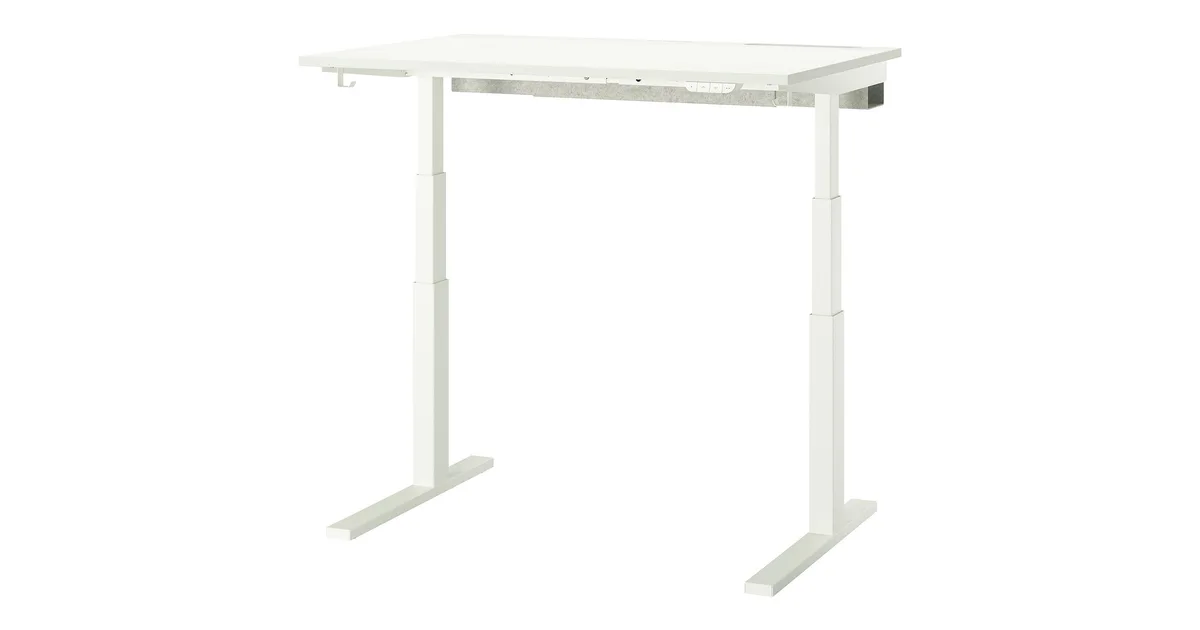
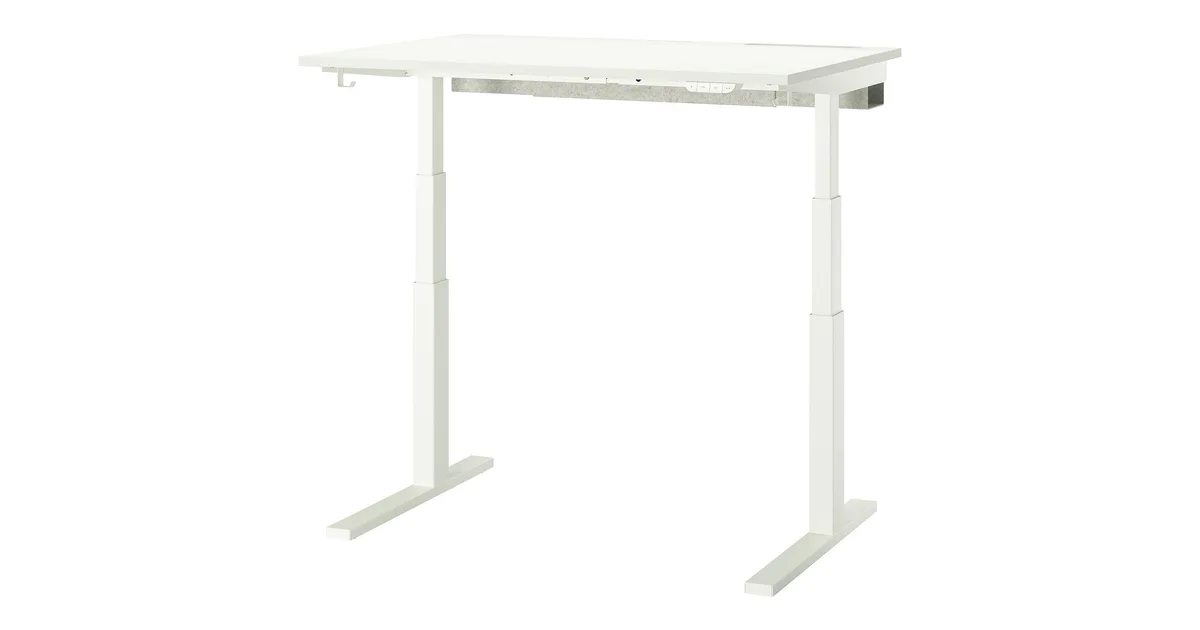
| IKEA MITTZON Sit/Stand | 23 5/8" | 47 1/4" | $499.99 | Best value, dual motor |
| FlexiSpot E7 Mini | Compact | Small-space frame | $329.99 | Closet office, budget |
| Progressive Desk Mini Ryzer | 30" (square) | 30" | $315.99 | Corner footprint, not depth |
Best for Wide-But-Shallow: UPLIFT V3 Custom Laminate (24" depth, $599 to $919)
(Verified against UPLIFT's live configurator, August 2026.)
This is the pick that solves the problem the other two tiers can't. UPLIFT's configurator lets you choose a 24-inch-deep desktop at any width from 42 to 80 inches, in 2-inch increments. The depth choice doesn't change the price. Only width does.
That means a 72-inch desk at 24 inches deep costs $829. An 80-inch desk at the same depth is $919. If your room has a long wall but a shallow one, this is the only desk on this list that lets you use the whole wall without eating room depth.
Weight capacity is 355 lbs regardless of the depth you pick, and the frame carries UPLIFT's 15-year warranty covering frame, motors, electronics, and desktop. Our full UPLIFT V3 review covers the complete spec sheet if you're deciding between UPLIFT and a cheaper frame.
What you give up: UPLIFT doesn't sell through Amazon, so there's no Prime shipping. Base laminate desktop is included in that price. Upgrading to bamboo or solid wood adds $100 to $600+ on top.
Check current UPLIFT V3 configurator pricing
Best Value: IKEA MITTZON Sit/Stand, Electric (23 5/8" depth, $499.99)
(Verified against IKEA's live product listing, August 2026.)
IKEA sells the MITTZON sit/stand desk in two depths at the 47 1/4-inch width: 31 1/2 inches standard, or 23 5/8 inches narrow. The narrow-depth version is actually $30 cheaper than the standard one, not a premium option.
Dual motors, ANSI/BIFMA certified, 10-year limited warranty, and a 365-day return window if it doesn't fit your space the way you measured. IKEA's contract-grade line has held up well in owner reports for a desk at this price.
What you give up: 47 1/4 inches is the only width we could confirm at this specific narrow depth. If you need more width and shallow depth together, the UPLIFT above is the better fit. IKEA's desktop finish options are limited to walnut veneer/black or white.
Check current price on IKEA.com
Best for a Closet Office: FlexiSpot E7 Mini (~$329.99)
FlexiSpot markets the E7 Mini specifically for small spaces and closet offices, and it carries the same dual-motor system as the full-size E7 at 352 lbs capacity, well above what a compact frame usually offers.
We verified the current price and capacity directly on FlexiSpot's site, but couldn't pull an exact desktop depth figure this session. If a specific depth number matters for your space, confirm it on the current listing before ordering rather than trusting a number from a review, ours included.
What you give up: Without a confirmed depth spec here, treat this as the budget option for a genuinely small footprint rather than a precision pick for a specific wall measurement.
Check FlexiSpot E7 Mini on Amazon
Worth Knowing: Progressive Desk Mini Ryzer (30" x 30" square, $315.99)
This one solves a different problem than the rest of this list, and we want to be upfront about that. At 30 inches deep, it's not narrower than a standard desk. What it solves is footprint: a 30-inch square fits into a corner or a closet office where a rectangular desk, even a narrow one, wouldn't turn or fit at all.
Single motor, 180 lbs capacity, 23 to 49-inch height range, BIFMA and UL certified, 8-year warranty. If your constraint is a tight corner rather than a shallow wall, this is worth a look. If your constraint is genuinely depth, it won't help.
Check current price on ProgressiveDesk.com
Can You Get a Wide Desk That's Still Narrow in Depth?
Yes, and this is the question most "narrow standing desk" searches actually miss. Every generic roundup on this topic assumes narrow means small overall. It doesn't have to.
The UPLIFT V3 above proves this: 80 inches wide, 24 inches deep, same price structure as any other width at that depth. If you have a long wall and a shallow room, that combination is what you're looking for, not a smaller desk that also happens to be narrower.
IKEA's MITTZON line doesn't currently offer that same width flexibility at the narrow depth, based on what we could confirm. If width matters as much as depth to you, UPLIFT is the more configurable option right now.
What You Give Up With a Shallow Desk
Monitor arm becomes close to mandatory. At 24 inches or less, a monitor sitting directly on the desktop eats into your typing space fast. Budget for a monitor arm if you don't already have one. Our ergonomic workstation setup guide covers positioning once you've got one.
Less room for a laptop next to a monitor. If you run a dual setup with a laptop open beside an external display, a shallow desk makes that tighter than it would be at standard depth.
Solo assembly is harder on a wide, shallow frame. A long, narrow desktop is awkward for one person to flip and position alone. Budget for a second set of hands if you're going wide.
Who Should Skip This
Skip a narrow-depth desk if you regularly spread out physical paperwork, run two monitors side by side without arms, or just haven't measured your actual wall clearance yet. A standard 30-inch-deep desk is the easier, cheaper default if nothing in your room specifically demands shallower.
If what you actually need is a smaller desk, not a shallower one, our small spaces guide is the better starting point.
Not Ready to Commit? Try a Converter First
If you're not sure a narrow-depth desk will actually work for your space, a standing desk converter sits on top of your existing desk and costs a fraction of the price. Our standing desk converter guide and desk riser roundup cover the best options if you want to test the concept before committing to a new frame.
FAQ
How deep does a standing desk actually need to be?
Standard depth is 28 to 30 inches, built around comfortable arm reach with a keyboard and monitor in front of you. Anything from 20 to 24 inches counts as narrow-depth and still works, but usually requires a monitor arm to keep the surface usable.
What's the difference between a narrow standing desk and a small standing desk?
Narrow refers to depth: how far the desk sticks out from the wall. Small usually refers to overall footprint, meaning both width and depth are reduced. A desk can be narrow in depth while still running 60 or more inches wide. If you specifically need a smaller desk overall, see our small spaces guide.
Can I get a wide standing desk that's still narrow in depth?
Yes. UPLIFT's V3 configurator offers a 24-inch depth option at every width from 42 to 80 inches, at the same price as the 30-inch-deep version. This is the clearest option we found for a long wall with limited depth clearance.
Is a narrow-depth desk harder to assemble by yourself?
A wide desk at a shallow depth is more awkward to flip and position solo than a standard desk, simply because of the length. Budget for a second person if you're assembling something 60 inches or wider alone.
Will a narrow-depth desk work with two monitors?
It can, but a monitor arm or dual-monitor arm becomes much more useful at 24 inches of depth or less, since resting two displays directly on the desktop eats most of your usable surface. Our guide to standing desks for two monitors covers frame and arm combinations that work well together.
Bottom Line
If your room has a long wall but shallow clearance, the UPLIFT V3's 24-inch custom depth at widths up to 80 inches is the pick that actually solves that specific problem. If you want the simplest, cheapest narrow-depth option and don't need extra width, IKEA's MITTZON at 23 5/8 inches deep is $30 less than their own standard-depth version. For a genuinely small footprint rather than a shallow wall, look at the FlexiSpot E7 Mini or the Progressive Desk Mini Ryzer instead, and confirm exact dimensions on the current listing before you order.
Measure your actual clearance before you shop. A desk that's narrow on paper doesn't help if you guessed wrong about what your wall allows.
The Desk Riser Research Team
Standing Desk & Home Office Researchers
We research standing desks, ergonomic chairs, and home office gear by analyzing manufacturer specs, warranty terms, and real owner review patterns across thousands of purchases. No sponsored placements. No fake hands-on claims.
Share this article:
Comments
Have a question or want to share your setup? Leave a comment below.