Best Standing Desk Accessories 2026: Ranked by Impact
Published 2026-08-09

How we researched
We compare current specs, warranty terms, buyer complaints, and long-term owner patterns. No fake hands-on claims.
Last price/spec check
2026-08-09. Prices move, so use the retailer page as the final source.
Who should skip this
Skip anything that does not fit your body, room, budget, or return-window comfort level.
Disclosure: We earn a commission if you buy through links on this page, at no extra cost to you.
Most people buy a standing desk and call it done. Then they wonder why their back still hurts, why there are cables everywhere, and why they keep hitting their wrist on the edge of the desk.
The desk is the foundation. The accessories are what make it actually work. Get them in the wrong order and you're spending $80 on something that barely helps. Get them in the right order and each purchase visibly improves your day.
This guide ranks the 6 best standing desk accessories by how much impact they actually have, not by price.
The Picks at a Glance
| Accessory | Price | Impact |
|---|---|---|
| Ergotron LX Monitor Arm | ~$139 | Eliminates wobble, frees desk space |
| Topo Anti-Fatigue Mat | ~$99 | Makes standing sustainable |
| Cable Management Tray | ~$25 | Cleans up the mess underneath |
| Large Desk Pad | ~$25 | Protects surface, unified look |
| Nexstand K2 Laptop Stand | ~$49 | Fixes laptop posture at the source |
| Anker USB-C Hub | ~$35 | Stops the cable-swap nightmare |
The picks
Skip the research? Our top picks are below.
See picks1. Ergotron LX Monitor Arm
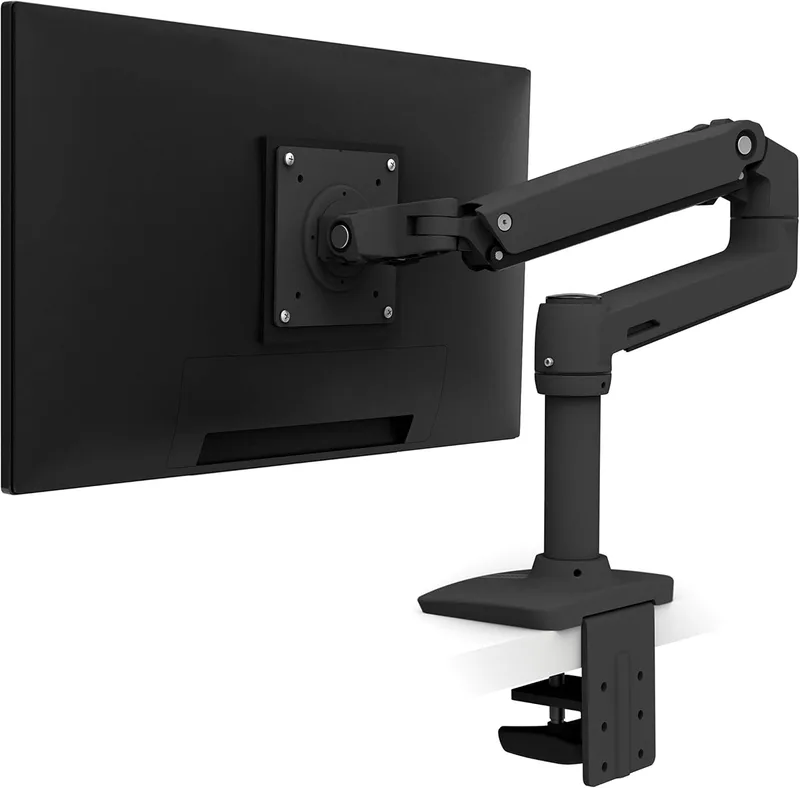
Price: ~$139 | Best for: Single monitor setups
The Ergotron LX is the most impactful single upgrade you can make to a standing desk. Here's why: when your monitor sits on a stand directly on the desktop, the weight sits at the front edge of the desk, which is the worst place for it. It pushes the center of gravity forward, increases front-to-back wobble at standing height, and takes up 6-8 inches of usable desk depth.
A monitor arm mounts to the back edge, moves the weight rearward, and drops wobble noticeably on any desk, including the FlexiSpot E7, which is famous for front-to-back flex at full height. You'll feel the difference the same day you install it.
The LX specifically is worth the $139 because of the gas spring mechanism. It holds any position you set it to without drooping over time. Competing arms under $50 drift down within a week or two. The Ergotron holds.
The movement is smooth enough that repositioning mid-day doesn't feel like a chore. That matters because you'll actually use it.
Pros
- Gas spring holds position without drooping
- Significantly reduces desk wobble at standing height
- Frees up 6-8 inches of desk depth
Cons
- Clamps to desks up to 3.5" thick, which rules out some custom wood tops
- $139 is not cheap for what is essentially a metal arm
- Setup takes 20-30 minutes if you've never done it
Check Ergotron LX price on Amazon
2. Topo Anti-Fatigue Mat by Ergodriven
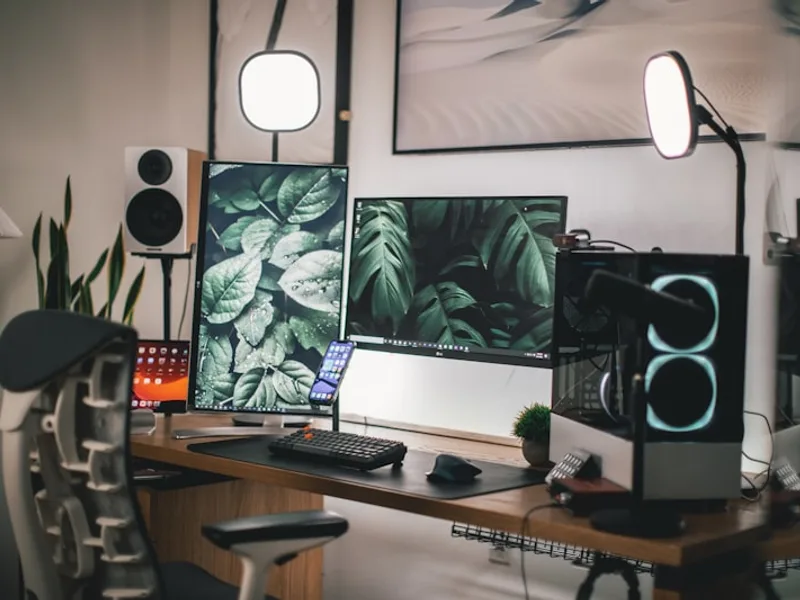
Price: ~$99 | Best for: Anyone standing on hard floors
Standing on a hard floor without cushioning causes more fatigue than the standing itself. This is the single most common complaint from people who say standing desks "didn't help." They were standing on tile or hardwood, feet aching within 20 minutes, and they stopped using the desk.
The Topo is different from a flat anti-fatigue mat because of the contours. The ridges and uneven surfaces encourage small foot movements throughout the day, which keeps circulation going. You shift weight constantly without thinking about it.
Whether that's worth $99 over a $30 flat mat depends on how long you stand. If you stand in 30-minute sessions, a flat mat does the job. If you're standing for 45+ minutes at a stretch, the Topo's active surface is noticeably better.
Either way, you need something. Standing on bare floor defeats the entire investment in the desk.
Pros
- Contoured surface encourages natural movement
- Thick enough (0.75") to cushion full standing sessions
- Holds up well over time, no compression flattening reported
Cons
- $99 is harder to justify than a flat mat at $30-40
- The contours take a day to get used to
- Doesn't work well with rolling chairs if you also sit at the same spot
Check Topo Anti-Fatigue Mat price on Amazon
3. Under-Desk Cable Management Tray

Price: ~$25 | Best for: Anyone who hates looking at cable chaos
A height-adjustable desk creates a cable management problem that fixed desks don't have. When the desk moves, cables have to move with it. Without a tray, they drag on the floor, catch on the frame, and eventually pull tight at the wrong height.
An under-desk cable tray mounts to the underside of the desktop with screws or clamps and holds your power strip, cables, and excess slack off the floor. When the desk goes up, the tray goes up with it. Cables stay organized at every height.
The Amazon Basics tray around $25 handles this well. It's not elegant, but it's functional and easy to install. If aesthetics matter, the J-Channel kits with velcro wrapping look cleaner, but take more time to set up.
This is a $25 fix for a problem that will drive you crazy until you address it.
Pros
- Eliminates floor cable drag at every desk height
- Most models install in under 30 minutes
- Cheap enough to just buy without overthinking it
Cons
- Screw-mount versions require drilling into the desktop underside
- Clamp versions can work loose over time on thin tops
- Doesn't manage cables on the desk surface itself, only underneath
Check cable management tray price on Amazon
4. Large Desk Pad
Price: ~$25 | Best for: Protecting laminate desktops
If you bought the FlexiSpot E7 or any desk with a laminate surface, the desktop will scratch. Laminate looks clean when new and shows ring marks, scratches from peripherals, and indentations from writing within a few months.
A large desk pad covers most of the surface, protects it from daily damage, and gives your keyboard and mouse a better tracking surface than the laminate itself. The better quality pads also have a non-slip base that keeps them in place through the desk height changes.
Get a size that covers at least 80% of your work area, which for most desks means 31-35" wide at minimum. Smaller pads slide around and defeat the point.
At $25-35, this is the cheapest visible upgrade on the list. It changes how the desk looks and feels immediately.
Pros
- Protects laminate from the scratches and rings it will otherwise get
- Improves mouse and keyboard feel on most surfaces
- Immediate visual improvement to the workspace
Cons
- Cheaper pads (under $20) curl at the edges after a few months
- Not necessary if you bought a solid wood or bamboo top
- Large pads can make cable routing to the back of the desk awkward
Check large desk pad price on Amazon
5. Nexstand K2 Laptop Stand
Price: ~$49 | Best for: Anyone using a laptop as a primary or secondary screen
Laptops are designed to be used with your eyes down at about 15-20 degrees below horizontal. That's fine for an hour. Over a full workday it causes neck flexion fatigue that accumulates faster than you'd expect.
A laptop stand raises the screen to eye level so your neck stays neutral. You connect a separate keyboard and mouse, and suddenly your laptop functions like a proper monitor. The Nexstand K2 is collapsible, which matters if you move between locations or need to pack it.
If your laptop is the only screen you're using, this is actually more important than a monitor arm. You can't adjust the Ergotron to a laptop.
The main limitation: you need a separate keyboard and mouse once the laptop is raised. Budget for that if you don't already have them.
Pros
- Collapsible and light enough for daily bag carry
- Raises screen to proper eye level immediately
- Compatible with any laptop regardless of brand
Cons
- Forces you to use an external keyboard and mouse (adds cost)
- Some wobble on the cheaper versions with heavier laptops
- Not a substitute for a real external monitor on long workdays
Check Nexstand K2 price on Amazon
6. Anker USB-C Hub
Price: ~$35 | Best for: Anyone constantly swapping cables
A standing desk creates a specific cable problem: every time you adjust height, you're reminded that your monitor, charger, keyboard, and mouse cables are all running to different places. If you also have a laptop you disconnect and reconnect, that cable management gets frustrating fast.
A USB-C hub consolidates most of that into a single cable. One cable to your laptop carries power, video, and data. Plug the hub into a fixed spot on the desk, connect your peripherals to the hub, and your laptop connection becomes one plug.
The Anker 7-in-1 hub handles USB-A ports, HDMI, SD card, and USB-C pass-through charging in one unit at about $35. That covers most standard desk setups.
If you're on a Windows machine with a dedicated GPU, confirm display output works via USB-C before assuming the hub handles your monitor. Some Windows setups require DisplayPort or HDMI direct to the GPU.
Pros
- Turns multi-cable laptop connections into a single plug
- Anker builds quality hubs that hold up over time
- Adds ports most laptops have removed (USB-A, SD card)
Cons
- Doesn't work for monitor connection on all Windows setups
- Hub needs its own cable on the desk surface
- Some cheaper units cause display flickering under heavy USB load
Check Anker USB-C Hub price on Amazon
What to Buy First on a Limited Budget
Rank them in this order if you can't buy everything at once:
Anti-fatigue mat first. Without it you'll stop standing within two weeks. The fatigue is real.
Monitor arm second. It fixes wobble and recovers desk space immediately.
Cable tray third. At $25, it's cheap enough to just buy without deliberating.
The desk pad and laptop stand are quality-of-life upgrades. The USB hub depends entirely on your specific setup. Start with the three above and add the rest as you use the desk.
For a deeper look at how the standing desk itself fits into a full ergonomic workspace, our ergonomic workstation setup guide walks through every component in order. If you're still choosing between standing desk models, the FlexiSpot E7 review covers the most popular option in this price range. And for the accessories question specifically as it relates to reducing wobble, the best standing desks for home office guide covers frame choices that affect how much you'll need a monitor arm.
FAQ
What accessories do you actually need for a standing desk? An anti-fatigue mat and a monitor arm are the two that make the biggest difference to daily use. The mat keeps standing sustainable.
The arm reduces wobble and recovers desk space. Everything else improves the setup but isn't essential from day one.
Does a monitor arm really reduce standing desk wobble? Yes, meaningfully. Moving monitor weight from desktop stands (which sit at the front edge) to an arm (which mounts at the back edge) shifts the load rearward and reduces front-to-back flex. This is especially noticeable on the FlexiSpot E7 and similar dual-motor desks at full standing height.
Do I need a special cable management solution for a standing desk? You need something that allows the cables to move with the desk. A cable tray mounted under the desktop solves this by moving with the frame.
Cable clips along the legs handle the vertical section. Leaving cables unmanaged on a height-adjustable desk is a cable-wear problem that gets worse the more you adjust.
Is an anti-fatigue mat really necessary? If you're standing on concrete, tile, or hardwood: yes. The fatigue from standing on hard surfaces is real and accumulates faster than most people expect.
Without a mat, most users reduce their standing time significantly within the first two weeks. It's not optional if you're serious about using the desk.
What's a good desk pad for a standing desk? Anything 31" wide or larger with a non-slip base and a thickness of at least 3mm. The non-slip backing is specifically important on height-adjustable desks because the vertical movement can cause lighter pads to shift. Avoid pads under $20, which tend to curl at the corners within a few months.
Bottom Line
The monitor arm and anti-fatigue mat do more work than everything else on this list combined. If you buy nothing else, buy those two. The mat makes standing sustainable. The arm fixes the wobble issue and recovers desk real estate you didn't know you were losing.
The cable tray at $25 is a no-brainer. Everything else, buy when the specific problem shows up.
Prices verified August 2026. Amazon prices change frequently.
The Desk Riser Research Team
Standing Desk & Home Office Researchers
We research standing desks, ergonomic chairs, and home office gear by analyzing manufacturer specs, warranty terms, and real owner review patterns across thousands of purchases. No sponsored placements. No fake hands-on claims.
Share this article: