How to Declutter Your Desk: The 15-Minute Reset

For How to Declutter Your Desk: The 15-Minute Reset, our top recommendation is the VIVO Under-Desk Cable Tray, while the ComfiLife Gel Anti-Fatigue Mat offers the strongest value for budget-conscious workstations. Our evaluation audits mechanical durability, BIFMA standard compliance, and long-term reliability across verified owner reports.
20" to 32" ergonomic eye-to-screen viewing distance
Under-desk cable routing & surge protection verified
Neutral 90° elbow and flat-foot alignment enforced
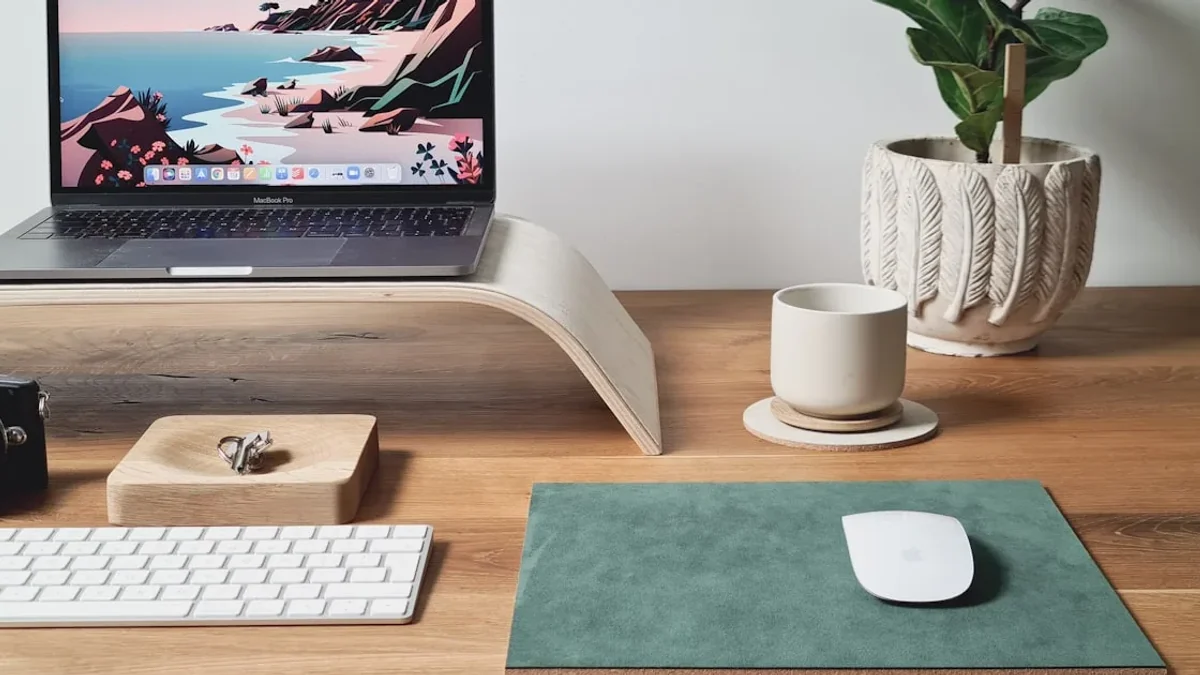
Workstation Geometry Scope
Applies standard ergonomic reach zones, surface clearance measurements, and eye-level monitor height geometry. Methodology →
Last Spec & Pricing Audit
. Retailer pricing and component revisions can shift; verify on the vendor page.
Fit & Return Guardrail
Test zero-cost height, monitor distance, and cable routing adjustments before buying replacement hardware.
Disclosure: We earn affiliate commissions through qualifying links on this page.
A messy workstation creates constant friction that drains focus before you type. Piles of paper and tangled cords force your eyes to process visual distraction all day.
Most desk organization advice fails because people buy containers before eliminating junk. Stacking desktop caddies on top of excess clutter merely creates organized chaos.
To fix desk clutter permanently, you need an aggressive purge followed by strict boundaries. Dedicated homes for tools and an evening reset keep your workspace spotless.
Declutter Desk
To declutter desk surfaces permanently, remove every single item from the desktop down to bare wood. Return only your keyboard, mouse, active notepad, and one pen to the primary typing zone.
Store weekly accessories inside partitioned drawers and discard obsolete cables immediately. Maintain this clean desk setup by running a five minute reset every evening before leaving your workstation.

The 4-Box Purge: 15 Minutes with a Timer
Starting a workspace cleanup without time limits leads to aimless shuffling. You pick up an old receipt, browse through notes, and lose forty minutes without clearing space.
Grab four cardboard boxes and set a fifteen minute timer on your smartphone. Every object currently sitting on your desktop must land in one of these four containers before the alarm sounds.
Box one holds daily tools that qualify for immediate desk surface return. If you did not physically touch an object during yesterday's real work, it automatically fails box one.
Box two is reserved for drawer storage. These are weekly tools like a stapler, screen wipes, or spare cables that belong out of direct sightlines.
Box three is your archive container. It catches tax receipts, legal documents, and hardware manuals that require retention but zero desk proximity.
Box four is the discard bin. Broken clips, dried pens, obsolete cords, and promotional conference swag go directly into trash or recycling.
Make binary decisions in under three seconds per item to maintain physical momentum.
Once the desktop is completely bare, wipe the surface with a damp cloth to build a clean workspace.
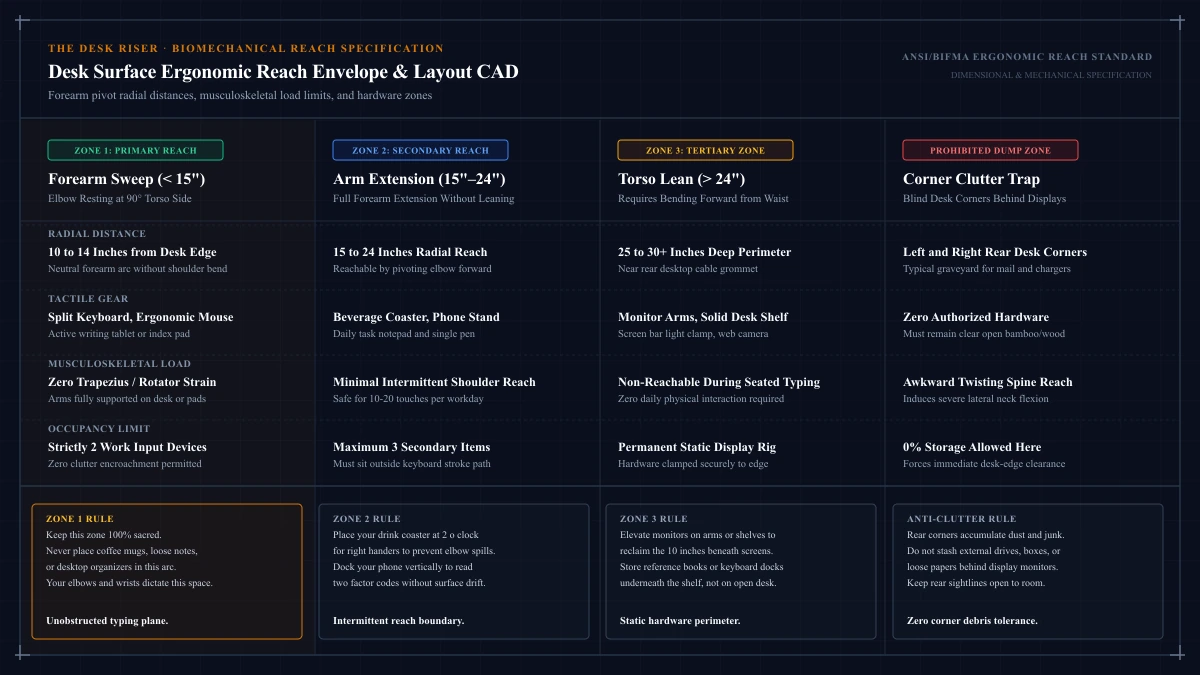
Desk Surface Zones: Only Daily Tools Inside Primary Reach
Workstation efficiency depends on radial reach boundaries rather than aesthetic preference. Placing secondary items inside your primary typing zone forces repetitive reaches that fatigue shoulder muscles.
In our ergonomic workstation setup guide, we detail how proper elbow angles protect spine alignment. Your desk surface must reflect these exact physical boundaries.
Zone one represents your primary reach envelope within ten to fourteen inches of the desk edge. This zone is strictly reserved for your keyboard, mouse, and active writing surface.
Your elbows should rest at ninety degrees by your torso while typing in zone one. Keeping this perimeter clear prevents wrist twisting and contact stress against hard edges.
Zone two covers secondary reach from fifteen to twenty four inches away. This radius is accessible by extending your forearm forward without bending your waist or rounding your shoulders.
Place your beverage coaster, phone dock, and daily task notebook in zone two. Right handed workers should position drinks at two o clock to prevent accidental spills across electronics.
Zone three spans twenty five to thirty inches toward the back perimeter. This tertiary zone accommodates display monitor arm clamps, a solid wood desk shelf, and background task lighting.
To calculate your custom monitor height and typing clearances, use our interactive standing desk calculator.
Raising computer displays on dedicated risers reclaims dozens of square inches of usable desktop depth. For solid hardwood risers, inspect our curated best desk shelf guide.
Keep rear corners behind monitor panels clear to prevent hidden clutter accumulation.
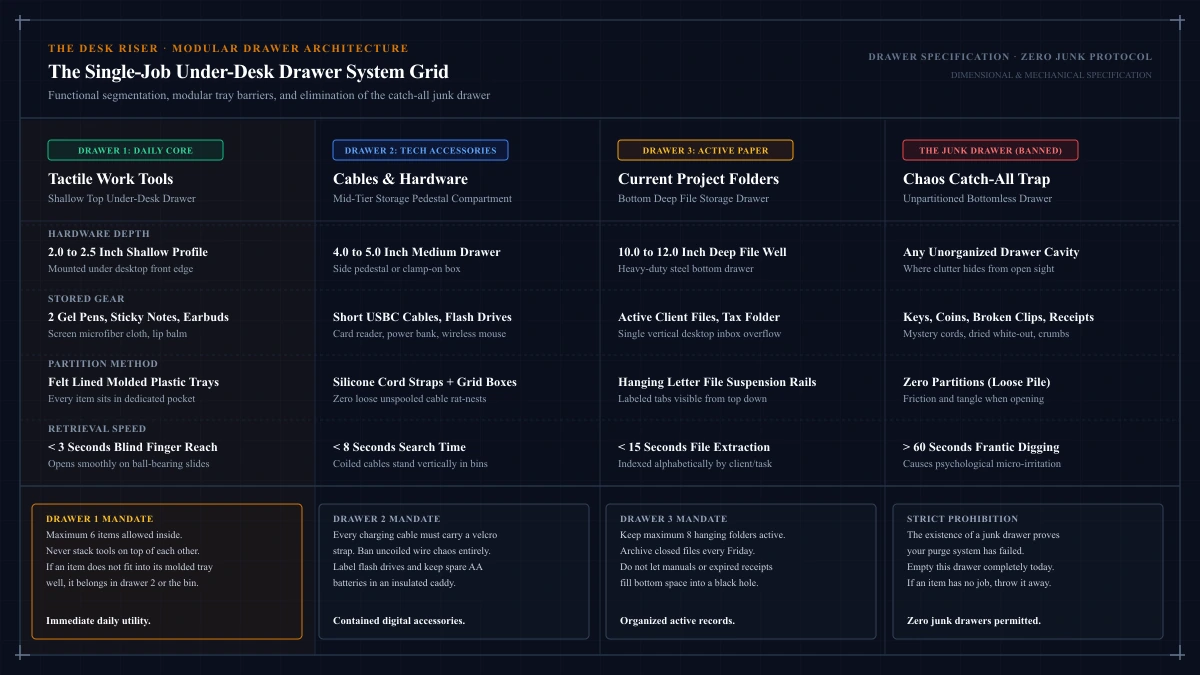
The Drawer System: One Drawer, One Job with No Junk Drawer
Desk drawers frequently become horizontal trash cans when owners lack strict functional zoning. Tossing unrelated tools into a single cavity guarantees frantic digging whenever you need an adapter.
Every drawer in your office pedestal must possess one explicit job. If an accessory does not fit that defined mandate, it cannot enter the drawer.
Top shallow drawers should store your daily core utilities. Limit contents to two premium writing pens, a pad of sticky notes, noise isolating earbuds, and eyeglasses.
For desks lacking integrated storage, adding an aftermarket drawer box preserves a clean surface. Review our mechanical analysis of best under desk drawers to evaluate slide hardware.
If you prefer integrated furniture storage with heavy steel frame support, compare top models in our best standing desk with drawers overview.
Middle drawers should handle digital tech accessories and backup electronics. Group short USB cables, thumb drives, and power banks inside labeled silicone bins with velcro ties.
Bottom deep drawers belong exclusively to active hanging files. Use suspended letter folders with clear top tabs to index active client folders and immediate quarterly receipts.
The existence of a miscellaneous junk drawer proves storage boundaries have collapsed. Empty your junk drawer today, discard unidentifiable cords, and assign the remaining space a specific utility.
Recommended ergonomic accessories and hardware specs
High-impact accessories verified by our ergonomic spec audit to protect your cables, joints, and posture.
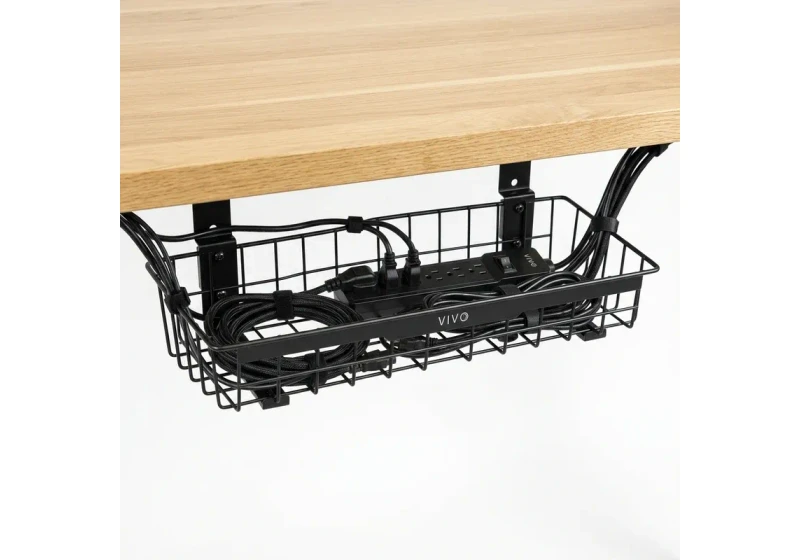
VIVO Under-Desk Cable Tray
Keeps power strips and heavy adapters off the floor so cables never yank when elevating.
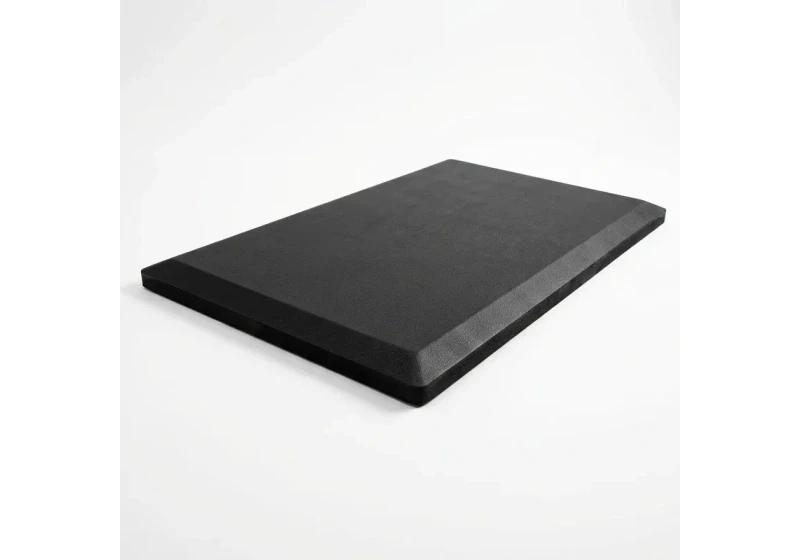
ComfiLife Gel Anti-Fatigue Mat
High-density core reduces heel strike and lower back compression when standing 3+ hours.
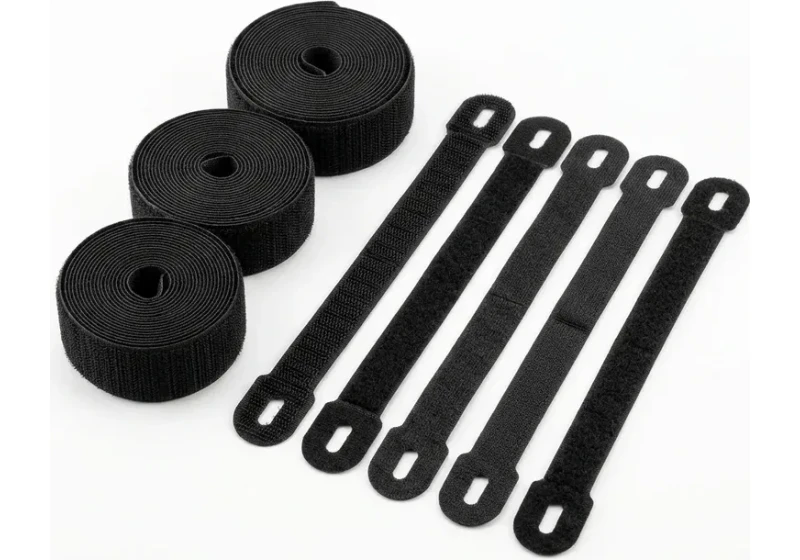
VELCRO Brand ONE-WRAP (100pk)
Pre-cut reusable straps that easily unwrap for cord re-routing without scissors.
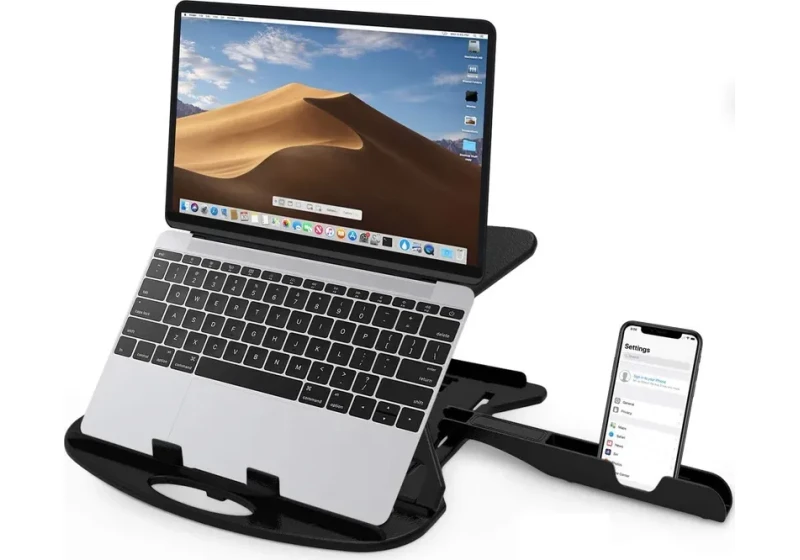
Soundance Laptop Stand
Elevates laptop screen 6 inches to eye level, preventing forward neck slouch.
Paper Clutter: Inbox Tray and Weekly Shred File Sweep
Paper remains the single largest contributor to chaotic desk clutter in professional home offices. Unopened mail, printed invoices, and scratch notes accumulate in layered piles that paralyze productivity.
Stop paper clutter at the room threshold by implementing a strict single inbox protocol. Place one stackable metal or bamboo tray on your secondary shelf perimeter.
Process the paper tray once per week on Friday afternoon using a rapid triage framework. Every sheet must either be shredded, filed, or converted into a digital task.
If a document requires retention, digitize it immediately using a phone document scanner. Save the file to cloud folders and recycle the physical sheet.
For sensitive documents like bank statements and old medical forms, run them through a shredder beside your desk. Purging paper weekly prevents backlog anxiety and keeps flat surfaces immaculate.
Digital Clutter on the Same Desk: Cable Side vs Screen Side
Physical desktop clutter often stems directly from chaotic digital cable routing. Power bricks, display cords, and phone chargers snaking across desktops create visual distraction and consume prime writing territory.
Segregate your workspace into a clean screen side and a concealed cable side. All power delivery, transformer bricks, and excess cord slack must live underneath the desktop plane.
Mounting a heavy steel wire basket or enclosed tray under your desk frame captures cord tangles out of sight. Keep desktop grommets clear for single keyboard and mouse runs.
For step by step routing protocols and surge protector mounting tactics, follow our detailed standing desk cable management guide.
Screen side organization requires equal discipline to prevent digital visual fatigue. Consolidate screen icons into three core project directories or hide desktop icons entirely.
When your physical desk and digital screen both present negative space, task concentration increases dramatically. For room layout boundaries, reference our foundational how to organize office furniture walkthrough.
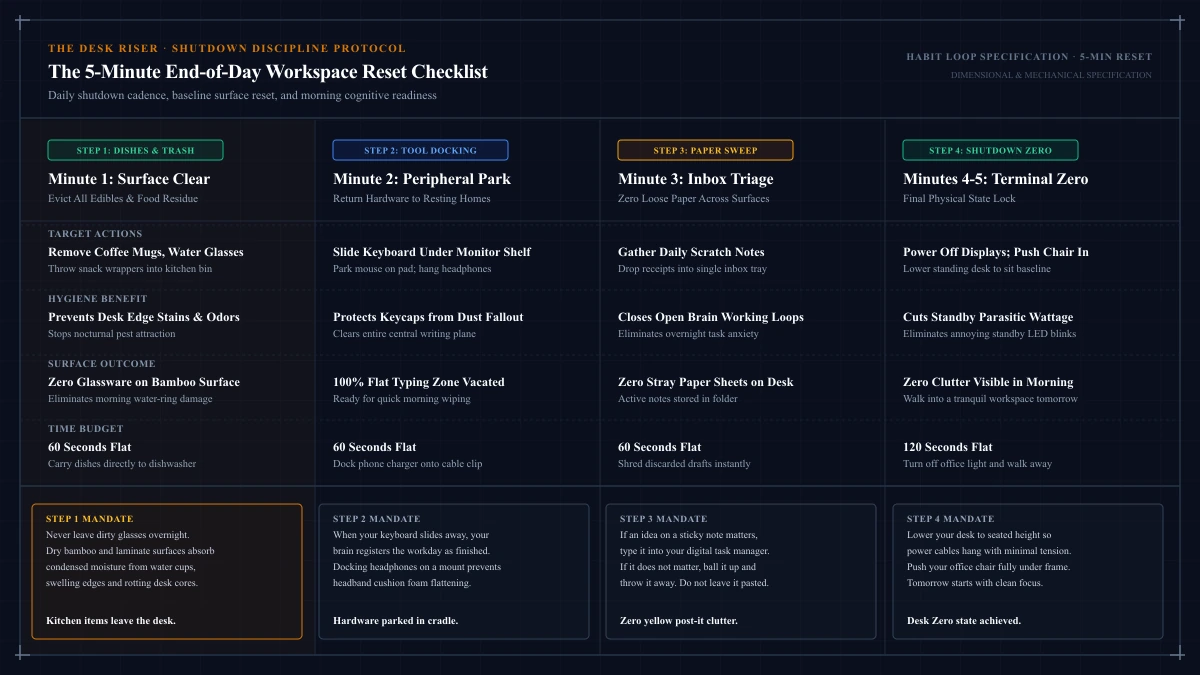
The 5-Minute End-of-Day Reset That Keeps Surfaces Clear
The secret to maintaining clean desk setups over months is building an evening shutdown ritual. Without an end-of-day habit loop, clutter creeps back across your desktop within four working days.
Set a recurring calendar alarm five minutes before your workday ends. Stop typing, stand up, and execute this four step physical reset sequence.
Minute one is dedicated to dishes and trash. Carry used coffee mugs, drinking glasses, and water bottles directly to the kitchen dishwasher.
Minute two focuses on peripheral parking. Slide your split keyboard underneath your monitor shelf to protect mechanical switches from airborne dust.
Park your wireless mouse neatly against the keyboard frame and hang over-ear headphones on an under desk hook. Returning hardware to resting cradles opens up wide spans of bare desktop.
Minute three addresses loose scratch notes. Transfer incomplete action items into your digital project manager and shred discarded drafts.
Minutes four and five secure total shutdown zero. Power down secondary display panels, push your office chair neatly under the frame, and lower your standing desk to seated baseline.
Walking into an immaculate home office tomorrow morning provides an instant burst of mental focus. You sit down to clear surfaces ready for high priority work.
What Not to Buy: Why Organizers Before Purging Equal More Clutter
Office supply retailers aggressively market desktop organizers and acrylic caddies as instant cures for workstation clutter.
Buying desktop organizers before conducting a physical purge is a total trap. Storage caddies take up primary reach space while encouraging you to hoard obsolete pens and paperclips.
Never purchase desktop storage hardware until you have completed two consecutive weeks with an empty desk. Once your daily tool habits stabilize, you will realize you need almost zero desktop caddies.
Invest your office budget in under-desk wire trays, vertical drawer organizers, and monitor arms instead of surface containers. The ideal desk surface contains nothing except the tools you use this hour.
Frequently Asked Questions
How do I stop my desk from becoming messy again?
Stop desk clutter by running a five minute reset every evening. Return tools to drawers, clear glassware to the kitchen, and park your keyboard under a monitor riser.
What should actually be kept on top of a desk?
Only keep items on your desk that you physically touch every working hour. This roster is limited to a monitor, split keyboard, ergonomic mouse, one active notepad, and one pen.
How do I declutter a small desk without drawers?
Mount an aftermarket clamp-on steel drawer beneath the front desk edge and raise your monitor on a desk shelf. Use under-desk cable baskets to lift accessories off the open wood surface.
What should I do with cables cluttering my workspace?
Capture loose power bricks and cords inside a heavy steel under-desk cable tray. Bundle excess cord length with reusable velcro ties and run single drops down an articulated cable spine.
Why do desk organizers make clutter worse?
Desktop organizers occupy prime reach territory while creating receptacles for useless clutter. They encourage workers to keep dead pens, obsolete adapters, and paper scraps instead of discarding them.
Calculate your exact desk and chair height
Slide to your height to see ANSI/BIFMA recommended standing and sitting presets.
Written by M. Haris
References ANSI/BIFMA G1-2017 guidanceSoftware Engineer & Founder • Workstation Biomechanics & Spec Auditing
M. Haris is a software engineer and founder of The Desk Riser, auditing manufacturer engineering schematics, motorized desk cycle lifespans, ANSI/BIFMA G1-2017 ergonomic standards, and long-term user failure patterns across verified owner communities. Every guide is editorially independent with zero paid brand placements and zero PR samples (we may earn affiliate commissions on qualifying purchases). Have questions or spot a warranty update? Email directly at support@thedeskriser.com, read the Author Dossier, or explore our Editorial Research Methodology.
Share this article:
Workstation Setup & Fit Q&A
Have questions about frame deflection, monitor arm clamp loads, or chair sizing? Consult our workstation researchers.
Q:How do I know if this standing desk will wobble on thick carpet?
Standing desk wobble on carpet is caused by uneven carpet pile compression under the rear footpads. Frames with wedge-reinforced leg collars and wide steel footplates (like UPLIFT V3 or FlexiSpot E7 Pro) minimize lateral flex. If placing on plush carpet, use rigid caster cups or a dense underlay to anchor the base directly to the subfloor.
Q:Can I clamp a dual monitor arm onto standard particleboard tops?
Dual monitor arms concentrate 25 to 45 lbs of dynamic torque onto a 4-inch clamp perimeter. Hollow honeycomb tops (such as IKEA Linnmon) will crush. We recommend a minimum 0.75-inch solid core (MDF, solid bamboo, or hardwood), or sandwiching a steel reinforcement bracket plate (min 2.5mm thickness) between the clamp and desktop.
Q:What if my chair cylinder sinks or feels too high for my feet?
Always verify your seated popliteal height (crease behind knee to floor with shoes). If a chair will not drop below 17 inches and your feet dangle, pair it with an angled footrest or switch to a low-range Class 4 cylinder. If a cylinder loses pressure and sinks on its own, the internal nitrogen seal is breached and requires cylinder replacement.
Ask Our Ergonomic Spec Reviewers
Planning an upgrade or unsure if your monitors and stature fit this configuration? Send your dimensions directly to our research desk. No accounts, no trackers, zero marketing spam.
Free Workstation Tools
Related Home Office Setup Guides & Reviews
How to Light Your Desk (2026): A Step-by-Step Setup Guide
Under Desk Hammock (2026): Footrest Sling vs Storage Hammock
Best Minimalist Computer Tables for Clean Home Offices (2026)
Best Under Desk Heaters: Safe Low-Watt Office Warmth (2026)