Why Do So Many Office Chairs Have Fixed Arms?

For Why Do So Many Office Chairs Have Fixed Arms?, our top recommendation is the Rollerblade Chair Caster Wheels (5pk), while the Memory Foam Lumbar Support Pillow offers the strongest value for budget-conscious workstations. Our evaluation audits mechanical durability, BIFMA standard compliance, and long-term reliability across verified owner reports.
Sacral L5-S1 unloading & forward tilt evaluated
2" minimum knee crease clearance to safeguard bloodflow
ANSI/BIFMA X5.1 commercial cylinder durability verified

Chair Shortlist Criteria
Filters models by seat pan depth adjustment, lumbar mechanism adjustability, BIFMA weight ratings, and documented owner friction. Methodology →
Last Spec & Pricing Audit
. Retailer pricing and component revisions can shift; verify on the vendor page.
Fit & Return Guardrail
Verify seat height range against your lower leg length and check return shipping terms before ordering boxed chairs.
Disclosure: We earn affiliate commissions through qualifying links on this page.
Walk through any office furniture store, and you will notice a familiar pattern. A large proportion of computer chairs feature rigid armrests bolted to the frame.
If you have tried sliding a chair under a shallow desk only to strike the apron, you know the frustration. Typing for hours with shrugged shoulders causes severe trapezius fatigue.
So why do so many office chairs have fixed arms when adjustable components offer superior ergonomic support?
Understanding the underlying engineering and procurement motives clarifies why these chairs dominate showrooms and whether one fits your posture.
Why Do So Many Office Chairs Have Fixed Arms: Manufacturing Economics and Corporate Fleet Needs
Find your optimal seating match with our interactive ergonomic chair finder.
Office chairs feature fixed arms primarily because molded loop designs cut manufacturing costs and eliminate mechanical failure points.
Corporate facility managers also prioritize fixed arms for open-office visual symmetry and zero-maintenance durability in high-turnover conference rooms.
1. Manufacturing Economics and Production Costs
The primary reason fixed arms remain common on entry level seating is manufacturing cost. Adding multi-directional adjustment to an armrest requires an intricate mechanical architecture.
A fixed loop armrest is typically a single continuous piece of molded polypropylene or cast aluminum. It attaches to the chair frame with standard machine screws, requiring zero internal moving parts.
This mechanical simplicity minimizes assembly labor, eliminates complex tooling investments, and reduces warranty failure rates. In contrast, fully adjustable 4D armrests require multi-stage internal steel ratchets, slide channels, and detent bearings.
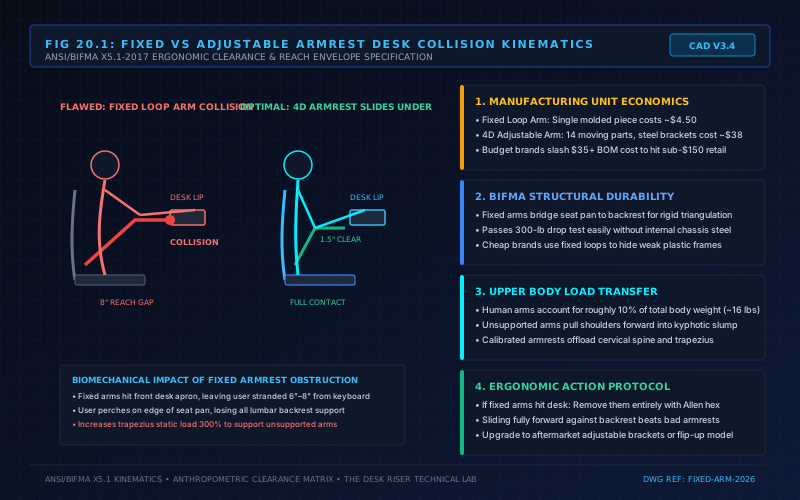
Tooling precision sliding components adds substantial expense to the bill of materials. Replacing a fixed loop arm with a multi-axis assembly easily doubles armrest production cost.
For budget task chairs under two hundred dollars, fixed arms keep retail prices competitive while delivering basic forearm support.
2. Structural Simplicity and long term Durability
Moving mechanical components introduce wear points over time. In commercial offices, adjustable armrests experience heavy daily torque.
Users push down on arm pads to lever themselves out of the seat. Repeated lateral torque causes internal ratchets to slip and uprights to wobble.
Fixed loop arms eliminate moving parts entirely. Many fixed designs connect both to the underside of the seat pan and the lower spine of the backrest.
This configuration forms a rigid structural triangle. The armrest reinforces the frame, reducing flex and extending chair longevity.
3. Bulk Corporate Procurement and Facility Standards
Corporate facility teams buy furniture in bulk for commercial spaces, operating under priorities that differ from home offices.
Corporate buyers focus on budget constraints and visual uniformity across open-plan floors. They also prioritize minimizing maintenance tickets.
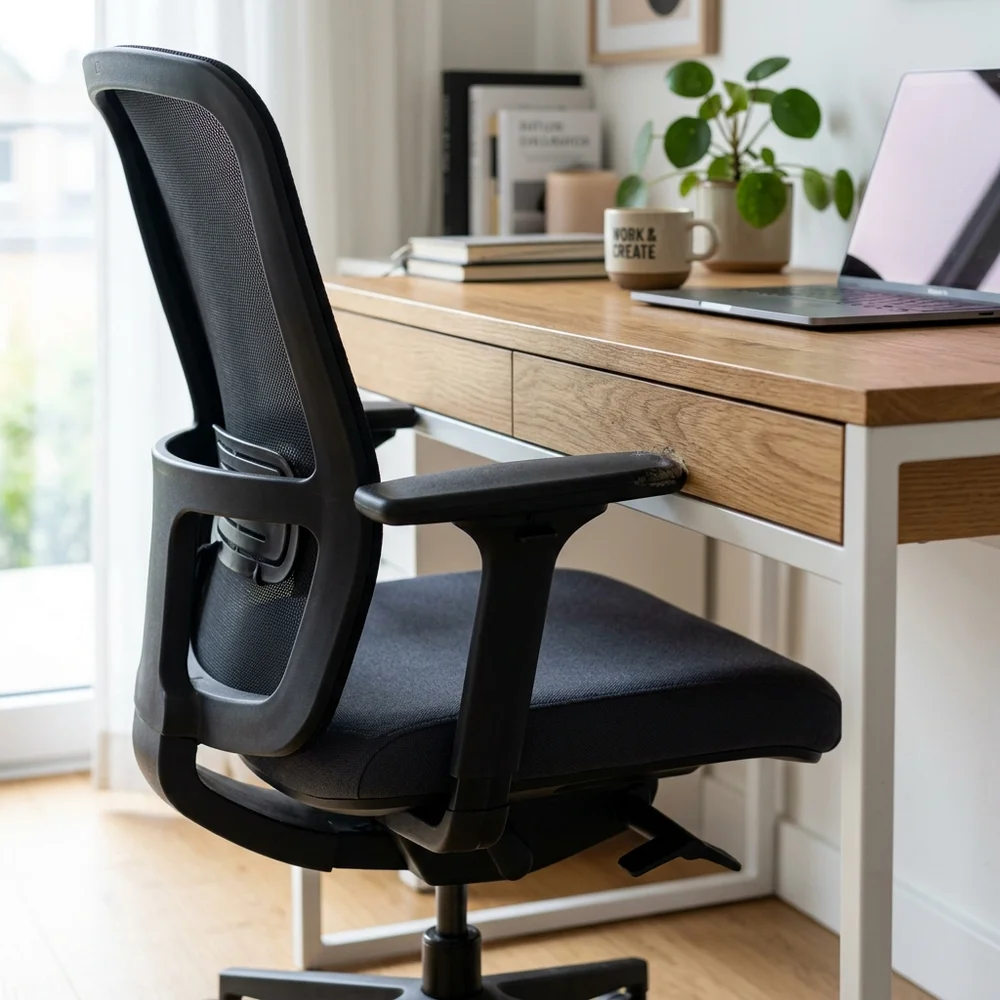
In conference rooms, individuals rarely sit for over two hours. Fixed-arm chairs offer durable, zero-maintenance seating for short meetings.
Mainstream review sites like Wirecutter and RTINGS often test office chairs in isolation within wide open studio spaces. They evaluate seat cushioning while ignoring real world workstation clearances.
In an actual office, a fixed loop armrest frequently collides with standard 29 inch desk aprons.
This collision leaves an 8 inch gap between you and your keyboard, forcing awkward spinal flexion that studio reviews miss entirely.
Recommended ergonomic accessories and hardware specs
Workstation accessories selected to support healthy ergonomics, joints, and cable routing.
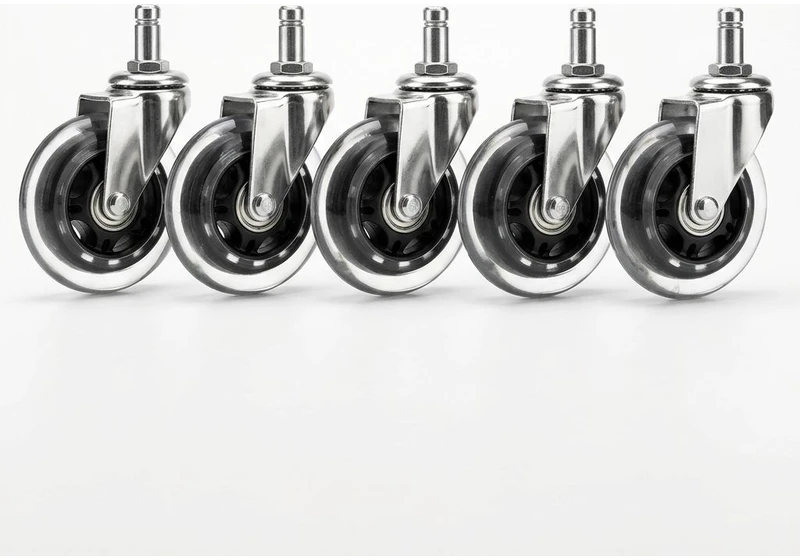
Rollerblade Chair Caster Wheels (5pk)
Heavy-duty polyurethane wheels glide smoothly on hardwood floors without plastic floor mats.
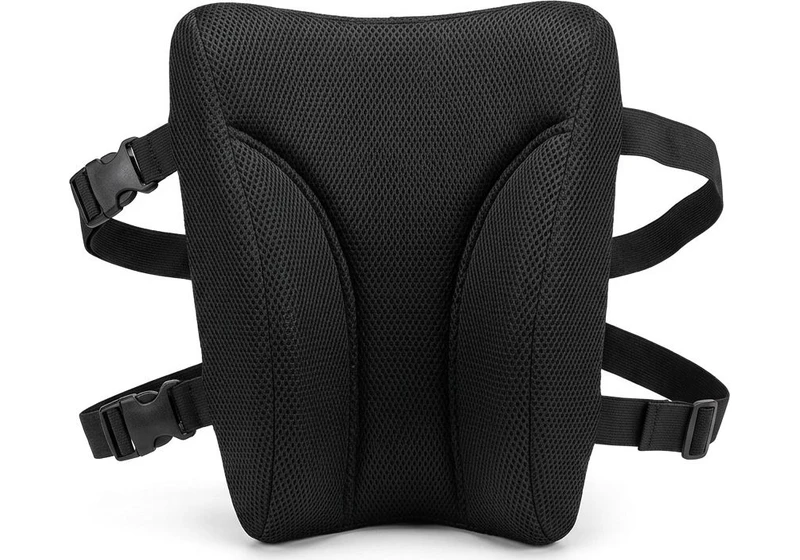
Memory Foam Lumbar Support Pillow
Contoured high-density foam with dual adjustable straps fills lumbar gap on firm office chairs.
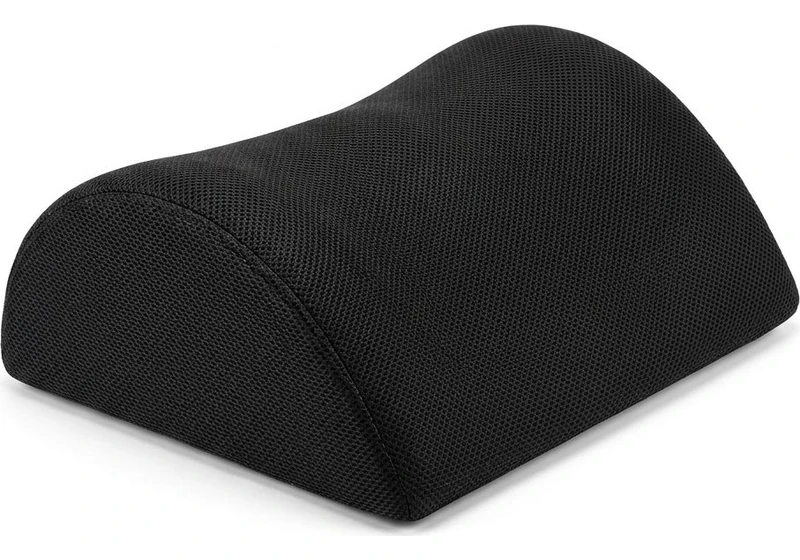
Ergonomic Teardrop Desk Footrest
Elevates feet 5 inches to reduce posterior thigh compression and improve pelvic posture when seated.
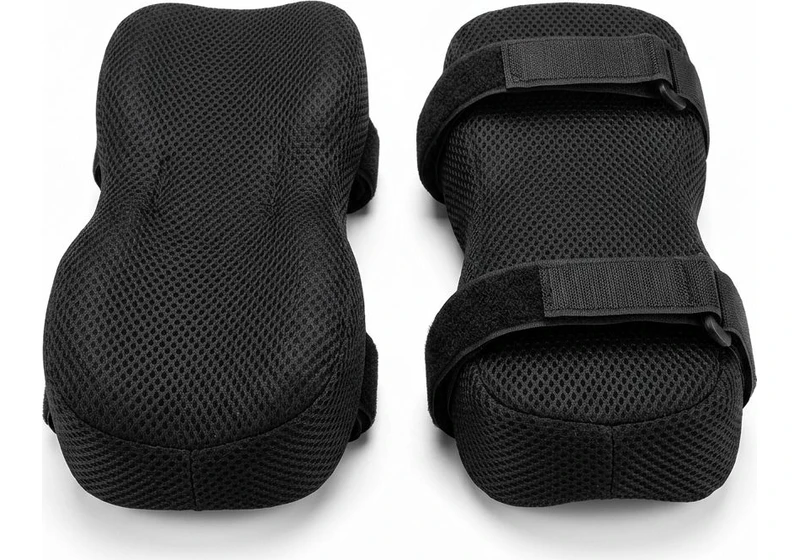
Contoured Chair Armrest Pads (Pair)
Thick memory foam cushions relieve elbow and forearm pressure points during 8+ hour workdays.
4. Architectural Lines and Aesthetic Continuity
Not all chairs with fixed arms are budget models. high end executive seating, classic conference chairs, and mid-century modern designs frequently feature fixed armrests by artistic design.
In designs like the Eames Aluminum Group chair, sculpted metal loop arms define the silhouette. Replacing integrated contours with adjustable plastic columns would compromise aesthetic lines.
In boardrooms, visual elegance balances against adjustability. Designers prioritize clean lines over mechanical levers.
Fixed Arms vs. Adjustable Arms: Specification Matrix
To evaluate how each armrest style aligns with your daily tasks, compare their key functional characteristics across common engineering considerations.
| Design Parameter | Fixed Office Chair Arms | Fully Adjustable (3D / 4D) Arms | Primary Ergonomic Impact |
|---|---|---|---|
| Mechanical Architecture | Single-piece molded loop or cast brace | Multi-stage internal ratchets and sliders | Moving parts introduce eventual play under high load |
| Anthropometric Fit | Fixed to single 50th-percentile dimension | Adapts across 5th to 95th percentile statures | Prevents trapezius shrugging across diverse body sizes |
| Desk Apron Clearance | Fixed height (often 26 to 28 inches from floor) | Drops down to 22 inches to slide under aprons | Eliminates forward reach gaps and keeps lumbar contact |
| Common Use Case | Conference rooms, boardrooms, waiting areas | Dedicated 8 hour computer workstations | Fixed arms suit short meetings; adjustable arms suit typing |
The Ergonomic Consequences of Fixed Armrests
While fixed arms offer durability, they introduce ergonomic compromises during full day typing. The human body does not conform to a single universal size.
ANSI/BIFMA G1:2017 guidelines recommend seating adapt to diverse body sizes. Because fixed armrests sit at a predetermined height, they cannot accommodate varying torso lengths.
Shoulder Shrugging and Trapezius Fatigue
To maintain neutral posture, your shoulders should rest comfortably while your forearms receive gentle support at a ninety degree elbow angle.
If a fixed armrest sits higher than your natural resting elbow plane, it pushes your forearms upward.
This position forces your shoulders into a continuous shrug, creating static upper trapezius tension and chronic neck stiffness.

Elbow Splaying and Cubital Tunnel Pressure
Fixed armrests sit at fixed widths, typically twenty to twenty two inches apart. For narrower frames, this spacing is excessively wide.
To use the armrests, users must splay their elbows outward. This outward flare forces awkward wrist angles relative to the keyboard and concentrated contact pressure over the ulnar nerve.
Desk Clearance Obstruction and Spinal Flexion
A frequent practical issue with fixed arms is desk interference. Many standard desks sit between twenty-nine and thirty inches high with an under desk frame or apron.
Fixed armrests measure twenty six to twenty eight inches, colliding with desks and creating an 8 inch gap that forces slouching and abandons lumbar support.
Practical Workarounds for Chairs with Fixed Arms
If your current chair features fixed arms, several practical adjustments can improve your workstation posture before you invest in a replacement.
Remove the Armrests Entirely
On many task chairs, fixed arms bolt to the seat underside with standard machine screws. Removing the bolts with a hex key allows you to detach the arm assemblies cleanly.
Working in an armless configuration allows you to pull close to your desk, keeping your spine supported against the backrest.
Review our guide on how to make an office chair more comfortable for zero cost positioning tips.
Use add on Contoured Armrest Pads
If your fixed armrests sit slightly too low, your elbows hover without support. Outfitting your chair with contoured memory foam armrest pads bridges height gaps over factory plastic caps.
high density foam pads add one to two inches of height and provide soft cushioning that relieves localized elbow pressure.
Swap for Universal Adjustable Armrests
If your chair base features standard slotted bottom mounting holes, you can replace rigid brackets with universal 3D adjustable replacement armrests. Measure your chair bolt spacing before ordering to confirm plate compatibility.
Adjustable replacement arms allow you to lower arm pads below desk aprons and align forearm support with your elbows.
Adjust Workstation Height Relationships
If fixed armrests collide with your desk edge, you can adjust workstation height relationships. Installing an articulating clamp on keyboard tray positions your typing surface below armrest height.
Alternatively, raise the chair so armrests clear the desktop surface, and place an adjustable footrest beneath your feet.
Our detailed desk footrest buying guide explains how to calibrate foot platforms when raising a chair.
Pair your workstation with our ergonomic desk and chair calculator for exact measurements.
For flexible clearance, consider an office chair with flip up arms or explore our top rated best ergonomic office chairs.
Frequently Asked Questions (FAQ)
Are office chairs with fixed arms bad for your posture?
Fixed arms compromise posture if their factory height mismatches your natural elbow plane. When armrests force shoulder shrugging or block desk clearance, you lean forward and strain spinal discs.
Can you remove fixed arms from an office chair?
Yes, most fixed arms attach to the seat underside with standard machine screws. Removing those screws with a hex wrench detaches the armrests without affecting structural stability.
Why do conference room chairs frequently feature fixed arms?
Conference chairs serve short meetings that rarely exceed two hours. Facility managers select fixed arms because they provide durable seating with zero maintenance tickets and consistent aesthetics.
What is the proper armrest height for computer work?
Armrests should align with your resting elbow height when shoulders are relaxed. Forearms should rest parallel to the floor at a ninety degree elbow angle without shoulder shrugging.
Can you replace fixed arms with adjustable arms on an existing chair?
Chairs with standard bottom mounting slots can accept universal adjustable arm kits. Check your under seat bolt patterns and spacing before ordering aftermarket replacements.
Sources & Ergonomic Literature
ANSI/BIFMA G1:2017: Ergonomics Guideline for Furniture Used in Office Spaces Featuring Computer Workstations (Section 5: Armrest Height and Width Recommendations).
OSHA Computer Workstations eTool: Components and Posture Guidance (United States Department of Labor Occupational Safety and Health Administration).
Grandjean, E., et al. (1983): VDT Workstation Design: Preferred Settings and Physical Discomfort. Applied Ergonomics, 14(2), 99-104. (Forearm support and posture in seated computer operators).
Chaffin, D. B., Andersson, G. B., & Martin, B. J. (2006): Occupational Biomechanics (4th ed.). John Wiley & Sons. (Analysis of seated upper extremity support and shoulder girdle loading).
Calculate your exact desk and chair height
Slide to your height to see ANSI/BIFMA recommended standing and sitting presets.
By M. Haris
References ANSI/BIFMA G1-2017 guidanceSoftware engineer and founder of The Desk Riser
M. Haris is a software engineer and founder of The Desk Riser, auditing manufacturer engineering schematics, motorized desk cycle lifespans, ANSI/BIFMA G1-2017 ergonomic standards, and long-term user failure patterns across verified owner communities. Every guide is editorially independent with zero paid brand placements and zero PR samples (we may earn affiliate commissions on qualifying purchases). Have questions or spot a warranty update? Email directly at support@thedeskriser.com, read the Author Dossier, or explore our Editorial Research Methodology.
Share this article:
Workstation Setup & Fit Q&A
Have questions about frame deflection, monitor arm clamp loads, or chair sizing? Consult our workstation researchers.
Q:How do I know if this standing desk will wobble on thick carpet?
Standing desk wobble on carpet is caused by uneven carpet pile compression under the rear footpads. Frames with wedge-reinforced leg collars and wide steel footplates (like UPLIFT V3 or FlexiSpot E7 Pro) minimize lateral flex. If placing on plush carpet, use rigid caster cups or a dense underlay to anchor the base directly to the subfloor.
Q:Can I clamp a dual monitor arm onto standard particleboard tops?
Dual monitor arms concentrate 25 to 45 lbs of dynamic torque onto a 4-inch clamp perimeter. Hollow honeycomb tops (such as IKEA Linnmon) will crush. We recommend a minimum 0.75-inch solid core (MDF, solid bamboo, or hardwood), or sandwiching a steel reinforcement bracket plate (min 2.5mm thickness) between the clamp and desktop.
Q:What if my chair cylinder sinks or feels too high for my feet?
Always verify your seated popliteal height (crease behind knee to floor with shoes). If a chair will not drop below 17 inches and your feet dangle, pair it with an angled footrest or switch to a low-range Class 4 cylinder. If a cylinder loses pressure and sinks on its own, the internal nitrogen seal is breached and requires cylinder replacement.
Ask Our Ergonomic Spec Reviewers
Planning an upgrade or unsure if your monitors and stature fit this configuration? Send your dimensions directly to our research desk. No accounts, no trackers, zero marketing spam.