Footrest for Desk 2026: Do You Actually Need One?
Published 2026-08-23
How we researched
We compare current specs, warranty terms, buyer complaints, and long-term owner patterns. No fake hands-on claims.
Last price/spec check
2026-08-23. Prices move, so use the retailer page as the final source.
Who should skip this
Skip anything that does not fit your body, room, budget, or return-window comfort level.
Disclosure: We earn a commission if you buy through links on this page, at no extra cost to you.
A footrest is the right fix for some setups and a band-aid for others, and almost nothing you'll find on this tells you which one applies to you. Here's the actual distinction: if your desk is a fixed height and you're short enough that your feet don't reach the floor once your chair is raised to keyboard height, a footrest is often the only practical fix. If you have a height-adjustable or standing desk and your feet don't reach the floor in the seated position, check your sit-height preset before buying anything.
Quick picks
| Footrest | Price | Type | Best For |
|---|---|---|---|
| Mind Reader Tilt Adjustable | $37.99 | Tilting platform | Budget |
| Kensington SoleSaver | $51.59 | Tilt adjustable | Best overall |
| Kensington SmartFit Solemate Plus | $79.99 | Tilt adjustable, premium | Long daily use |
The Root Cause Question First
Skip the research? Our top picks are below.
See picksIf you're on a fixed-height desk, the math is simple: raise the chair to get your elbows level with the keyboard, and if that leaves your feet dangling, a footrest is the fix. There's no cheaper alternative that doesn't involve replacing the desk.
If you're on a height-adjustable desk or a standing desk with a seated mode, check whether you've actually set and saved a proper sit-height preset. A footrest bought to cover for a desk that's still set too high for sitting is treating a symptom instead of the setup problem. Our standing desk posture guide covers how to set that preset correctly.
What a Footrest Actually Does
Beyond the height-mismatch case, sustained static sitting reduces the calf muscle's normal pumping action, which affects circulation over a long day. Rocking or tilting footrests are built around keeping your ankles moving periodically rather than locking your feet in one flat position for hours.
There's also a posture mechanism worth knowing: Cornell University's ergonomics research notes that proper foot support makes it physically easier to sit back into your chair's backrest, rather than perching forward without back support. That's a different benefit than the height-mismatch fix, and it's why some people with feet that do reach the floor still find a footrest useful.
Best Overall: Kensington SoleSaver ($51.59)
(Verified against a live Staples listing, August 2026.)
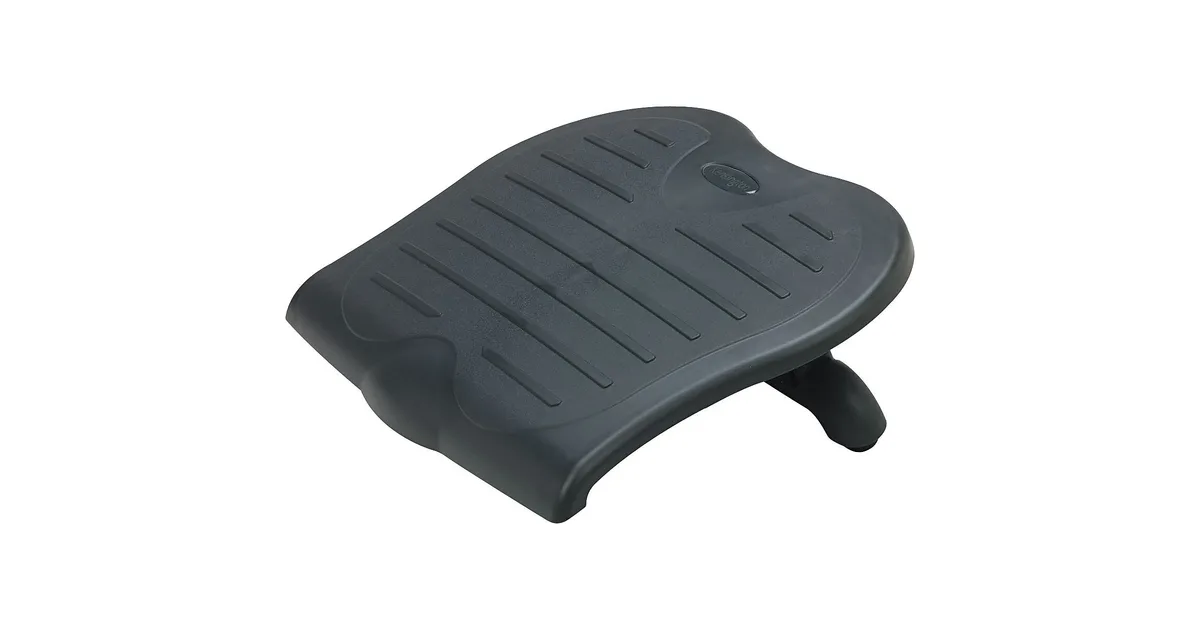
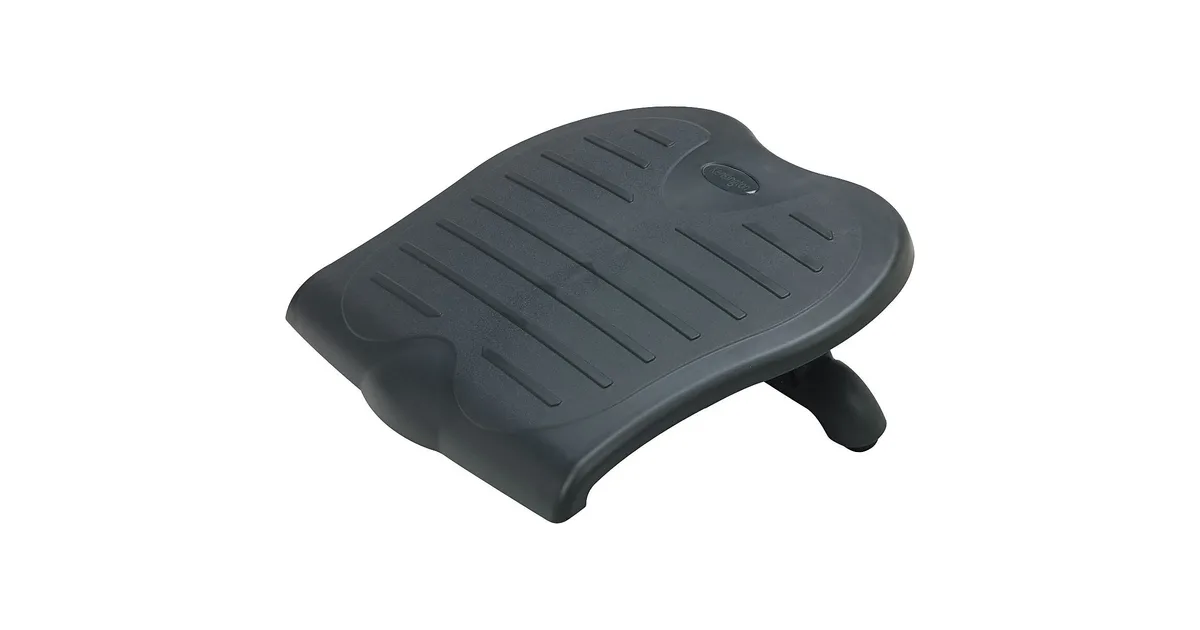
A tilt-adjustable platform from Kensington's ergonomics line, the same brand behind the wrist rests and monitor stands we've verified elsewhere on this site. Straightforward design: a flat platform that tilts to let you shift ankle angle periodically rather than holding one fixed position.
What you give up: No rocking mechanism for active movement. If circulation and continuous ankle motion matter more to you than a simple tilt, look at a rocking-style footrest instead.
Budget Pick: Mind Reader Tilt Adjustable Footrest ($37.99)
(Verified against a live Staples listing, August 2026, 208 reviews at time of check.)
The most-reviewed footrest in this comparison by a wide margin, at the lowest price. Same tilting-platform design as the Kensington above, without the brand's ergonomics-line pedigree.
What you give up: Less established brand track record than Kensington specifically for ergonomic accessories, though the review volume here is a real, independently verifiable signal.
Premium Pick: Kensington SmartFit Solemate Plus ($79.99)
(Verified against a live Staples listing, August 2026.)
The step-up version in Kensington's own lineup, built for daily, all-day use rather than occasional adjustment. If you're planning to use a footrest every workday for years, the "Plus" designation reflects a sturdier build than the base SoleSaver.
What you give up: Double the price of the Mind Reader for a functionally similar tilt mechanism. The upgrade is build quality and expected longevity, not a different core function.
Static Platform, Tilting, or Rocking: What's the Difference
Static platform: A flat surface at a fixed angle. Cheapest, simplest, least adjustable.
Tilting: All three picks above. The platform rocks between two angle positions, letting you shift periodically without a continuous rocking motion.
Rocking/massage style: A rounded or textured base that keeps your feet in gentle continuous motion rather than resting in one position. Better suited to circulation concerns than a simple height mismatch, and typically the most expensive style.
Getting the Height Right
The general standard for footrest height comes down to matching your popliteal height, the distance from the back of your knee to the floor, once your chair is set correctly for keyboard height. Most adjustable footrests cover a 3 to 6 inch range, which fits most adults. If you need more than 6 inches of lift, the mismatch between your desk and your body is large enough that a footrest alone may not fully solve it, and it's worth reconsidering desk height before buying.
Footrest or Footring?
A footring is a different product: a ring that mounts directly to a tall chair or drafting stool, common on bar-height seating rather than standard desk chairs. If you're searching for something to rest your feet on at a standard desk height, you want a freestanding footrest, not a footring.
Barefoot or With Shoes?
Foam-topped footrests compress and wear faster under regular shoe use than under bare or socked feet. If you'll be using yours with shoes on most of the day, a firmer platform surface holds up longer than a soft foam top.
When a Footrest Isn't the Right Fix
Height-adjustable desk set too high for sitting. Fix the sit-height preset first. A footrest here is compensating for a setup step that was skipped, not solving an unavoidable mismatch.
Seat pan too long for your legs. If your knees can't bend comfortably at the front edge of your seat, that's a chair-fit problem. Our guide for shorter users covers chairs sized for shorter leg length specifically.
Expecting it to fix back pain on its own. A footrest supports foot and leg position. It doesn't address lumbar support, monitor height, or forward head posture. Those need their own fixes.
A large height mismatch. If you need more lift than a standard footrest's 3 to 6 inch range provides, the underlying desk height is the problem to solve, not the footrest.
FAQ
Do I need a footrest if my chair adjusts low enough to reach the floor?
No. If your chair can be set low enough that your feet rest flat on the floor while your elbows are still at keyboard height, you don't need a footrest. It solves a mismatch, not a universal requirement.
Should my feet rest flat on the footrest, or is some movement fine?
Some periodic movement is fine and often preferable to a completely static position. Tilting and rocking-style footrests are specifically designed to allow that movement rather than lock your feet in one spot.
Rocking or static footrest, which is actually better?
Static and tilting footrests suit a straightforward height mismatch. Rocking styles suit people specifically prioritizing circulation and continuous ankle movement through the day. Neither is universally better, they solve slightly different problems.
Do standing desk users need a footrest?
Only in the seated position, and only if the desk's sit-height preset still leaves your feet unsupported. Check that setting before assuming you need a footrest.
What's the right footrest height and angle for my setup?
Set it so your knee is at roughly a 90-degree angle with your foot flat on the platform, once your chair itself is correctly set for keyboard height. Most adjustable footrests give you a 3 to 6 inch range to dial that in.
Footrest or footring, what's the difference?
A footring mounts to a tall chair or stool. A footrest sits freestanding on the floor at a standard desk. Most searches for "footrest for desk" want the freestanding type.
Can a footrest fix back pain?
Not directly. It supports foot and leg position, which can make it easier to sit back into your chair's backrest, but it doesn't address lumbar support or monitor height on its own.
Bottom Line
The Kensington SoleSaver is the right default: an established ergonomics brand, a straightforward tilting design, and a mid-range price. The Mind Reader is the pick if budget is the deciding factor and the strong review count gives you confidence. The SmartFit Solemate Plus is worth the extra cost if you're using it every day for years, not occasionally.
Before buying any of them, confirm the actual problem is desk or chair height you can't otherwise fix, not a standing desk preset you haven't set correctly yet.
The Desk Riser Research Team
Standing Desk & Home Office Researchers
We research standing desks, ergonomic chairs, and home office gear by analyzing manufacturer specs, warranty terms, and real owner review patterns across thousands of purchases. No sponsored placements. No fake hands-on claims.
Share this article:
Comments
Have a question or want to share your setup? Leave a comment below.