Best Lumbar Support Pillow for Office Chair 2026
Published 2026-08-23
How we researched
We compare current specs, warranty terms, buyer complaints, and long-term owner patterns. No fake hands-on claims.
Last price/spec check
2026-08-23. Prices move, so use the retailer page as the final source.
Who should skip this
Skip anything that does not fit your body, room, budget, or return-window comfort level.
Disclosure: We earn a commission if you buy through links on this page, at no extra cost to you.
Most lumbar pillow reviews tell you which foam feels softest and skip the part that actually matters: where you put it. Get the placement wrong and a $70 pillow does less than a rolled-up towel positioned correctly.
This is the add-on fix, not the replace-your-chair fix. If your current chair has no adjustable lumbar support at all and you're not sure a pillow will be enough, our guide to ergonomic chairs for back pain covers when the chair itself is the real problem.
Quick picks
| Pillow | Price | Material | Best For |
|---|---|---|---|
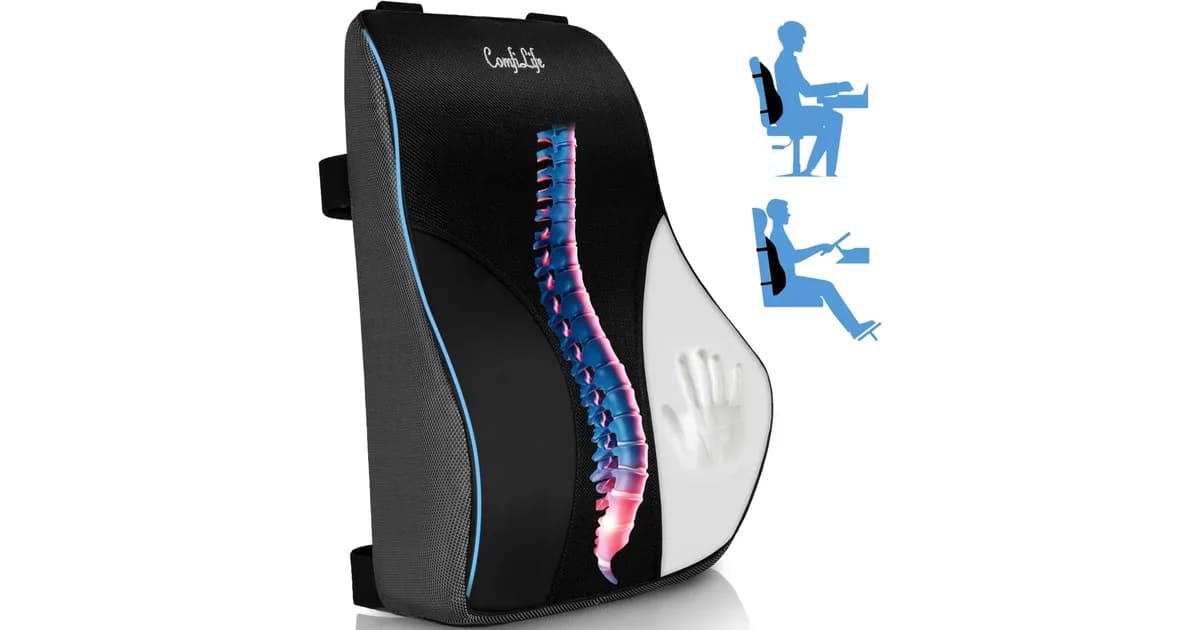
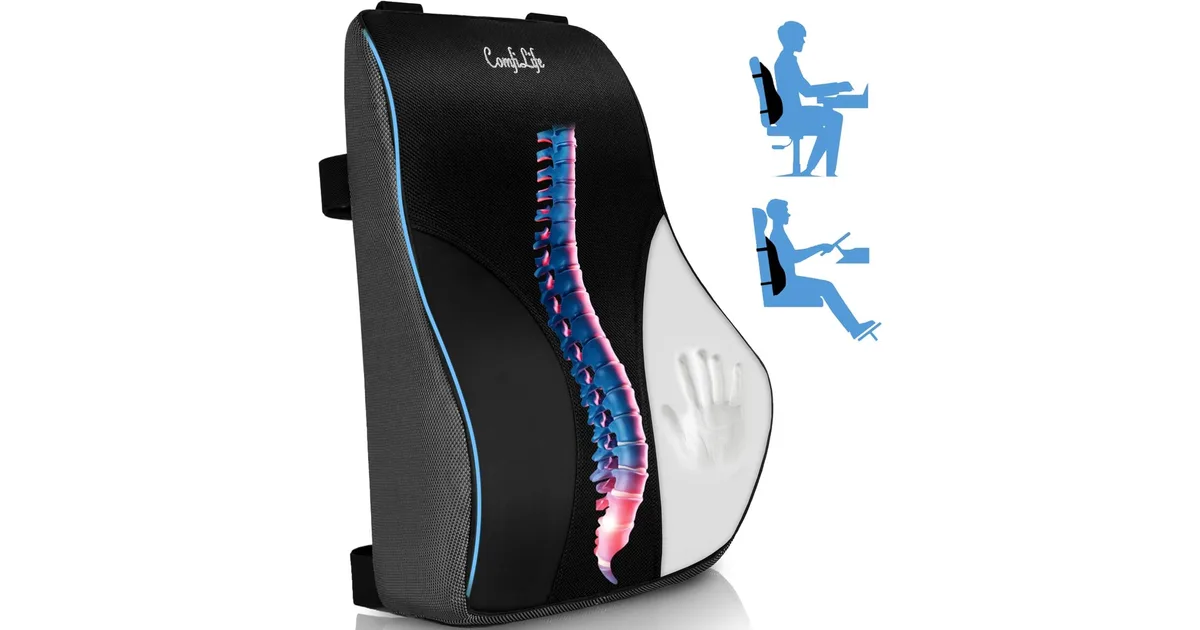
| ComfiLife Lumbar Support | $29.95 | Memory foam, mesh cover | Best overall value |
| Cushion Lab Back Relief | $69 | HyperFoam, gel-lined strap | Premium, most chair types |
| OPTP Original McKenzie Roll | $24.15 to $26.15 | Firm foam roll | Clinical, most precise placement |
Where It Actually Goes (This Is the Part Most Reviews Skip)
Skip the research? Our top picks are below.
See picksTwo independent sources converge on the same range: a lumbar pillow belongs roughly 6 to 8 inches above the compressed seat surface, at belt-line height. One study found a preferred average around 7.5 inches. A separate paper on seated lumbar posture found men and women preferred slightly different heights on average, which is itself evidence that no single "correct" spot works for everyone.
Start at belt height and adjust from there.
The two placement mistakes that show up across the research and owner reviews: too high, where it rides toward your mid-back and shoulders and can actually encourage slouching, and too low, where it sits at your tailbone and pushes your pelvis the wrong way. If a pillow isn't helping, check placement before assuming the product doesn't work.
What the Research Actually Shows
A 2013 study out of the Canadian Memorial Chiropractic College (published in Chiropractic & Manual Therapies) tested a contoured lumbar pillow against a standard chair with 28 participants. The pillow measurably improved lower-back curve and pressure distribution. It also caused a small compensatory shift in the participants' mid-back curve, and didn't produce a statistically significant improvement in how comfortable people said they felt.
That's the honest version: it does something measurable to your posture. Whether you'll consciously feel that benefit is a separate question the research doesn't fully answer. We're not aware of a study claiming a lumbar pillow eliminates back pain, and you should be skeptical of any product that claims one.
Best Overall Value: ComfiLife Lumbar Support Pillow ($29.95)
(Verified against ComfiLife's live product listing, August 2026.)
Memory foam core with a leatherette and mesh cover, a 3-strap design meant to fit most office chairs, car seats, and wheelchairs. Straightforward, no gimmicks, and priced low enough that trying it isn't a real financial commitment.
What you give up: ComfiLife's own product listing notes the strap system may not fit some deeply contoured seats, large office chairs, or car seats with unusual bolstering. Measure your chair's backrest curve before ordering if it's an unusual shape.
Premium Pick: Cushion Lab Back Relief Lumbar Pillow ($69, regularly $79)
(Verified against Cushion Lab's live product listing, August 2026.)
Denser HyperFoam that holds its shape longer under daily use than standard memory foam, with a gel-lined strap designed to grip more securely across a wider range of chair shapes, including sofas and recliners, not just office chairs.
What you give up: More than double the price of the ComfiLife for a firmer, longer-lasting foam and a better strap grip. If your chair already fits a standard strap fine, you're paying for durability more than a functional difference.
Clinical Pick: OPTP Original McKenzie Lumbar Roll ($24.15 to $26.15)
(Verified against OPTP's live product listing, August 2026.)
A firm cylindrical foam roll, not a contoured cushion, based on physical therapist Robin McKenzie's original design. Systematic reviews of the McKenzie method describe its effect on acute low back pain as real but small, and the evidence for chronic pain is more limited. We're not overselling this as a cure. It's a legitimately different shape than the contoured pillows above, and its firmness makes placement easier to feel and adjust than a soft memory foam pillow.
What you give up: Firmer than most people expect on first use. If you want plush comfort, this isn't it. The 1.5-inch elastic strap is simpler than the multi-point straps on the pillows above, which means less adjustability but also less to go wrong.
Material Comparison
Memory foam (ComfiLife): softens with body heat, contours to your back, most common and least expensive material in this category.
Dense foam (Cushion Lab's HyperFoam): holds its shape under sustained pressure better than standard memory foam, costs more.
Firm foam roll (OPTP): doesn't contour at all, relies on a fixed cylindrical shape rather than conforming to your back. Easiest to feel exact placement, least "plush."
Mesh-back: worth clarifying since it's sometimes marketed as its own category. Every product we checked uses mesh only as a breathable cover fabric over foam, not as a structural support material on its own. If a listing implies mesh alone provides support, that's marketing language, not a real structural difference.
When a Pillow Isn't the Right Fix
Your seat is too deep. If your thighs already can't reach the backrest without your knees bending past 90 degrees, adding a pillow doesn't change that. That's a seat-depth problem, not a lumbar-support problem.
Your chair already has real adjustable lumbar support. If you own a chair with a working dynamic lumbar mechanism, a pillow is likely redundant. Save the money. Our how to fix back pain from sitting at a desk guide covers the full range of fixes, including when the chair itself needs to change.
Soft, overstuffed backrests. Sofas, recliners, and plush dining chairs don't always give the strap enough firm surface to cinch against. Check reviews for your specific furniture type before ordering.
Asymmetric spinal conditions. A symmetric pillow can't match an asymmetric spinal curve. If you have a diagnosed condition like scoliosis, talk to a professional about a fitted solution instead of a generic product.
FAQ
Do lumbar support pillows actually work?
Research shows they produce a measurable change in seated posture and pressure distribution. Whether that translates to noticeably less pain varies by person, and the evidence for a large comfort improvement is more limited than most product marketing suggests.
Where exactly should a lumbar pillow sit on your back?
Roughly 6 to 8 inches above the seat surface, at belt-line height, based on published research on preferred lumbar support placement. Start there and adjust based on what actually feels supportive for your body.
Can a lumbar pillow make back pain worse?
Placed too high, it can push you into positions that encourage slouching. Placed too low, it can push your pelvis the wrong way. Correct placement matters more than which specific product you buy.
Memory foam or firm foam roll, which is better?
Memory foam contours and feels plusher. A firm roll like the OPTP holds a fixed shape and can make correct placement easier to identify by feel. Neither is objectively better, it depends on whether you want contouring comfort or precise, consistent support.
Do I need a lumbar pillow if my chair already has lumbar support?
Probably not, if the built-in support actually works for your body. A pillow is meant to add support to a chair that lacks it, not stack on top of a chair that already has real adjustable lumbar support.
Will a lumbar pillow fit a car seat, gaming chair, or recliner?
Most strap-based pillows are designed to fit multiple seat types, but soft or heavily contoured backrests can make the strap harder to secure. Check the specific product's fit notes before ordering for anything other than a standard office chair.
Bottom Line
The ComfiLife is the right starting point for most people: real memory foam, a functional strap system, and a low enough price that trying it isn't a real commitment. The Cushion Lab is worth the upgrade if you want denser foam that holds up longer or a chair shape the basic strap doesn't grip well. The OPTP is for anyone who wants the clinical, McKenzie-method version and doesn't mind a firmer feel.
Whichever one you buy, spend five minutes actually finding the right placement before deciding whether it's working. That's the step every generic review skips, and it's the one that actually determines whether you feel a difference.
The Desk Riser Research Team
Standing Desk & Home Office Researchers
We research standing desks, ergonomic chairs, and home office gear by analyzing manufacturer specs, warranty terms, and real owner review patterns across thousands of purchases. No sponsored placements. No fake hands-on claims.
Share this article:
Comments
Have a question or want to share your setup? Leave a comment below.