Office Chair Casters: Types, Sizing, and Stem Fit Guide

Office chair casters are mobile wheel assemblies combining a mounting stem, swivel fork rig, and rolling wheels engineered to distribute occupant weight while enabling omnidirectional movement.
Standard 50mm column taper and BIFMA X5.1 cylinder fit audited
Fastener torque specs, caster stem diameter, and weld integrity
Non-destructive disassembly and step-by-step tool procedure
Chair Shortlist Criteria
Filters models by seat pan depth adjustment, lumbar mechanism adjustability, BIFMA weight ratings, and documented owner friction. Methodology →
Last Spec & Pricing Audit
. Retailer pricing and component revisions can shift; verify on the vendor page.
Fit & Return Guardrail
Verify seat height range against your lower leg length and check return shipping terms before ordering boxed chairs.
Desk work halts when chair wheels lock up or gouge floors. Worn factory wheels drag grit, wobble in sockets, and strain your back.
Choosing proper replacement wheels restores smooth glide while protecting floors. This guide explains wheel mechanics, stem sizing, floor pairings, and installation steps.
Office Chair Casters: Engineering Anatomy and Core Types
Office chair casters are wheel assemblies combining a steel stem, swivel fork, central axle, and wheels engineered to distribute seated weight while enabling omnidirectional movement across floor surfaces.
Caster Anatomy and Structural Components
A standard caster assembly relies on four parts working under mechanical stress. The mounting stem anchors the assembly into the five star chair base socket.
Above wheels, a swivel fork rig houses precision ball bearings for 360 degree rotation. Without smooth swivel action, the chair resists turns and drags sideways.
The central axle pin locks wheels securely inside the stamped steel fork housing. Dual wheels rotate around the axle pin to bear shear force and roll smoothly.
Types by Wheel Architecture
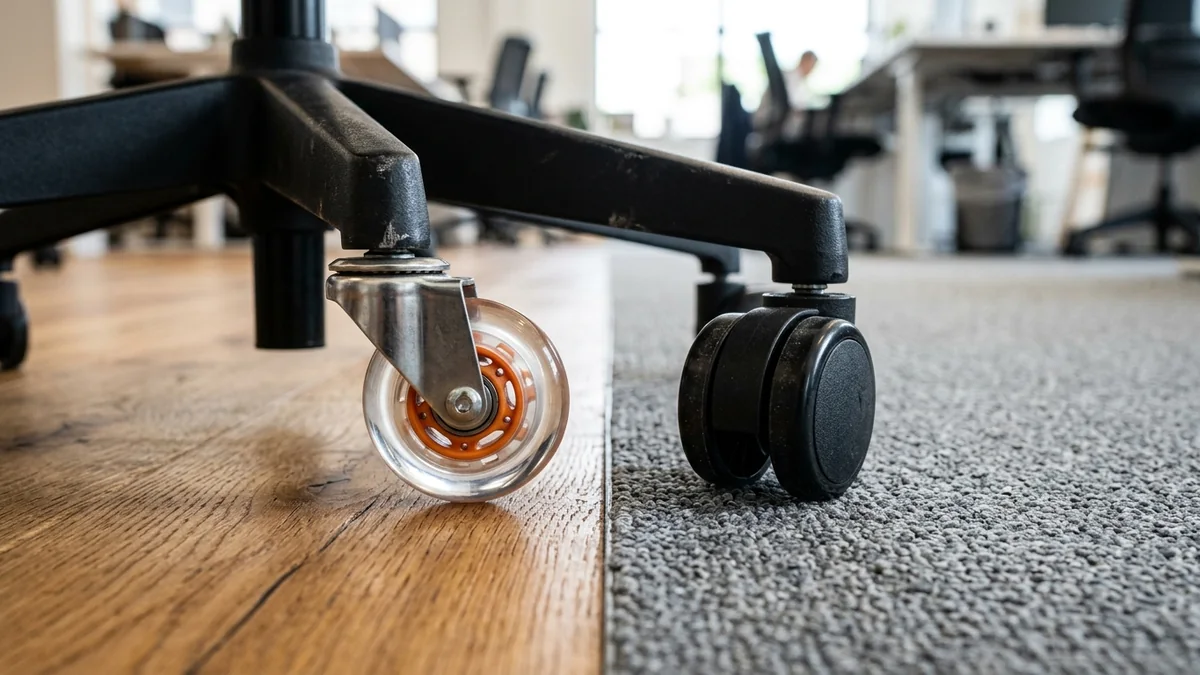
Twin wheel casters feature two independent wheels rotating on a central axle pin. This dual design creates differential rotation during turns, reducing carpet scuffing.
Rollerblade style casters use a single tall wheel made of solid polyurethane. Their larger diameter rolls easily over carpet seams without sinking into gaps.
Hooded casters feature an integrated protective shroud over wheels. The curved cover blocks falling pens and cords from jamming spinning wheels.
Ball casters use a spherical rolling element inside a rounded metal cup. While common on vintage furniture, ball units collect grit rapidly and offer poor control.
Types by Attachment and Function
Locking casters incorporate foot levers that clamp the wheel rim or stop swivel rotation. They prevent chair drift on hard surfaces during focused tasks or sim racing.
For specialized setups requiring rigid pedal stability, review our guide on desk chair with locking wheels.
Reverse locking casters engage internal friction brakes when you stand up. Weight removal locks wheels to prevent the chair from rolling away unexpectedly.
Stationary bell glides replace rolling wheels with wide nylon sliding pads. If your desk requires a fixed seating base, consult our guide to an office chair without wheels.
Sizing Benchmarks and Popliteal Offset
Wheel diameter dictates rolling resistance, threshold clearance, and seat height. Standard task chairs ship with 50 millimeter or 60 millimeter wheels.
Upgrading to 75 millimeter rollerblade wheels raises seat height by one inch. This extra stack height changes knee angles and pinches popliteal arteries.
Before changing wheel size, measure your current clearance using our interactive chair finder tool.
Verify that your desk accommodates this elevated posture. For workstation height guidelines, reference our ergonomic workstation setup guide.
Materials Matched to Floor Hardness
Factory casters feature hard nylon or polypropylene plastic wheels. These hard plastics roll smoothly on low pile carpet across synthetic fibers.
Hard nylon wheels cause immediate abrasion on wood and tile. Trapped sand grains grind circular ruts directly into clear floor finishes.
Soft polyurethane and thermoplastic rubber protect hard floors. Their elastic tread absorbs micro vibrations and rolls silently without leaving skid marks.
To review dedicated floor wheels, read our guide to the best office chair wheels for hardwood floors.
Floor Performance Matrix
Selecting caster materials requires matching wheel elasticity to floor composition. The table below details recommended materials and hazards for each surface.
| Floor Surface | Recommended Wheel Material | Ideal Wheel Diameter | Primary Failure Mode with Wrong Wheels |
|---|---|---|---|
| Natural Hardwood | Soft Polyurethane (85A Shore) | 60mm to 75mm | Finish scratching, plank gouging |
| Glazed Ceramic Tile | Thermoplastic Rubber | 60mm to 75mm | Surface chipping, loud rolling chatter |
| Engineered Laminate | Soft Polyurethane | 50mm to 60mm | Wear layer delamination, core swelling |
| Luxury Vinyl Plank | Soft Polyurethane | 60mm | Surface denting, protective coat dulling |
| Low Pile Office Carpet | Hard Molded Nylon | 50mm to 60mm | Fiber snagging, static buildup, high drag |
| High Pile Shag Carpet | Large Rollerblade Polyurethane | 75mm (3-inch) | Deep wheel sinkage, caster axle stalling |
Hard wheels generate costly gouging on soft wood within days. Soft polyurethane wheels offer safe universal performance across hard floors and thin carpeting.
Stem Fitment and Measurement Protocols
Caster stems anchor wheel housings into chair base legs. Nearly 95 percent of modern task chairs use universal grip ring friction stems.
A standard grip ring stem measures 7/16 inch by 7/8 inch. The split steel c clip expands inside the socket to anchor casters firmly.
Grip neck stems measure 5/16 inch by 1.5 inches. They feature a bulbous head that snaps into socket sleeves inside wood legs.
Threaded stems feature machine threads like 3/8 inch 16 UNC studs. Threaded casters screw directly into tapped metal legs and tighten with wrenches.
IKEA chairs represent a critical sizing exception by using proprietary 10 millimeter stems. Forcing an 11 millimeter universal stem into IKEA bases will fracture socket castings.
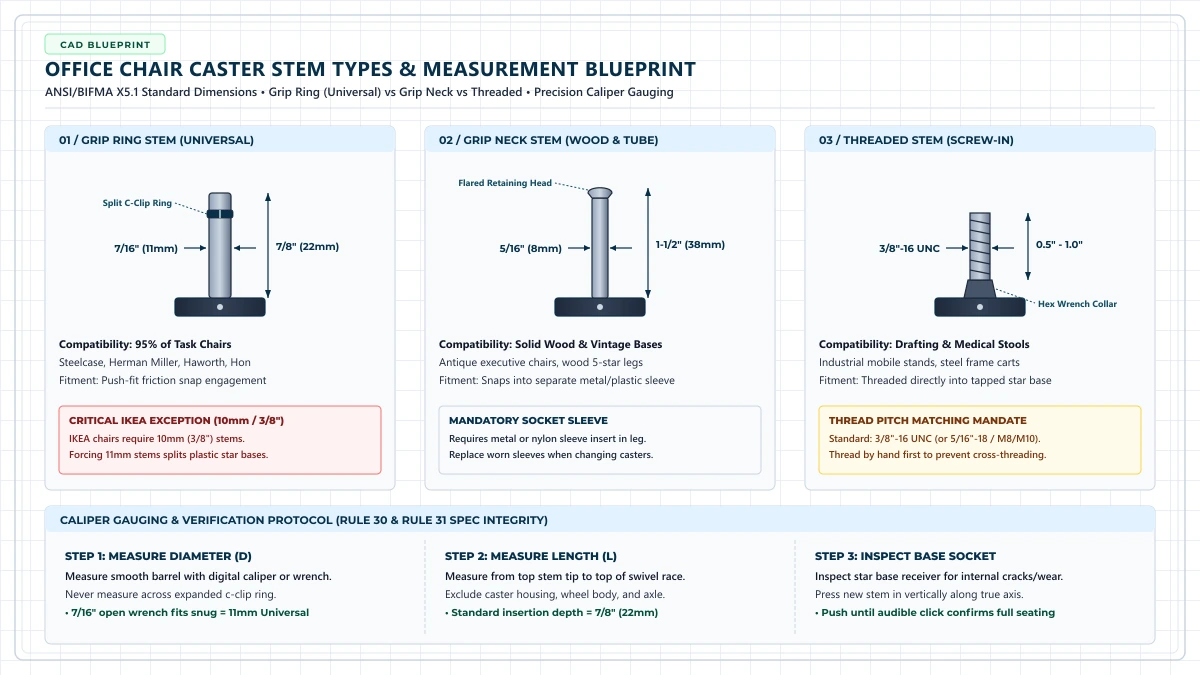
Measure the smooth barrel of your old stem using calipers. An 11 millimeter or 7/16 inch wrench should slide snugly over the stem shaft.
Load Capacity and Dynamic Stress Dynamics
Standard commercial casters support 75 to 100 pounds per wheel. A five star chair base distributes occupant weight across five contact points.
Dropping into your seat creates instantaneous dynamic shock loads. Dynamic force can double localized weight pressing on a single wheel assembly.
Heavy duty casters feature reinforced steel forks supporting 110 to 150 pounds each. Overloading weak casters splays the swivel fork, resulting in shear failure.
Step-by-Step Caster Replacement Procedure
Replacing worn chair wheels requires simple hand tools and ten minutes. Always replace all five casters simultaneously to maintain rolling height and prevent chair wobble.
Safety warning: An unseated stem can bend or break under load and stems must never be forced. Align the stem perpendicularly to the socket before applying pressure to avoid damaging the base.
Step 1: Invert your office chair carefully onto a clean workbench. Pull firmly on the old caster body along the socket axis until it releases.
If the stem resists hand pulling, slide a flat pry bar beneath the caster plate. Protect the base with cloth and lever the stem out gently.
Step 2: Inspect the empty socket for hair buildup or cracked walls. Wipe the socket bore clean with a shop towel before inserting replacement hardware.
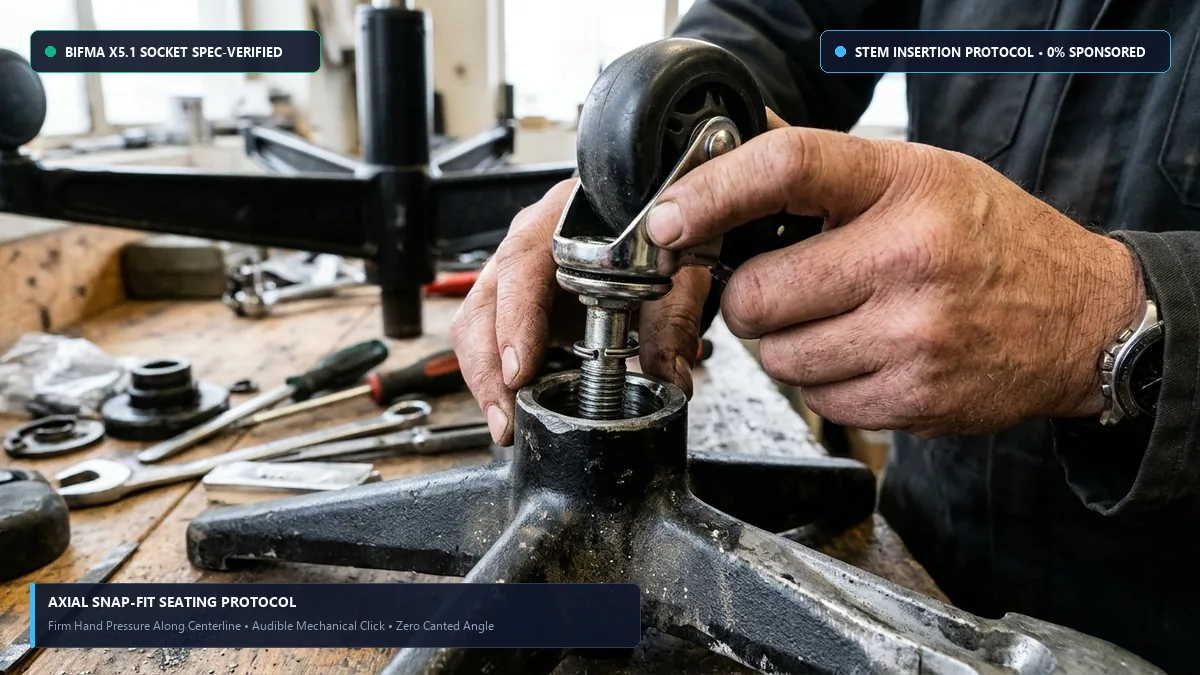
Step 3: Align the new caster stem with the socket opening. Push downward with steady hand pressure until the retention ring snaps into the socket groove.
Step 4: Return the chair upright and sit down slowly to seat all hardware. Roll five feet in every direction to confirm smooth swivel and level alignment.
Troubleshooting Common Caster Failures
Hair and fibers wrap around the central axle pin over months of use. Compacted hair stops rotation, turning wheels into skids that scratch floor sealants.
For a step by step cleaning fix using utility blades and isopropyl alcohol, follow our guide on how to fix an office chair.
High pitched squeaks originate from dry ball bearings or unlubricated sockets. Apply two drops of synthetic PTFE lubricant into the top swivel race to silence squeaks.
Chair wobble occurs when stems seat to unequal depths or wheel diameters mix. Remove the offending caster and verify full engagement inside the socket groove.
Casters Versus Chair Mat Decision Rules
Upgrading to soft polyurethane casters eliminates the need for plastic mats on hardwood. Polyurethane tread disperses point pressure and rolls quietly without damaging floor finishes.
However, chair mats remain mandatory on plush high pile carpeting. Small wheels sink into deep synthetic fibers, creating rolling resistance that strains hip flexors.
To explore mat materials and tensile strength ratings, read our guide on desk chair mat for hardwood floors.
Choose dedicated casters if you prefer a clean desk aesthetic without mat edges. Retain a rigid glass mat if your subfloor has uneven grout joints.
Frequently Asked Questions
Are office chair casters universal across all brands?
Most office chairs use universal 7/16 inch by 7/8 inch grip ring stems. However, IKEA chairs require proprietary 10 millimeter stems, and antique chairs use grip neck fittings.
Can office chair casters ruin hardwood floors?
Hard nylon wheels scratch and dull hardwood floors over time by trapping grit. Switching to soft polyurethane rollerblade wheels protects wood finishes from pressure dents and abrasion.
How do I know what size caster stem I need?
Pull one caster out and measure stem diameter with digital calipers. Alternatively, slide an 11 millimeter or 7/16 inch wrench over the shaft to verify fit.
Should I replace office chair casters in full sets of five?
Always replace all five casters simultaneously using identical matching models. Mixing casters creates uneven rolling height, inducing chair wobble and uneven bearing wear.
Why do my new chair casters feel stiff and hard to turn?
New casters may feel stiff before ball bearings distribute grease evenly during initial use. Rolling the chair through figure eight patterns under load frees the swivel mechanism.
Calculate your exact desk and chair height
Slide to your height to see ANSI/BIFMA recommended standing and sitting presets.
By M. Haris
References ANSI/BIFMA G1-2017 guidanceSoftware engineer and founder of The Desk Riser
M. Haris is a software engineer and founder of The Desk Riser, auditing manufacturer engineering schematics, motorized desk cycle lifespans, ANSI/BIFMA G1-2017 ergonomic standards, and long-term user failure patterns across verified owner communities. Every guide is editorially independent with zero paid brand placements and zero PR samples (we may earn affiliate commissions on qualifying purchases). Have questions or spot a warranty update? Email directly at support@thedeskriser.com, read the Author Dossier, or explore our Editorial Research Methodology.
Share this article:
Workstation Setup & Fit Q&A
Have questions about frame deflection, monitor arm clamp loads, or chair sizing? Consult our workstation researchers.
Q:How do I know if this standing desk will wobble on thick carpet?
Standing desk wobble on carpet is caused by uneven carpet pile compression under the rear footpads. Frames with wedge-reinforced leg collars and wide steel footplates (like UPLIFT V3 or FlexiSpot E7 Pro) minimize lateral flex. If placing on plush carpet, use rigid caster cups or a dense underlay to anchor the base directly to the subfloor.
Q:Can I clamp a dual monitor arm onto standard particleboard tops?
Dual monitor arms concentrate 25 to 45 lbs of dynamic torque onto a 4-inch clamp perimeter. Hollow honeycomb tops (such as IKEA Linnmon) will crush. We recommend a minimum 0.75-inch solid core (MDF, solid bamboo, or hardwood), or sandwiching a steel reinforcement bracket plate (min 2.5mm thickness) between the clamp and desktop.
Q:What if my chair cylinder sinks or feels too high for my feet?
Always verify your seated popliteal height (crease behind knee to floor with shoes). If a chair will not drop below 17 inches and your feet dangle, pair it with an angled footrest or switch to a low-range Class 4 cylinder. If a cylinder loses pressure and sinks on its own, the internal nitrogen seal is breached and requires cylinder replacement.
Ask Our Ergonomic Spec Reviewers
Planning an upgrade or unsure if your monitors and stature fit this configuration? Send your dimensions directly to our research desk. No accounts, no trackers, zero marketing spam.