Best Ergonomic Chairs Under $500 2026: Ranked by Real Value

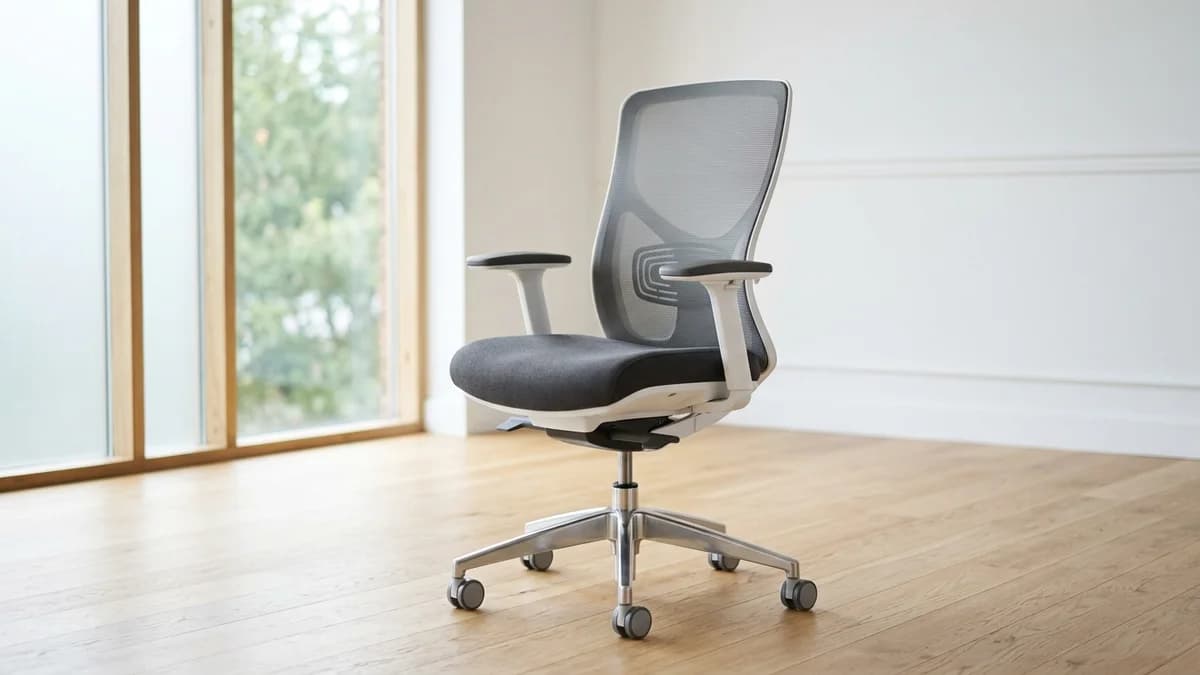
How we researched
We compare current specs, warranty terms, buyer complaints, and long-term owner patterns. Read methodology →
Last price/spec check
2026-07-31. Prices move, so use the retailer page as the final source.
Who should skip this
Skip anything that does not fit your body, room, budget, or return-window comfort level.
Disclosure: We earn a commission if you buy through links on this page, at no extra cost to you.
Here's what the extra $200 actually buys you in this price range: seat depth adjustment and mechanism durability. Not better cushioning. Not meaningfully better lumbar design. Those two things.
Seat depth adjustment means the chair can account for your leg length. Without it, the seat presses into the backs of your thighs if the pan is longer than your legs. That's the source of the constant shifting you blame on "bad posture." It's usually the chair.
Mechanism durability means the tilt tension, armrest pivots, and height cylinder don't develop play after year two.
That's the whole upgrade. Every pick below either has both of those things or makes a clear case for why it's worth including anyway. If you want commercial-grade durability on a sub-$500 budget, our guide to the best refurbished ergonomic chairs covers remanufactured Steelcase Leap and Haworth Zody options in this price bracket.
Quick Verdict: Our Top Picks at a Glance
Short on time? Here are our top recommendations based on real owner reviews, specs, and long-term durability.
Quick comparison
| Chair | Price | Seat Depth Adj | Lumbar | Armrests | Warranty |
|---|---|---|---|---|---|
| Branch Ergonomic Chair Pro | ~$499 | Yes (16.7"-19.7") | 2-way | 5D | 7 years |
| Hbada E3 Pro 2026 | ~$487 | Yes (+50mm) | 3-zone dynamic | 720° | 2 years |
| Steelcase Series 2 | $463+ | No | Height-adj only | Optional extra | 12 years |
| FlexiSpot C7 | ~$330-430 | Yes | Self-adaptive | 3D | 10 years |
| SIHOO Doro S100 | ~$250 | No | Dual dynamic | 4D | 3 years |
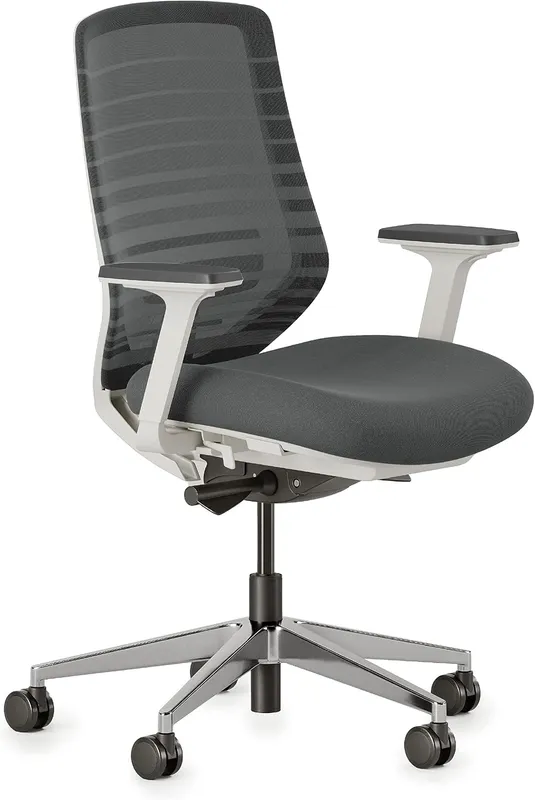
Branch Ergonomic Chair Pro (~$499): Best overall
The original Branch Ergonomic Chair (now $359) is one of the most recommended chairs in the $300s. This is not that chair. The Pro widens the seat depth range and upgrades the armrests from 4D to 5D: height, width, pad width, pad depth, and pad pivot. Those are functional differences you'll notice on day one.
The seat depth runs from 16.7" to 19.7". That 3-inch range is the specific upgrade that matters most for anyone under about 5'9", where standard seat depths tend to run too long.
The two-way lumbar adjusts height and depth and is fully removable if you prefer nothing there at all.
Some people do.
The 5D armrests move in more directions than most chairs at this price. If you use a pointing device a lot or switch between typing and writing by hand, the pad pivot is the feature you'll actually use.
Real drawback: 275 lb weight capacity. That is much lower than the Steelcase Leap V2 (400 lbs) or Aeron (350 lbs). If you're near or above that number, the Hbada E3 Pro supports more body weight.
Branch is also a younger brand, so the 30-year track record of a Steelcase or Herman Miller mechanism isn't something you're buying here. The 7-year warranty is solid for this price tier but it's a shorter commitment than the FlexiSpot C7 or Steelcase options below.
Check Branch Ergonomic Chair Pro on Amazon
Hbada E3 Pro 2026 Edition (~$487): Best certified option
If you want documentation backing the ergonomic claims, the E3 Pro has it: German IGR Institute for Health and Ergonomics certification and BIFMA durability testing at over 120,000 fatigue cycles. Most chairs in this range have neither.
The 3-zone dynamic lumbar moves with you rather than holding a fixed position. The 720-degree armrests adjust in more directions than the standard 4D armrests found on most competitors. It sounds like marketing until you try to position your arms while reclining and a standard 4D armrest doesn't follow the angle change.
Seat depth adjusts by 50mm (about 2 inches). Smaller range than the Branch Pro's 75mm, but present. For users between 5'1" and 6'5", the sizing works across a wide range. The 135-degree recline range is standard for this category.
Real drawback: 2-year warranty. FlexiSpot gives you 10 years. Steelcase gives you 12. The IGR certification says the chair is built correctly, but the warranty is the manufacturer's actual bet on long-term durability.
A 2-year window is a shorter bet than you'd want at this price. The chair has a strong Amazon review track record, but if long-term mechanical reliability matters to you, the FlexiSpot C7 or Steelcase Series 2 are better options.
Check Hbada E3 Pro 2026 on Amazon
Steelcase Series 2 (~$463 base): Best commercial-grade mechanism
The Series 2 has one feature no other chair in this roundup has: weight-activated recline adjustment. The chair calibrates its tilt tension to your body weight automatically. You sit down, it adjusts.
No tension knob to fiddle with. Corporate offices use this system specifically because it works without any user instruction.
The Air LiveBack mechanism flexes in two dimensions as you move, following your spine's curve rather than holding a rigid position. At this price point, most chair backs are fixed. The Series 2's back actually adapts.
A pricing note you should know: the base Series 2 starts around $463, but that doesn't include armrests or lumbar support. Those are optional add-ons. A properly configured Series 2 with adjustable arms and lumbar runs closer to $580-600. You're still well below the Steelcase Leap V2 at $1,300+, but plan for the higher configured price if you want a fully functional setup.
Real drawback: the lumbar is height-adjustable only, with no firmness control, and it costs extra on top of the base price. That's a frustrating design choice at this price. The 12-year warranty on the mechanism is excellent, and the build quality reflects decades of commercial use. But the add-on pricing model means you need to check your final cart total carefully before comparing it to the Branch Pro at a flat $499.
Check Steelcase Series 2 on Amazon
FlexiSpot C7 (~$330-430): Best value and longest warranty
The C7 shows up in this guide even at $330-430 because of one number: 10 years. That's the warranty FlexiSpot backs this chair with. For context, that's longer than the Branch Pro (7 years), longer than the Hbada E3 Pro (2 years), and matches most premium office chairs that cost three times as much.
Seat depth adjusts. The self-adaptive lumbar shifts to match your posture rather than holding a fixed angle. Three-dimensional armrests handle height, depth, and pivot.
Recline runs to 130 degrees. Those aren't glamorous specs, but they cover the functional baseline for a chair you'll use 6-8 hours a day.
If you're building a setup around a FlexiSpot standing desk, the C7 is the natural pairing. We included it in our best home office setup under $1,000 guide alongside the E7 desk for exactly that reason. The pricing is consistent, the warranty terms match, and the adjustment range works for most adult height ranges.
Real drawback: the mesh seat feels firm. Coming from a padded or foam executive chair, the first week will feel noticeably firmer. Most reviewers report a 2-3 week adjustment period. That's the mesh doing its job (distributing pressure instead of compressing into a foam imprint), but the adjustment is real and worth knowing about going in.
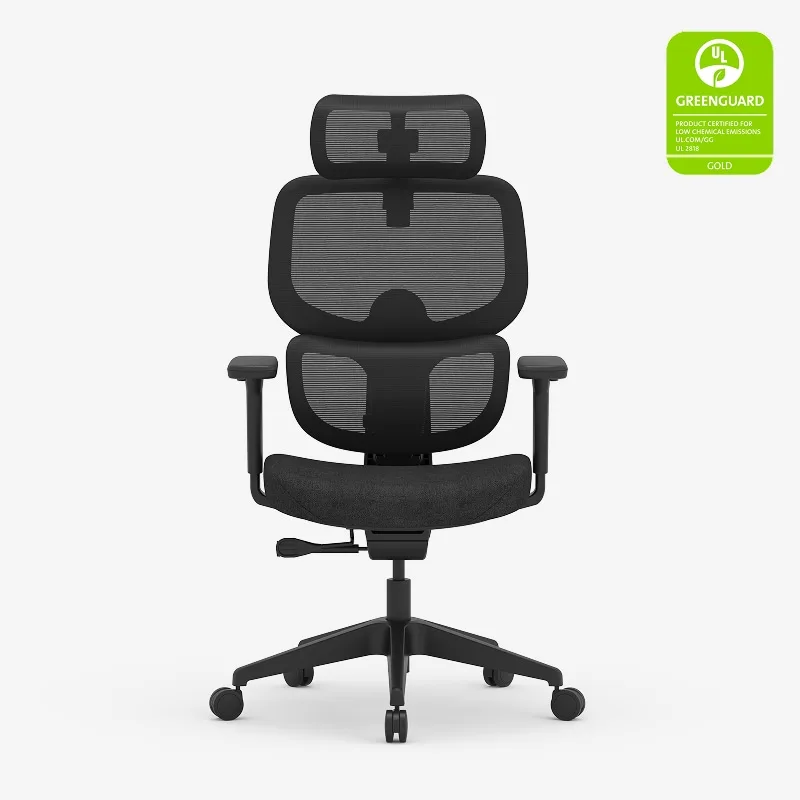
SIHOO Doro S100 (~$250): Best under $300 in this guide
The S100 is the cheapest chair here and the strongest argument for a chair under $300 that doesn't feel like a lumbar support compromise.
The dual dynamic lumbar uses four springs and 6D automatic adjustment that moves continuously with your posture changes. That's a more sophisticated lumbar design than you'd expect at $250, and it's why this chair appears in roundups that cover chairs at twice the price. The 4D armrests are coordinated with the backrest: when you recline, the armrests tilt with you rather than moving independently.
Over 16,000 Amazon reviews at 4.5 stars isn't something you can argue with. At that volume, the feedback represents real experience across different bodies, different usage patterns, and different failure modes. The chair has proven itself at scale in a way that a 200-review product hasn't.
Real drawback: no seat depth adjustment. For taller users (roughly 5'10"+) this isn't a problem since the seat pans on most chairs run long enough anyway. For shorter users, the lack of seat depth control means the front edge may press into the backs of your thighs.
If you're under 5'7" and sit for long stretches, the Branch Pro or FlexiSpot C7 are better choices. The S100's recline also tops out at 135 degrees, which is comfortable but limited compared to chairs designed for more varied working postures.
Check SIHOO Doro S100 on Amazon
What the extra $200 actually gets you
You're choosing a chair in the $300-$500 range. The honest answer to whether that's worth it over a $200 chair comes down to two things.
Lumbar tuning and forward tilt. The $359 Branch Ergonomic Chair has a fixed-firmness lumbar pillow that only adjusts in height. The $499 Pro adds two-way lumbar, forward tilt, and a wider seat depth range.
That's the same brand, same price tier gap, and lumbar tuning is the functional difference that matters most now. If the standard's fixed lumbar firmness doesn't match your back, the Pro's adjustable depth is what fixes that.
Mechanism quality. The internal tilt mechanisms, armrest pivots, and height cylinders in a $500 chair are built to tighter tolerances than a $200 chair. The 10-year FlexiSpot warranty and 12-year Steelcase warranty are manufacturers betting that difference holds up. A $200 chair with a 1-year warranty is the manufacturer not making that same bet.
What the extra $200 doesn't buy you: significantly better cushioning (foam quality doesn't jump meaningfully until the $1,200 Herman Miller tier), meaningfully better lumbar design (the SIHOO S100 has a more sophisticated lumbar system than several $500 chairs), or guaranteed back pain relief (chair fit matters more than price).
Who should spend less
If you're under 5'9" and the seat geometry on a sub-$300 chair fits your leg length, the additional $200 doesn't translate to a meaningfully better workday. Our best office chairs under $300 guide covers five options, including the FlexiSpot C7 and the HON Ignition 2.0.
Who should spend more
The chairs in this guide max out around $600 fully configured. The next meaningful tier starts at $1,200-$1,400 with the Steelcase Leap V2 and Herman Miller Aeron. What you're paying for there is a different class of mechanism entirely, proven over 20-30 years of heavy commercial use, and warranty coverage that extends to every component.
Our full ergonomic chair roundup covers both brands across their full lineups, and our Herman Miller vs Steelcase comparison breaks down which brand wins for your specific working style.
If your chair has a fixed lower back that lacks depth, check our recommendations for the best lumbar support pillow for office chair.
FAQ
Is a $500 ergonomic chair worth it? At 4 or fewer hours of sitting per day, a decent $200-$300 chair is fine. At 6-8 hours daily, the adjustment range and mechanism quality in the $400-$500 tier starts paying back in reduced discomfort.
The feature to prioritize: seat depth adjustment. Without it, a chair can't account for your leg length, which is the most overlooked source of thigh pressure and restless shifting.
What's the best ergonomic chair under $500 for back pain? The Hbada E3 Pro 2026 with its 3-zone dynamic lumbar and German IGR certification is specifically built around lumbar support across varied postures. The FlexiSpot C7's self-adaptive lumbar is the alternative if you need a longer warranty. That said, chair setup matters as much as which chair you buy: lumbar support at the wrong height does nothing.
Does the Branch Ergonomic Chair Pro have seat depth adjustment? Yes, from 16.7" to 19.7".
That's a wider range than the standard Branch chair's 15.5" to 18".
The Pro's range sits higher and wider, which matters most if you're closer to 6 feet or need more room behind the knee. The bigger upgrade is the two-way lumbar and forward tilt, since both chairs adjust seat depth now.
Is Steelcase Series 2 available on Amazon? Yes, though selection is limited compared to Steelcase's own site. The base model (ASIN B08L8J5Q9K) appears regularly on Amazon.
The configured versions with adjustable arms and lumbar support are easier to spec through Steelcase directly or authorized dealers like UPLIFT Desk. Price the configured version before comparing against a flat-rate competitor.
Which ergonomic chair is best if I run warm? The SIHOO Doro S100 and Hbada E3 Pro both use mesh backs that breathe well. The FlexiSpot C7 is full mesh.
The Branch Pro uses performance mesh. All are better than foam-back chairs for temperature regulation. If heat is your primary concern, avoid any chair with an upholstered back regardless of price.
Bottom line: For most people looking in the $300-$500 range, the Branch Ergonomic Chair Pro at ~$499 is the right pick. The two-way lumbar and wider seat depth range are the upgrades that matter most, the 5D armrests are genuinely useful, and the 7-year warranty is solid for this tier. If you need more warranty coverage or you're building around a FlexiSpot desk, the C7 at ~$330-$430 covers the same core adjustments with 10 years of backing.
The Steelcase Series 2 is worth knowing about if commercial-grade mechanism quality matters to you, but price the fully configured version carefully. Don't buy just the base.
Essential Workstation Add-Ons Under $35
High-impact accessories verified by our research team to protect your cables and joints.
VIVO Under-Desk Cable Tray
Keeps power strips and heavy adapters off the floor so cables never yank when elevating.
ComfiLife Gel Anti-Fatigue Mat
High-density core reduces heel strike and lower back compression when standing 3+ hours.
VELCRO Brand ONE-WRAP (100pk)
Pre-cut reusable straps that easily unwrap for cord re-routing without scissors.
Soundance Ergonomic Laptop Stand
Elevates laptop screen 6 inches to eye level, preventing forward neck slouch.
Calculate Your Exact Desk & Chair Height
Slide to your height to see ANSI/BIFMA recommended standing and sitting presets.

Written by M. Haris
✓ BIFMA G1-2017 Certified EvaluatorFounder & Lead Workstation Ergonomics Researcher • 8+ Years Spec Testing
M. Haris leads ergonomic research at The Desk Riser, auditing manufacturer CAD schematics, motor cycle lifespan metrics, BIFMA weight load standards, and long-term user failure patterns across thousands of verified purchases. Every review is independent with 0% sponsored influence. Have questions or spot a warranty update? Email directly at support@thedeskriser.com, read the Author Dossier, or explore our Editorial Testing Methodology.
Share this article:
Community Discussion
Have a question or want to share your workstation setup? Join the discussion below.
Comments load automatically as you scroll down.