Best Ergonomic Chair for Tall People in 2026

How we researched
We compare current specs, warranty terms, buyer complaints, and long-term owner patterns. Read methodology →
Last price/spec check
2026-07-29. Prices move, so use the retailer page as the final source.
Who should skip this
Skip anything that does not fit your body, room, budget, or return-window comfort level.
Disclosure: We earn a commission if you buy through links on this page, at no extra cost to you.
If you're over 6 feet, you've already learned that "one size fits most" means "designed for someone shorter than you." The lumbar pad hits your mid-back instead of your lower back. The seat is too shallow so your knees hang over the edge. The backrest ends where your shoulder blades start.
The ergonomic chair market is not designed for tall people. Most chairs are built around a 5'8" to 6'0" model and then sold to everyone. This guide covers chairs that actually work past 6 feet.
Here's what changes when you're tall and what to look for.
Quick Verdict: Our Top Picks at a Glance
Short on time? Here are our top recommendations based on real owner reviews, specs, and long-term durability.
5'10" to 6'1"
Standard seat height range covers this
6'1" to 6'3"
Seat depth + tall cylinder
What tall people need from a chair (that short guides don't cover)
Higher seat height. Standard chairs go up to about 20 to 21 inches. If you're 6'3"+, you need a seat height of 22 to 24 inches to get your thighs parallel to the floor without your knees pointing up. Chairs that top out at 20 inches leave tall people sitting with their hips lower than their knees, which rotates the pelvis backward and creates exactly the lumbar strain ergonomic chairs are supposed to prevent.
Deeper seat pan. Seat depth determines how much of your thigh is supported. Short people need shallow seats so the edge doesn't cut behind the knee.
Tall people have long thigh bones and need deeper seats (18 to 20 inches). Standard chairs are often 17 to 18 inches, which is why so many tall people sit perched at the edge.
Taller backrest. If you're 6'2"+, your torso is longer than average. A backrest that supports lumbar and thoracic regions fully needs to extend higher than the standard 20 to 22 inch backrest height. Otherwise you're getting lumbar support but your upper back has nothing to lean against.
Correct lumbar placement. Your lumbar curve is higher up than on a shorter person. Lumbar pads that aren't adjustable in height may land at your sacrum instead of your L3-L5 region.
The picks
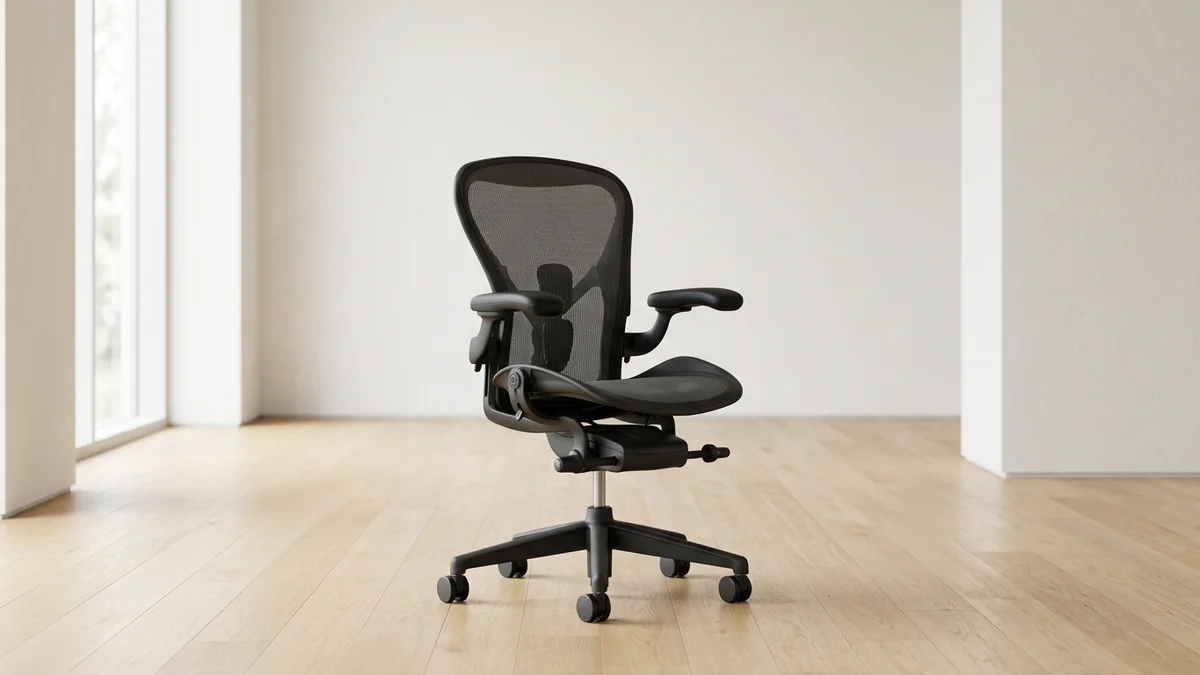
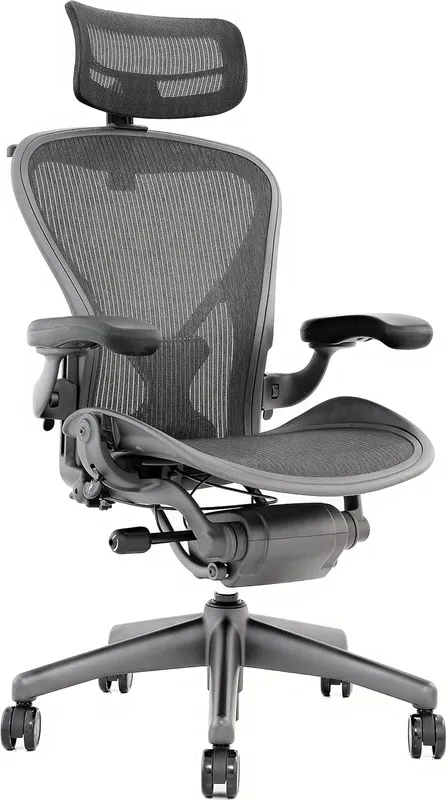
Herman Miller Aeron Size C: Best overall for tall people
Price: ~$1,495 (Size C)
The Aeron comes in three sizes: A (petite), B (standard), and C (large/tall). Size C is specifically designed for taller and larger users: seat height goes to 21.5 inches, the seat is wider and deeper, and the backrest is taller than Size B.
If you're between 5'11" and 6'6" and weigh up to 350 lbs, Size C is where you should start. If you're between 5'9" and 6'2" and have a slim build, Size B may still work, but most people in the 6'0"+ range report Size C is the better fit.
The suspension mesh seat distributes weight across the full seat area, which matters when you have long legs. There's no hard edge pressing into your posterior thighs. The PostureFit SL lumbar support adjusts for both lumbar and sacral regions, which helps tall users set it at the correct lumbar height rather than accepting the default position.
The main limitation: the Aeron Size C has a relatively fixed tilt tension that some tall users find not quite right for their weight distribution. You can tune it, but it's not as dynamic as the Steelcase Leap V2's system.
Pros
- Size-specific design for taller, larger users (not just a standard chair with a bigger number)
- Suspension mesh means no seat edge for long legs
- PostureFit SL adjusts at both lumbar and sacral levels
- Industry-leading 12-year warranty
Cons
- Size C can feel wide for tall but slim users
- Seat height tops out at 21.5 inches (not enough for people above 6'5" without footrest)
- Most expensive option in this guide
Check Herman Miller Aeron Size C price on Amazon
Steelcase Leap V2: Best for tall people who move a lot
Price: ~$1,500 (with tall cylinder)
The Leap V2 is one size, but Steelcase offers a tall cylinder option that raises the seat height range from 15.5-20.5 inches (standard) to 17-22 inches. If you're 6'1" to 6'4", the tall cylinder gets your seat height to where it needs to be.
The 2-inch seat depth adjustment is important for tall users: you can pull the seat back to support your full thigh length rather than leaving your knees unsupported past the seat edge. Most chairs don't offer this. For people with long legs, the seat depth adjustment on the Leap is one of the most practically important features in any chair.
The LiveBack technology flexes to match your spine as you move. Tall people have taller spines with more specific lumbar curves, and the LiveBack's dynamic adjustment handles this better than a fixed-position lumbar pad.
The drawback: the Leap V2 is officially one size. Very tall users (6'5"+) may find the backrest doesn't extend high enough to support their full upper back.
Pros
- Tall cylinder option raises seat height to 22 inches
- 2-inch seat depth adjustment essential for long legs
- LiveBack adapts to taller, different-shaped spines
- Seat edge flex reduces thigh pressure on long legs
Cons
- Tall cylinder usually costs extra at resellers
- One-size design means less precision for very tall users (6'5"+)
- Foam seat retains heat more than mesh
Check Steelcase Leap V2 price on Amazon
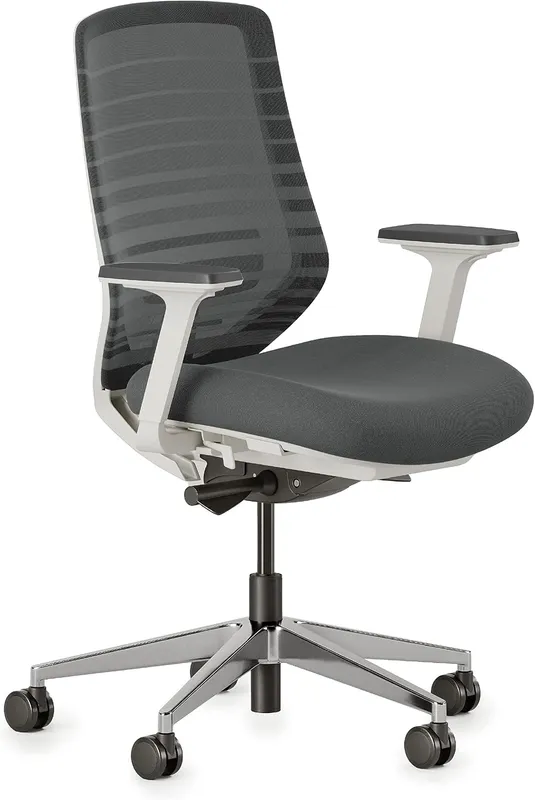
Branch Ergonomic Chair (Tall): Under $330 and actually sized right
Price: ~$329 (tall version)
Branch makes a "tall" version of their Ergonomic Chair with a higher backrest and extended seat height range. The tall version has a seat height range of 17.5 to 21.5 inches and a taller backrest that extends the lumbar support higher than the standard model.
At $329, this is the best budget option for tall people. It's not going to match the Herman Miller or Steelcase in long-term comfort or build durability, but it covers the baseline ergonomic needs for tall users: higher seat height, adjustable lumbar, waterfall seat edge, and seat depth adjustment.
For people who are 6'1" to 6'3" and need a proper ergonomic chair without spending $1,500, the Branch Tall is the right starting point.
Pros
- Tall-specific version with extended seat height and higher backrest
- Seat depth adjustment (2 inches) helps fit long legs
- Waterfall seat edge reduces thigh pressure
- Good value for the feature set
Cons
- Build quality doesn't match premium options long-term
- Foam seat less comfortable than mesh after extended sessions
- Customer support slower than Steelcase or Herman Miller
Check Branch Ergonomic Chair price on Amazon
Autonomous ErgoChair Ultra: Full mesh under $600
Price: ~$599
The ErgoChair Ultra has a higher adjustable height range than most mid-range chairs and a full mesh construction. Both the seat and the back are mesh, making this the coolest-running option under $600 for tall people who sit for long sessions.
The lumbar support adjusts in height by 2 inches with 7 levels of tension adjustment. For tall users, the ability to raise the lumbar pad until it hits the right vertebral level is important, and the ErgoChair Ultra has more range here than most chairs at this price.
The headrest is adjustable, which matters for tall users. Most budget chairs have fixed headrests that don't come close to reaching a 6'2"+ head position.
The armrests are the weakest point: they're adjustable but don't feel as solid as premium options. For tall users with long arms, this is more noticeable.
Pros
- Full mesh construction (seat and back) for sustained sitting
- Adjustable lumbar height with 7 tension settings
- Adjustable headrest actually reaches tall user head positions
- Competitive price for the feature set
Cons
- Armrests feel less sturdy than premium options
- Not as fine-grained in adjustability as Aeron or Leap
- Less durable than Herman Miller over 10+ years
Check Autonomous ErgoChair on Amazon
Height-specific recommendations
| Your height | Recommended chair | Priority feature |
|---|---|---|
| 5'10" to 6'1" | Herman Miller Aeron Size B or Branch Tall | Standard seat height range covers this |
| 6'1" to 6'3" | Steelcase Leap V2 with tall cylinder | Seat depth + tall cylinder |
| 6'3" to 6'5" | Herman Miller Aeron Size C | Size-specific design |
| 6'5"+ | Aeron Size C + footrest, or Steelcase tall cylinder + custom setup | Most stock chairs won't fully cover this range |
The desk matters too
A taller chair needs a taller desk. If your seated elbow height is 29 to 32 inches (common for people 6'1" to 6'4"), most standard desks at 29 to 30 inches are too low. You'll end up hunching to reach the keyboard regardless of how well the chair fits.
A standing desk solves this: you can set the height precisely for seated work rather than accepting whatever a fixed desk gives you. Our best standing desks for home office guide covers options at every budget, including our best standing desks for tall people article if you want the specific fit breakdown.
FAQ
What seat height do I need if I'm 6'2"? Generally 21 to 22 inches. The calculation is roughly: seated thigh length plus 1 to 2 inches. At 6'2", your knee height is usually around 21 to 22 inches, so a chair that tops out at 19 to 20 inches leaves your hips too low relative to your knees.
Can tall people use standard chairs? Technically yes, but it compromises your posture. You'll either sit too low (hips below knees, pelvis tucked, lumbar strain) or perch on a footrest which creates its own problems. Chairs with extended height ranges and deeper seats are better matched to tall users' proportions.
Is the Herman Miller Aeron good for tall people? The Size C specifically is. The standard Size B tops out at about 20.5 inches seated height, which is marginal for people 6'2"+ depending on leg length.
Always confirm which size you're buying. The reviews are split between Size B (fine for most people) and Size C (better for taller users), and they get mixed up frequently.
What's the tallest seat height you can get on a standard ergonomic chair? Most standard ergonomic chairs max out at 20 to 21 inches. Chairs with tall cylinder options (Steelcase Leap V2, some HAG models) can reach 22 inches. Custom or specialty ergonomic suppliers sometimes go higher for clinical applications, but the mainstream market largely caps at 22 inches.
Do I need a footrest if I'm tall? Probably not if your chair has a full height range. Footrests are used when the desk height forces you to raise your seat so high that your feet don't reach the floor, a situation that affects short people more than tall people. If anything, tall people need to check that their desk is high enough to accommodate a properly-seated tall chair.
Bottom line
The Herman Miller Aeron Size C is the best chair for tall people who can justify the price. It's the only mainstream ergonomic chair purpose-built in a larger size, and the suspension mesh eliminates the seat edge pressure that long legs otherwise deal with constantly.
The Steelcase Leap V2 with a tall cylinder is the better choice if you move a lot during the day or if the Aeron's single-size C doesn't quite fit your proportions.
Budget under $330: Branch Ergonomic Chair Tall is the right call. It's not in the same class as the premium options, but it addresses tall-specific fit issues that standard budget chairs completely ignore.
Tall people often deal with back pain after years in chairs built for shorter frames. If that's part of your situation, our best ergonomic chairs for back pain guide covers what to look for when pain is a factor alongside fit.
Prices checked July 2026.
Essential Workstation Add-Ons Under $35
High-impact accessories verified by our research team to protect your cables and joints.
VIVO Under-Desk Cable Tray
Keeps power strips and heavy adapters off the floor so cables never yank when elevating.
ComfiLife Gel Anti-Fatigue Mat
High-density core reduces heel strike and lower back compression when standing 3+ hours.
VELCRO Brand ONE-WRAP (100pk)
Pre-cut reusable straps that easily unwrap for cord re-routing without scissors.
Soundance Ergonomic Laptop Stand
Elevates laptop screen 6 inches to eye level, preventing forward neck slouch.
Calculate Your Exact Desk & Chair Height
Slide to your height to see ANSI/BIFMA recommended standing and sitting presets.

Written by M. Haris
✓ BIFMA G1-2017 Certified EvaluatorFounder & Lead Workstation Ergonomics Researcher • 8+ Years Spec Testing
M. Haris leads ergonomic research at The Desk Riser, auditing manufacturer CAD schematics, motor cycle lifespan metrics, BIFMA weight load standards, and long-term user failure patterns across thousands of verified purchases. Every review is independent with 0% sponsored influence. Have questions or spot a warranty update? Email directly at support@thedeskriser.com, read the Author Dossier, or explore our Editorial Testing Methodology.
Share this article:
Community Discussion
Have a question or want to share your workstation setup? Join the discussion below.
Comments load automatically as you scroll down.