Best Balance Boards for Standing Desks 2026: Reviewed and Ranked
How we researched
We compare current specs, warranty terms, buyer complaints, and long-term owner patterns. Read methodology →
Last price/spec check
2026-07-25. Prices move, so use the retailer page as the final source.
Who should skip this
Skip anything that does not fit your body, room, budget, or return-window comfort level.
--
Disclosure: We earn a commission if you buy through links on this page, at no extra cost to you.
Most people who buy a standing desk use it for about a week before they stop standing. The legs get tired. The feet ache. And the desk goes back to being a sitting desk with a motorized frame.
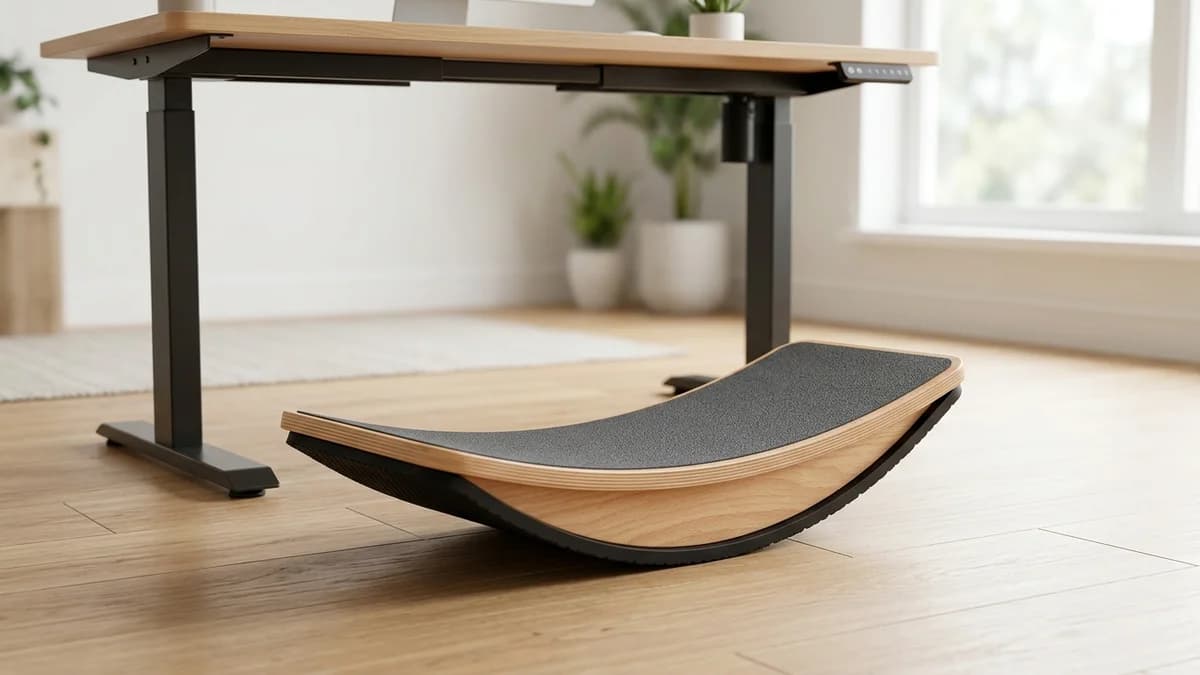
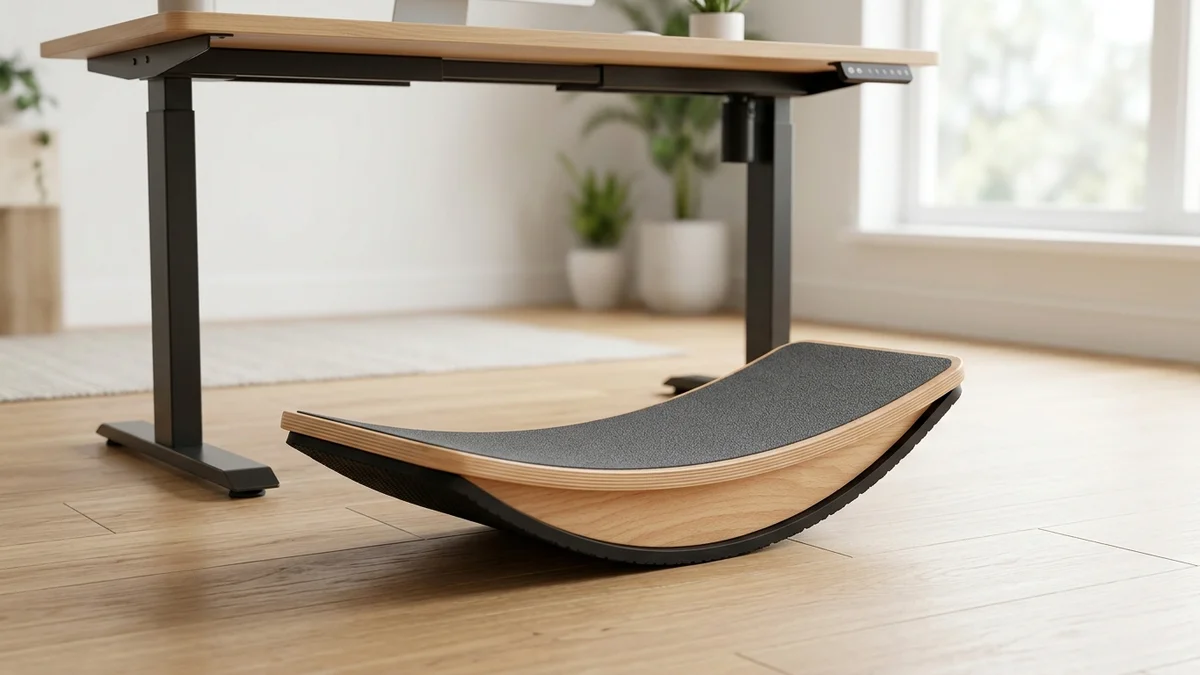
A balance board fixes this. It keeps your legs moving in small, low-effort ways that cut the static fatigue that kills most people's motivation to stand. You're not working out. You just stop standing completely still, and standing becomes sustainable for longer stretches.
Not every balance board works at a desk, though. Anything too wobbly makes it impossible to concentrate. Anything too flat defeats the point.
Here's what actually works.
Quick Verdict: Our Top Picks at a Glance
Short on time? Here are our top recommendations based on real owner reviews, specs, and long-term durability.
Quick picks
| Board | Price | Best for |
|---|---|---|
| Fluidstance Level | ~$150 | Best overall |
| UPLIFT Standing Desk Balance Board | ~$85 | Best mid-range |
| Yes4All Wobble Board | ~$28 | Best budget |
| Topo Mini by Ergodriven | ~$100 | Best if you also want anti-fatigue cushioning |
What to look for before buying
Tilt range. This is the most important spec for desk use. Too much tilt (20°+) and you're fighting to stay balanced instead of working.
Too little and you might as well stand on flat ground. 10-16° is the desk-friendly sweet spot.
Surface size. Your whole foot needs to fit with room to shift weight. Most boards are 16-18" long. If you're above a size 12 shoe, check the dimensions before buying.
Deck material. Wood and bamboo are quieter than plastic. If you're on a hard floor in a quiet room, a plastic board rocking back and forth is annoying enough to stop using it.
Height. Balance boards add 0.5-2 inches of standing height. If your standing desk is already at its maximum height, that's worth checking before you order.
The picks
Fluidstance Level: Best overall

Price: ~$150
The Level is the balance board most standing desk communities point to first, and the reason is how it moves. It rocks and rotates in all directions on a curved base (not just front to back), which keeps your micro-movements more varied than a standard wobble board. The movement is subtle enough that you can type, think, and hold a call without actively managing your balance.
It's made from a single piece of machined aluminum or bamboo depending on which version you choose. Both are quiet on hard floors.
The one genuine complaint in owner reviews is the price. At $150, it's the most expensive board in this guide by a wide margin. It's worth it if you're serious about daily standing desk use. If you're still testing whether balance boards work for you, start with the budget pick.
Pros
- Multi-directional movement keeps feet and legs actively engaged
- Quiet on hard floors
- Compact footprint (fits under a standard desk)
Cons
- Most expensive option in this guide
- No anti-fatigue cushioning (just a hard deck)
Check Fluidstance Level price on Amazon
UPLIFT Standing Desk Balance Board: Best mid-range
Price: ~$85
UPLIFT makes good standing desk accessories, and this board is a solid mid-range option. The textured surface keeps feet from sliding, the tilt range is desk-appropriate, and it's compatible with their standing desks' anti-fatigue mat accessories if you want to combine both.
It's straightforward. Rocks in one axis (front to back), no rotation. Less dynamic than the Fluidstance but still enough movement to cut fatigue. Most buyers are happy with it as long as they know it's a simpler design.
Pros
- Good build quality for the price
- Non-slip textured deck
- Ships from UPLIFT with fast delivery if you're already ordering a desk
Cons
- Front-to-back movement only, no rotation
- Hard to justify at $85 when the Yes4All does the same job for $28
Check UPLIFT Balance Board price on Amazon
Yes4All Wobble Board: Best budget
Price: ~$28
If you want to find out whether a balance board actually improves your standing desk experience before spending real money on one, this is where to start. It rocks and tilts in all directions, fits most shoe sizes, and costs less than most people spend on lunch for a week.
The dome base is plastic and makes some noise on hard floors. If that's a concern, put an anti-fatigue mat under it.
It's not as refined as the Fluidstance. The movement is less smooth and the deck isn't as comfortable underfoot. But for a $28 test run, it tells you everything you need to know about whether balance boards work for your setup.
Pros
- Dramatically lower price than any alternative
- All-direction tilt, not just front to back
- Widely available, fast shipping
Cons
- Plastic base is louder than wood or aluminum options
- Less smooth movement than premium boards
Check Yes4All Wobble Board price on Amazon
Topo Mini by Ergodriven: Best combined anti-fatigue and movement
Price: ~$100
The Topo Mini isn't a balance board in the traditional sense. It's an anti-fatigue mat with terrain: raised ridges and a central dome that encourage your feet to shift position constantly rather than stay locked in one spot.
The result is somewhere between a flat anti-fatigue mat and a balance board. Less active engagement than the Fluidstance, but more comfortable underfoot and quieter. If your main issue is foot fatigue rather than leg engagement, the Topo Mini often works better than a standard balance board.
One thing to know: the ridges take a few days to get used to. The first week your feet look for flat ground out of habit. By week two it feels normal.
Pros
- Anti-fatigue cushioning plus movement in one product
- Quieter than any hard-deck balance board
- Durable, holds up to years of daily use based on owner reviews
Cons
- Less active engagement than a true balance board
- Larger footprint than most balance boards (takes up more floor space)
Check Topo Mini price on Amazon
Do you actually need a balance board?
It depends on why you stop standing.
If your feet ache, an anti-fatigue mat helps more than a balance board. The Topo Mini covers both.
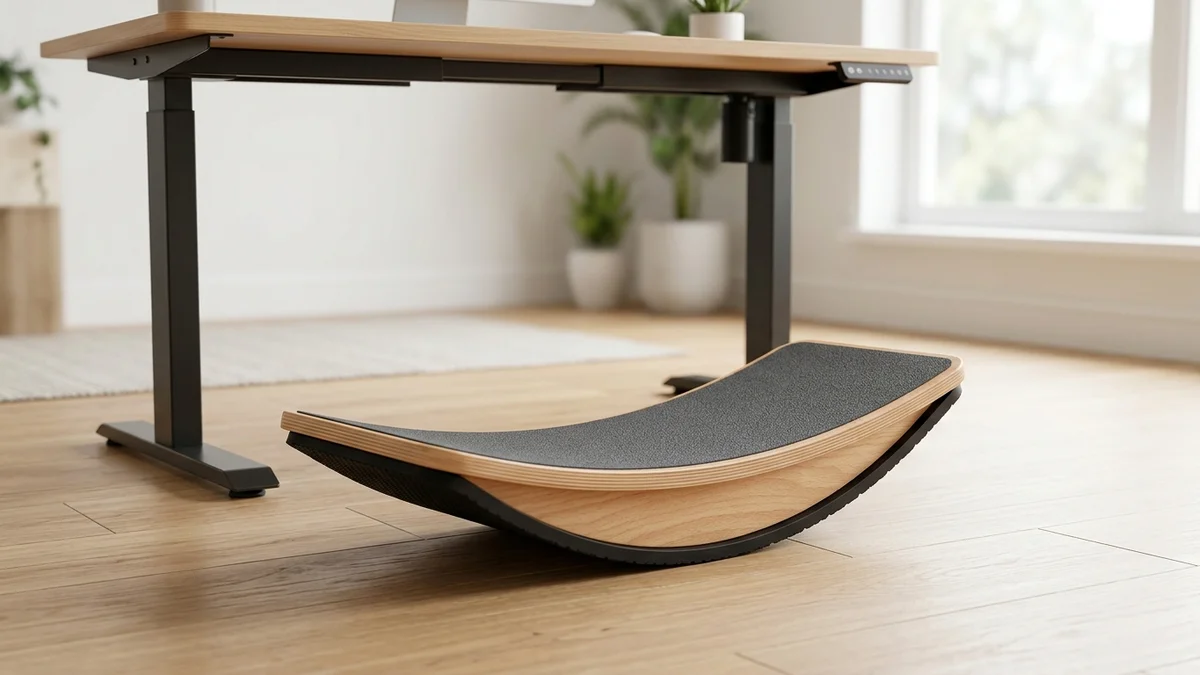
If your legs get tired and heavy, a balance board helps. The small continuous movement keeps circulation better than standing completely still.
If you just get bored or distracted standing, a balance board doesn't fix that. Neither does an anti-fatigue mat.
Most people benefit from combining an anti-fatigue mat underneath a balance board. The mat cushions your feet. The board keeps your legs from going static. Together they extend comfortable standing time significantly more than either alone.
FAQ
Do balance boards really help with standing desks? For most people, yes. The constant small shifts in weight and balance cut the static muscle fatigue that makes standing uncomfortable after 30-40 minutes. They won't fix foot pain from bad footwear or underlying issues, but for general standing fatigue, they help.
Can you use a balance board on carpet? Balance boards work best on hard floors. On carpet, the base digs in and the movement becomes uneven. If you're on carpet, a flat wobble board with a dome base works better than a rocker board.
How long should you stand on a balance board? Start with 15-20 minute sessions and work up. Most people find they can extend their comfortable standing time by 30-50% compared to standing flat after a week or two of regular use.
Is a balance board or anti-fatigue mat better for a standing desk? For most people, an anti-fatigue mat is the better first purchase if you're new to standing. It solves foot fatigue with no learning curve. A balance board is the step up once you're comfortable standing regularly and want to extend your sessions further.
Can balance boards cause injury? No, provided you use one that's designed for desk use (10-16° tilt range). Exercise balance boards with extreme angles aren't appropriate for prolonged desk standing. The ones in this guide are all designed for low-intensity sustained use.
Bottom line
Start with the Yes4All if you don't know whether balance boards will work for you. Spend $28, find out.
If balance boards work for you and you want something better built, the Fluidstance Level is the right upgrade. The multi-directional movement is noticeably more effective than a single-axis rocker.
Not sure whether you need a balance board or an anti-fatigue mat? The Topo Mini by Ergodriven gives you both in one product and is the right call for most people starting out.
For more on the standing side of your setup, see our best anti-fatigue mats guide. For the science behind why standing and movement actually helps, see our standing desk benefits breakdown. For the desk underneath, our best standing desks for home office guide covers all budgets.
Prices checked July 2026. Amazon prices change frequently.
Essential Workstation Add-Ons Under $35
High-impact accessories verified by our research team to protect your cables and joints.
VIVO Under-Desk Cable Tray
Keeps power strips and heavy adapters off the floor so cables never yank when elevating.
ComfiLife Gel Anti-Fatigue Mat
High-density core reduces heel strike and lower back compression when standing 3+ hours.
VELCRO Brand ONE-WRAP (100pk)
Pre-cut reusable straps that easily unwrap for cord re-routing without scissors.
Soundance Ergonomic Laptop Stand
Elevates laptop screen 6 inches to eye level, preventing forward neck slouch.
Calculate Your Exact Desk & Chair Height
Slide to your height to see ANSI/BIFMA recommended standing and sitting presets.
Written by M. Haris
✓ BIFMA G1-2017 Certified EvaluatorFounder & Lead Workstation Ergonomics Researcher • 8+ Years Spec Testing
M. Haris leads ergonomic research at The Desk Riser, auditing manufacturer CAD schematics, motor cycle lifespan metrics, BIFMA weight load standards, and long-term user failure patterns across thousands of verified purchases. Every review is independent with 0% sponsored influence. Have questions or spot a warranty update? Email directly at support@thedeskriser.com or explore our Editorial Testing Methodology.
Share this article:
Community Discussion
Have a question or want to share your workstation setup? Join the discussion below.
Comments load automatically as you scroll down.