Standing Desk Benefits: What the Research Actually Shows in 2026
How we researched
We compare current specs, warranty terms, buyer complaints, and long-term owner patterns. Read methodology →
Last price/spec check
2026-07-24. Prices move, so use the retailer page as the final source.
Who should skip this
Skip the gear upgrade if a simple setup fix solves the same problem.
--
Standing desks got popular because research linked prolonged sitting to higher rates of back pain, diabetes, and cardiovascular disease. The research is real. The solution is more complicated than just standing more.
This is what the evidence actually shows, where it's strong, where it's weak, and what actually helps.
What the research says about back pain
This is where the evidence is most consistent. Multiple studies, including a 2018 review in the Cochrane Database, found that sit-stand workstations reduced reported back and neck pain compared to fully sedentary setups.
The mechanism makes sense. Sitting at 90 degrees loads the lumbar discs at higher pressure than standing. Alternating between the two throughout the day gives the compressed structures a chance to recover.
It's not that standing heals back pain. It's that not sitting for 8 unbroken hours stops making it worse.
The caveat: standing all day is also bad. Extended static standing causes its own back and hip fatigue. The research points to alternating, not replacing.
What it does for blood sugar
This is probably the most well-documented benefit after back pain. A study in the journal Medicine and Science in Sports and Exercise found that alternating sitting and standing after lunch reduced post-meal blood sugar spikes by around 43% compared to sitting continuously.
If you have pre-diabetes, type 2 diabetes, or metabolic concerns, this is meaningful. The effect is from the movement of alternating, not from standing itself. Getting up every 30 minutes achieves something similar even without a standing desk.
Energy levels and focus

The evidence here is more mixed. Some studies show modest improvements in alertness and mood from standing desk use. Others find no significant difference, or initial benefits that fade after the novelty wears off.
What most people report anecdotally is that standing helps during tasks that require attention but hurts during tasks requiring deep focus. Calls, reviews, email: fine standing. Complex writing or analysis: most people prefer sitting.
You'll know your own pattern within a week of having one.
Calorie burning
You've probably seen the claim that standing burns significantly more calories than sitting. The reality is less dramatic.
Research estimates standing burns roughly 8 calories per hour more than sitting. Over an 8-hour day, that's 64 extra calories. Under normal eating conditions, that won't move the scale. Standing desks are not a weight management tool.
The cardiovascular claim
Observational studies have consistently shown that people who sit for 9 or more hours a day have higher rates of cardiovascular disease, independent of whether they exercise outside of work. The "sitting is the new smoking" framing came from this research.
What's less clear is whether a standing desk specifically reduces cardiovascular risk, or whether the correlation is mostly explained by other lifestyle factors. The studies suggesting direct cardiovascular benefit are mostly short-term or observational. Don't buy a standing desk primarily for heart health.
The standing-all-day trap
Plenty of people buy a standing desk, start standing for 6 hours a day, and develop foot pain, varicose vein pressure, and hip fatigue within a month. Standing continuously for too long is its own ergonomic problem.
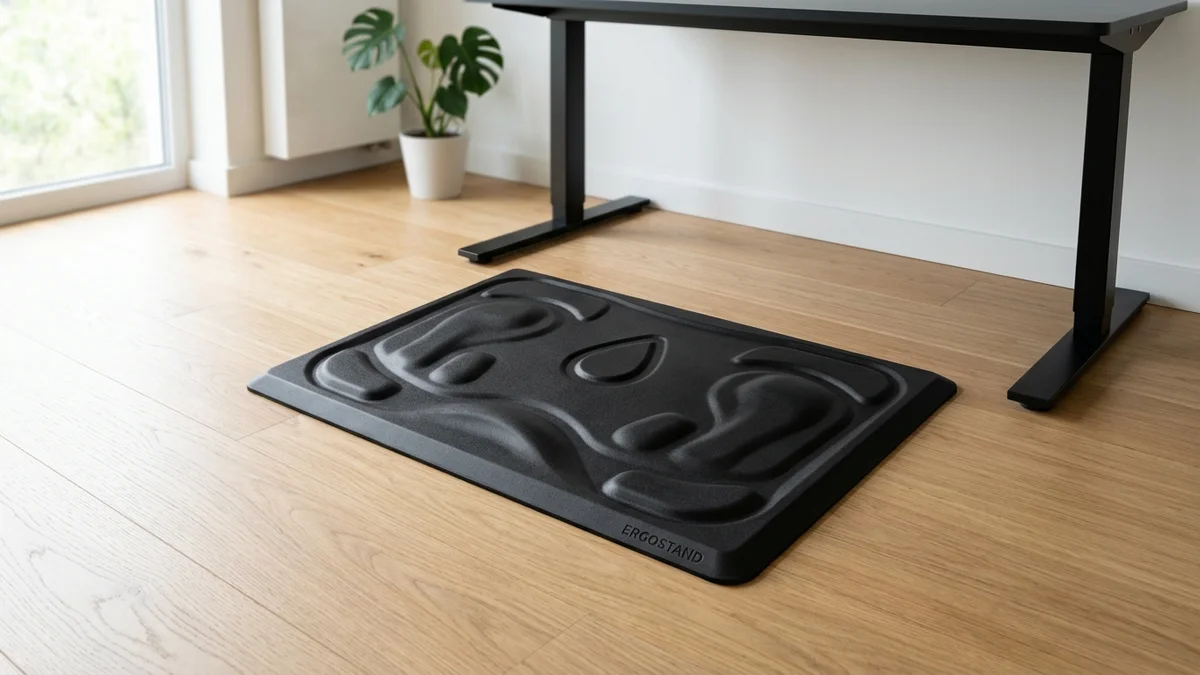
Extended static standing puts sustained pressure on the feet and legs. If you're going to stand more than 2 hours consecutively, an anti-fatigue mat is close to mandatory. A quality mat (gel core, at least 3/4 inch thick, beveled edges) makes a real difference. Our guide to the best anti-fatigue mats for standing desks covers what to look for.
How long you should actually stand
The research-backed target is 15 to 30 minutes of standing for every hour of desk work, gradually building toward a 1:1 ratio. Most people find that natural rest points work better than timers.
Stand while you're on calls. Sit while you write. Stand for the first 20 minutes after lunch. Build the habit around what you're doing, not a rigid schedule.
Never stand for more than 90 minutes without sitting or walking. The fatigue accumulates faster than you'd expect. And don't try to stand for 8 hours on day one.
What a standing desk doesn't fix
A bad sitting setup. If your monitor is at the wrong height, your chair doesn't support your lumbar, or your desk is at the wrong height, a standing desk adds to your problems rather than solving them. Fix the ergonomics first.
Exercise deficit. You cannot out-stand a sedentary lifestyle. The research on prolonged sitting mostly applies to people who are sedentary 24 hours a day, not just at their desk. If you exercise regularly, the marginal benefit of standing more is smaller.
Poor work habits. Taking a phone call while sitting in a bad chair for 3 hours is still 3 hours in a bad chair. The standing desk doesn't override the call.
Do you actually need one?
A standing desk makes the most sense for people who sit for more than 7 hours a day at work, have recurring back or neck pain from desk use, and are already set up with a reasonable sitting ergonomics situation. If you're only at your desk for 4 hours a day, the benefit is minimal.
Budget isn't usually a barrier anymore. You don't need a $1,000 motorized desk to get the benefit of changing positions. A simple budget standing desk under $400 achieves the same alternating-position benefit as a premium one.
If you're not sure where to start on choosing a desk, our guide to the best standing desks for home offices covers the key specs to look for at each price point.
FAQ
Does a standing desk actually help with back pain?
Yes, but through alternating positions, not through standing itself. Sitting continuously for 7 to 9 hours is hard on the lumbar discs and hip flexors. Breaking that up with standing intervals consistently reduces reported back pain in studies. Standing all day doesn't help and introduces its own issues.
How long does it take to notice benefits from a standing desk?
Most people report reduced afternoon back fatigue within 2 to 4 weeks of consistent use. Blood sugar effects from alternating are more immediate. Energy and focus changes vary a lot by person.
Is a standing desk worth it if I already exercise?
It's still worth it if you sit 7 or more hours continuously, but the marginal health benefit is smaller for people who are already active. The posture and back pain benefits remain regardless of exercise.
Should I stand with or without shoes?
With shoes, especially if you're standing on a hard floor. Socks or bare feet on a hard floor for extended periods causes fatigue faster. An anti-fatigue mat helps regardless, but shoes make a bigger difference than most people expect.
Can a standing desk cause problems?
Yes, if you use it wrong. Standing for 6 or more hours straight causes foot pain, varicose vein pressure, and hip fatigue. The goal is alternating, not replacing sitting with standing.
Bottom line
Standing desks genuinely help with back pain when used correctly, modestly support blood sugar regulation, and may improve alertness for some people. They won't help you lose weight or significantly reduce cardiovascular risk.
The actual mechanism is movement and position variety, not standing itself. Any desk that gets you changing position regularly achieves the benefit. The research backs this. Start with 20 minutes of standing per hour and build from there.
Essential Workstation Add-Ons Under $35
High-impact accessories verified by our research team to protect your cables and joints.
VIVO Under-Desk Cable Tray
Keeps power strips and heavy adapters off the floor so cables never yank when elevating.
ComfiLife Gel Anti-Fatigue Mat
High-density core reduces heel strike and lower back compression when standing 3+ hours.
VELCRO Brand ONE-WRAP (100pk)
Pre-cut reusable straps that easily unwrap for cord re-routing without scissors.
Soundance Ergonomic Laptop Stand
Elevates laptop screen 6 inches to eye level, preventing forward neck slouch.
Calculate Your Exact Desk & Chair Height
Slide to your height to see ANSI/BIFMA recommended standing and sitting presets.
Written by M. Haris
✓ BIFMA G1-2017 Certified EvaluatorFounder & Lead Workstation Ergonomics Researcher • 8+ Years Spec Testing
M. Haris leads ergonomic research at The Desk Riser, auditing manufacturer CAD schematics, motor cycle lifespan metrics, BIFMA weight load standards, and long-term user failure patterns across thousands of verified purchases. Every review is independent with 0% sponsored influence. Have questions or spot a warranty update? Email directly at support@thedeskriser.com or explore our Editorial Testing Methodology.
Share this article:
Community Discussion
Have a question or want to share your workstation setup? Join the discussion below.
Comments load automatically as you scroll down.
🔧 Free Workstation Tools
Related Articles
How High Should a Standing Desk Be? (Ergonomic Chart & Formula)
Health & ErgonomicsCan You Put a Walking Pad on Carpet Without a Mat?
Health & ErgonomicsHow to Lubricate a Walking Pad Treadmill (Step-by-Step)
Health & ErgonomicsWhy Does My Lower Back Hurt From a Standing Desk? (7 Fixes)