Steelcase Gesture vs Herman Miller Embody (2026)
Published 2026-08-31
How we researched
We compare current specs, warranty terms, buyer complaints, and long-term owner patterns. No fake hands-on claims.
Last price/spec check
2026-08-31. Prices move, so use the retailer page as the final source.
Who should skip this
Skip anything that does not fit your body, room, budget, or return-window comfort level.
Disclosure: We earn a commission if you buy through links on this page, at no extra cost to you.
When you decide to invest north of $1,400 into an ergonomic office chair, the conversation almost always narrows down to two undisputed flagships: the Steelcase Gesture and the Herman Miller Embody.
Both chairs represent the absolute pinnacle of commercial seating engineering. Both come backed by industry-standard 12-year multi-shift warranties, robust build quality, and millions of hours of real-world use by software engineers, corporate executives, and creative professionals worldwide.
Yet, their ergonomic philosophies could not be more distinct.
The Steelcase Gesture was engineered specifically around the modern multi-device workday. Its hallmark feature is an unmatched 360-degree articulating armrest system and an adaptive LiveBack frame designed to support your body whether you are typing, swiping a tablet, taking a phone call, or reclining.
The Herman Miller Embody, by contrast, was conceived alongside biomechanics medical researchers to actively lower heart rate and reduce spinal compression. It uses an exposed, dynamic pixelated matrix that contours to your individual vertebrae and encourages natural movement throughout long 10+ hour sessions.
If you are spending between $1,400 and $2,200, choosing the wrong model for your specific body frame, posture habits, and desk setup can lead to shoulder tension or tailbone fatigue. Below is our comprehensive, spec-tested comparison to help you invest with complete confidence.
Quick Verdict: Our Top Picks at a Glance
Short on time? Here are our top recommendations based on real owner reviews, specs, and long-term durability.
Steelcase Gesture
3D LiveBack & 360° Articulating Arms
Herman Miller Embody
Pixelated Support Matrix & BackFit
Quick Verdict: Gesture vs Embody
| Chair | Price Range | Backrest Support | Best For |
|---|---|---|---|
| Steelcase Gesture | ~$1,399 – $1,750 | 3D LiveBack & 360° Articulating Arms | Multi-device workers & tablet users |
| Herman Miller Embody | ~$1,795 – $2,295 | Pixelated Support Matrix & BackFit | Dynamic spine alignment & 8+ hr posture |
[Need personalized matching? Use our 60-Second Chair Finder Tool](/chair-finder)
1. Armrest Adjustability: The Gesture's Decisive Advantage
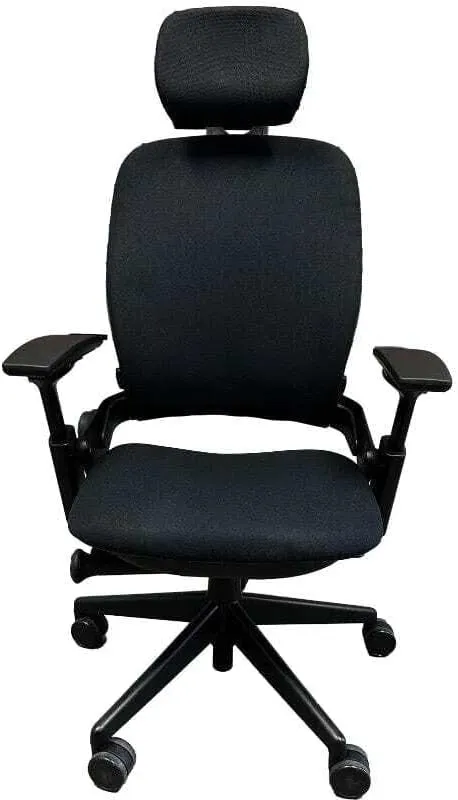
If your workday involves holding a smartphone, drawing on an iPad, using a trackball mouse, or typing on a split ergonomic keyboard, armrest flexibility is paramount. This is where the Steelcase Gesture establishes its greatest competitive advantage over every other chair on the market.
Steelcase Gesture Armrests
The Gesture's armrests do not simply slide forward and back on a fixed track. They are mounted to articulating ball-and-socket joints that mimic the movement of the human arm:
- 360-Degree Articulation: You can pull the arm pads tight against your ribcage when typing on a compact keyboard or holding a phone, or splay them outward when leaning back to review code.
- Extreme Height & Width Range: The arm pads adjust up to 4.25 inches vertically, rotate 360 degrees, and slide across an incredible width span of 10.25 to 22.5 inches.
- Stays Parallel to Work Surface: As you recline, the armrests pivot naturally so your elbows remain supported at your desk height without forcing your shoulders upward into a shrug.
Check Steelcase Gesture Price on Amazon
Herman Miller Embody Armrests
The Embody takes a far more traditional, conservative approach to arm support:
- 2D Adjustability: The Embody armrests only move in two directions: up/down (height) and in/out (width via a push-button ratchet release).
- No Forward/Back or Pivot Adjustments: The arm pads cannot slide forward, backward, or angle inward. If you like to type with your elbows tucked closely into your torso, the Embody armrests may feel too wide or slightly positioned too far forward.
- Padding: While the pads are wide and cushioned with comfortable polyurethane, they feel decidedly rudimentary when compared to the Gesture's robotic versatility.
Winner: Steelcase Gesture (Decisive). If armrest ergonomics and device switching matter to your workflow, the Gesture is in a league of its own.
2. Backrest Ergonomics: LiveBack vs Pixelated Matrix
Both chairs feature revolutionary backrests that reject traditional rigid foam pads in favor of flexible, spine-adaptive structures.
Herman Miller Embody: Pixelated Matrix & BackFit
The Embody's backrest is engineered to function like an external spine. It features a central spine spine beam connected to an array of flexible polymer ribs and dozens of independent "pixels":
- Micro-Adaptive Pressure Distribution: Every pixel collapses individually according to how hard your thoracic vertebrae and ribs press against it. This eliminates localized pressure points along the middle spine.
- Narrow Upper Profile: The backrest tapers inward near the top. This intentional design leaves your shoulder blades completely unobstructed, allowing you to stretch your chest, twist your torso, and rotate your shoulders without bumping into an outer plastic rim.
- BackFit Tuner: A dedicated knob on the lower-right side alters the spinal curvature of the chair from a flat, relaxed recline to an aggressive forward thoracic curve that supports upright typing.
Check Herman Miller Embody Price on Amazon
Steelcase Gesture: 3D LiveBack with Core Equalizer
The Steelcase Gesture uses a flexible composite back shell called 3D LiveBack:
- Continuous Lumbar & Thoracic Tracking: As you lean back, the Gesture’s back shell shifts its internal geometry to maintain constant contact with your lower lumbar curve without requiring you to manually readjust a lumbar pad.
- Core Equalizer Linkage: Steelcase built a mechanical linkage between the backrest and the seat. When you recline deeply, the lumbar support automatically firms up, providing extra resistance right where your lower spine experiences the highest gravitational load.
- Flexible Perimeter Edge: The edges of the Gesture backrest are soft and pliable, preventing any sharp pressure on your upper back when sitting sideways or stretching.
Winner: Herman Miller Embody. While the Gesture provides outstanding uniform back support, the Embody’s exposed pixel matrix delivers superior thoracic mobility and adaptive pressure relief for long 8+ hour sessions.
3. Seat Cushioning, Sizing & Sitting Freedom
Seat comfort is deeply subjective, but the internal architecture of these two seats produces distinctly different sitting sensations.
Herman Miller Embody: 4-Layer Spring Matrix
The Embody does not use standard foam padding. Instead, its seat is built from four distinct layers:
- A molded plastic support base.
- A matrix of polymer spring coils.
- A breathable scrim distribution layer.
- A durable top textile cover (Sync or Balance fabric).
This construction creates an active, trampoline-like suspension. It distributes weight across your sit bones without ever bottoming out. Because there is no thick slab of foam to trap heat, the Embody remains noticeably cooler over long workdays.
Seat Depth Adjustment: The Embody features two pull-out handles at the front corners of the seat that roll the front edge in or out to match your thigh length.
Steelcase Gesture: Contoured High-Density Foam
The Gesture uses an advanced, highly durable polyurethane foam seat cushion with built-in air pockets that compress under your sit bones:
- Perimeter Edge Flex: The front, left, and right perimeter edges of the Gesture seat are soft and flexible. If you like to sit with one leg tucked under your thigh, cross your legs occasionally, or perch on the edge of your seat, the Gesture accommodates alternative postures far better than the Embody.
- Seat Depth Mechanism: The Gesture uses a smooth mechanical turn-knob on the right side that slides the entire seat pan forward or backward by 2.5 inches. It is easily the slickest seat slider mechanism in the commercial furniture industry.
Winner: Tie. Choose the Embody if you run warm and prefer a firm, suspended, zero-bottom-out seat. Choose the Gesture if you prefer familiar contoured foam cushioning and the freedom to sit cross-legged or tucked.
4. Recline Mechanics & Tilt Tension
How a chair reclines determines how fatigue-free you feel at the end of an 8-hour shift.
                               ┌──────────────────────────────────────────────┐
                               │           RECLINE PHILOSOPHY                 │
                               └──────────────────────────────────────────────┘
                                      │                                │
                     ┌────────────────┴──────────────┐                 │
                     ▼                               ▼                 ▼
          STEELCASE GESTURE               HERMAN MILLER EMBODY
          • 4-Position Back Stop          • Smooth Floating Harmonic Tilt
          • Variable core tension wheel   • 3-Position Tilt Limiter
          • Upright to deep 135° recline  • Smooth, synchronized eye-level
          • Best for structured tasks     • Best for deep recline & flow
Herman Miller Embody (Harmonic Tilt)
The Embody uses Herman Miller’s patented Harmonic Tilt mechanism. As you push back, the seat pan tilts slightly downward at the rear while the backrest expands, keeping your pelvis anchored and your feet flat on the floor. The resistance curve is silky smooth and effortless - you can float at a 110-degree or 120-degree recline without feeling like the chair is trying to snap you forward or dump you backward.
Steelcase Gesture (Variable Back Stop)
The Gesture utilizes a synchronized tilt mechanism with a 4-position back stop selector:
- Fully upright lock (for focused data entry or gaming).
- Mid-range tilt (105 degrees).
- Relaxed working tilt (115 degrees).
- Deep lounge recline (up to 135 degrees).
The tension knob requires very few turns to transition from stiff resistance to a light, effortless recline. For power users working at standing desk converters or multi-monitor setups, having distinct stop angles provides predictable support.
5. Headrest & Ergonomic Accessories
For users who suffer from cervical neck strain or like to recline during phone calls and video meetings, headrest availability is a major buying factor.

- Steelcase Gesture Factory Headrest: Steelcase manufactures an optional, fully integrated factory headrest for the Gesture. It features 5 inches of vertical travel, 4 inches of forward/backward adjustment, and 90 degrees of tilt rotation. It is widely considered the best factory headrest on any high-end office chair.
- Herman Miller Embody Headrest: Herman Miller does not manufacture a factory headrest for the Embody (they argue the dynamic spine should move freely). However, third-party manufacturers (such as Atlas Headrest) have created color-matched aftermarket headrests that clamp securely onto the Embody's frame.
If you know you need an integrated headrest out of the box, the Steelcase Gesture with Headrest is the clear recommendation.
6. Head-to-Head Technical Specifications
| Specification | Steelcase Gesture | Herman Miller Embody |
|---|---|---|
| Overall Height | 39.25" – 44.25" (w/o headrest) | 42" – 45" |
| Seat Height | 16" – 21" | 16" – 20.5" |
| Seat Width | 20" | 21.25" |
| Seat Depth | 15.75" – 18.25" | 15" – 18" |
| Backrest Width | 16.75" | 14" (Top) to 18" (Lumbar) |
| Arm Height Range | 7.25" – 11.5" (4.25" travel) | 6.5" – 11.5" (5" travel) |
| Arm Width Range | 10.25" – 22.5" | 12" – 21" |
| Max User Weight | 400 lbs (181 kg) | 300 lbs (136 kg) |
| Chair Weight | ~57 lbs | ~51 lbs |
| Assembly Required | Fully assembled in box | Fully assembled in box |
| Warranty Coverage | 12 Years (All components) | 12 Years (24/7 multi-shift) |
7. What Reddit & Real Users Say (1+ Year Realities)
Both chairs have massive followings on r/OfficeChairs and r/Ergonomics. Here is the unvarnished consensus after 1+ years of daily use:
Steelcase Gesture Feedback:
- Pros: The armrests receive universal praise as the best ever built. Users love that they can pull the arm pads all the way in when using a smartphone or writing notes. The build quality feels heavy, industrial, and indestructible.
- Cons: A minority of users feel the seat cushion is on the firmer side and can feel dense after 6+ continuous hours of sitting without standing up. (We recommend pairing it with a standing desk routine - see our 20-8-2 Rule Sit-Stand Guide).
Herman Miller Embody Feedback:
- Pros: Users with persistent lower back stiffness and thoracic spine tightness report dramatic relief within two weeks. The floating recline and breathable backrest make 10-hour coding marathons effortless.
- Cons: The armrests are considered frustratingly basic for a $1,800+ chair. Some users report slight plastic creaking when shifting weight aggressively, though this does not affect structural integrity.
8. The Final Verdict: Which Flagship Should You Buy?
Both the Steelcase Gesture and Herman Miller Embody are generational investments that will protect your spine, improve your daily comfort, and easily last 12 to 15+ years.
                              ┌────────────────────────────────────────────────────────┐
                              │                 WHICH CHAIR WINS FOR YOU?              │
                              └────────────────────────────────────────────────────────┘
                                           │                              │
                        ┌──────────────────┴─────────────┐                │
                        ▼                                ▼                ▼
             BUY THE STEELCASE GESTURE        BUY THE HERMAN MILLER EMBODY
             • You work across multiple devices • You want superior thoracic mobility
             • You need 360° arm adjustments  • You want a suspended, cooling seat
             • You want a factory headrest    • You prefer floating harmonic recline
             • Your weight is up to 400 lbs   • You sit in standard typing postures
Buy the Steelcase Gesture if:
- You switch between devices constantly: If your day involves laptops, tablets, smartphones, and dual monitors, the Gesture’s 360-degree armrests are unmatched.
- You want an exceptional factory headrest: The Gesture’s integrated headrest option provides full cervical support during reclined work.
- You sit in varied, unconventional postures: The flexible seat edges allow you to cross your legs or sit tucked without hitting rigid frame borders.
- You weigh over 300 lbs: The Gesture supports up to 400 lbs compared to the Embody’s 300 lb limit.
👉 Check Steelcase Gesture Availability & Pricing on Amazon
Buy the Herman Miller Embody if:
- You want the ultimate dynamic spinal support: The pixelated back matrix flexes with every micro-movement of your vertebrae.
- You suffer from upper back or shoulder blade tightness: The narrow upper backrest lets your shoulders drop back freely without hitting a frame.
- You run hot during long workdays: The 4-layer spring matrix seat stays significantly cooler than traditional molded foam cushions.
- You love an effortless, floating recline: The Harmonic Tilt allows you to recline while keeping your eyes aligned with your monitor.
👉 Check Herman Miller Embody Availability & Pricing on Amazon
Frequently Asked Questions (FAQ)
Is the Steelcase Gesture or Herman Miller Embody better for tall people?
Both chairs comfortably accommodate tall users up to 6'4" (193 cm). However, the Steelcase Gesture is slightly better for very tall or heavy users because of its higher 400 lb weight capacity, 2.5-inch seat depth adjustment range, and available tall factory headrest.
Can you add a headrest to the Herman Miller Embody?
Yes. While Herman Miller does not manufacture an OEM headrest, third-party companies like Atlas Headrest make color-matched, ergonomic headrests engineered specifically for the Embody's frame that install in under 10 minutes.
How does the Steelcase Leap V2 compare to the Gesture?
The Leap V2 features independent upper and lower back firmness controls and a more flexible lower lumbar curve. The Gesture features much more advanced 360-degree armrests and a more modern, streamlined aesthetic. For full details, read our Steelcase Leap vs Herman Miller Aeron guide.
Which chair is better for gaming and programming?
For long coding marathons where you maintain an upright or slightly reclined posture, the Herman Miller Embody (especially the Logitech Embody edition) is exceptional due to its back support. For multi-device workflows and controller gaming where arm positions shift constantly, the Steelcase Gesture is superior.
Related Ergonomic Guides:
Not sure what desk height fits your body?
Use our BIFMA calculator to find your exact standing desk and chair height.
The Desk Riser Research Team
Standing Desk & Home Office Researchers
We research standing desks, ergonomic chairs, and home office gear by analyzing manufacturer specs, warranty terms, and real owner review patterns across thousands of purchases. No sponsored placements. No fake hands-on claims.
Share this article:
Comments
Have a question or want to share your setup? Leave a comment below.