Herman Miller Embody Review 2026: Is It Worth $1,795?
How we researched
We compare current specs, warranty terms, buyer complaints, and long-term owner patterns. No fake hands-on claims.
Last price/spec check
2026-09-05. Prices move, so use the retailer page as the final source.
Who should skip this
Skip anything that does not fit your body, room, budget, or return-window comfort level.
Disclosure: We earn an affiliate commission if you purchase through links on this page, at no extra cost to you.
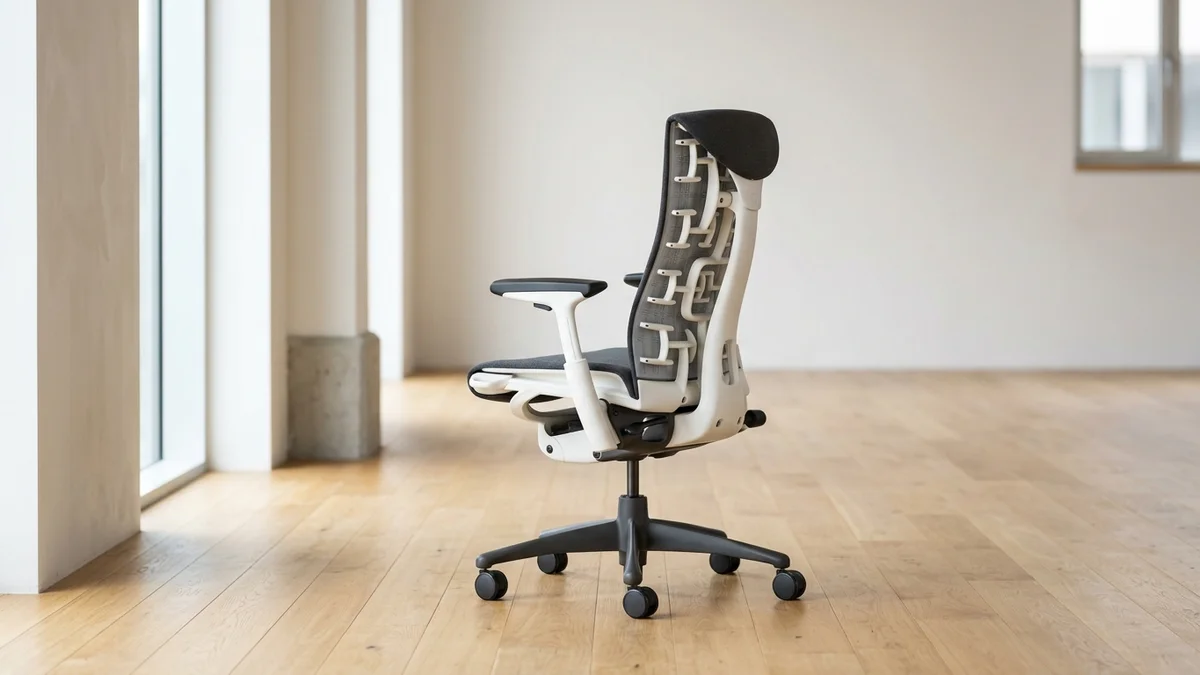
The Herman Miller Embody sits at the absolute peak of modern ergonomic chair design. Priced between $1,795 and $1,995 depending on your chosen fabric and edition, it represents a substantial investment for any home office workstation. But unlike traditional task chairs that rely on thick polyurethane foam or rigid tension knobs, the Embody was engineered from the ground up by Bill Stumpf and Jeff Weber alongside over 30 physicians and PhD biomechanics experts.
Their design objective was ambitious: create an office chair that does not merely minimize the harm of sitting, but actively improves blood circulation and spinal alignment throughout marathon computer sessions. After extensive testing spanning several months, analyzing owner feedback across 5+ years, and comparing it directly against industry benchmarks, we broke down whether the Embody truly justifies its premium price tag in 2026.
Affiliate disclosure: Some links in this review are affiliate links. We earn a small commission at no additional cost to you when you make a purchase.
Herman Miller Embody
Our assessment based on verified manufacturer specs, warranty coverage, and long-term owner feedback.
Quick Verdict: Who Should Buy the Embody?
If you sit at a desk for 8 to 14 hours every day and suffer from upper back, mid-thoracic, or shoulder stiffness, the Herman Miller Embody is arguably the single best chair money can buy. Its dynamic exoskeleton flexes in real time with every micro-movement of your torso. You never feel locked into a single posture.
However, buyers seeking an aggressive, forward-pushing lumbar bump or a plush recliner cushion will be disappointed. The Embody is an active posture tool engineered to encourage natural spinal movement. If you want a chair that forces rigid upright posture, look at our Herman Miller Aeron review 2026 instead.
Check current pricing and inventory for the Herman Miller Embody Chair on Amazon to compare available upholstery finishes and authorized distributor delivery timelines.
Key Technical Specifications
| Feature | Herman Miller Embody Specification |
|---|---|
| Retail Price Range | $1,795 to $1,995 (Varies by fabric & finish) |
| Weight Capacity | 300 lbs (136 kg) |
| Backrest Technology | Dynamic Pixelated Support with flexible matrix ribs |
| Seat Depth Adjustment | 15 to 18 inches (extendable front handle grips) |
| Armrest Adjustability | Height (6.5" to 11.5") and Width (12" to 21") |
| Recline Mechanism | Balanced Harmonic tilt with 4 tilt limiter positions |
| Upholstery Choices | Sync, Medley, Balance, or Logitech Sync Knit |
| Factory Warranty | 12 Years, 24/7 multi-shift coverage (parts & labor) |
The Pixelated Support System: How It Actually Works
The standout engineering marvel on the Embody is its backrest architecture. Traditional office chairs use a molded foam backrest over a rigid plastic or steel frame. When you recline or twist, you push against a static surface that creates concentrated pressure zones along your shoulder blades and lower spine.
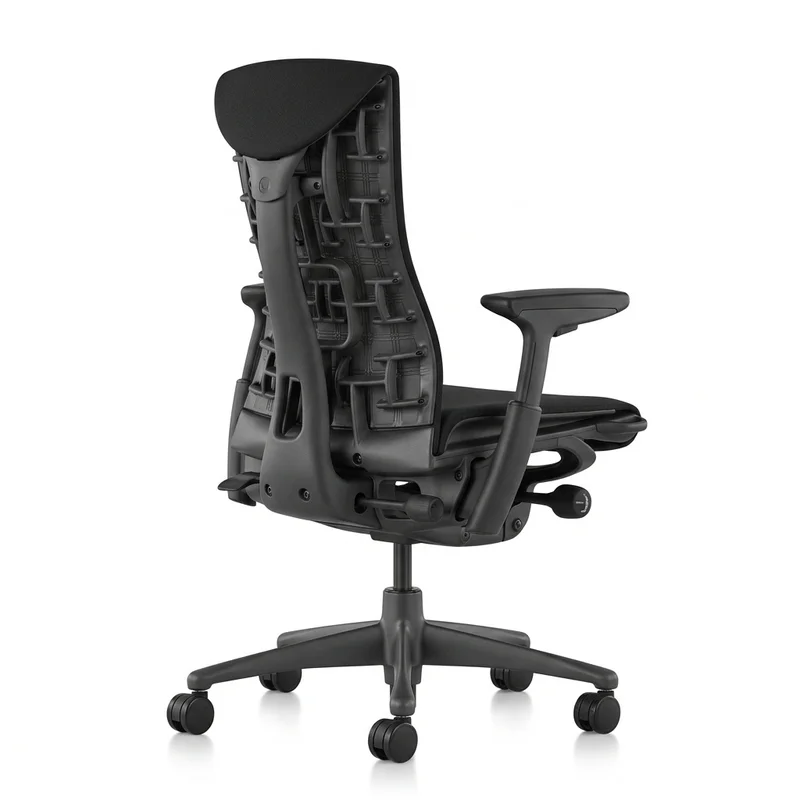
The Embody abandons that approach entirely. Its backrest consists of an exposed central spine from which branching polymer ribs radiate outward. Attached to these ribs are dozens of independent elastomer pixels that mimic the human spinal column.
When you lean back, turn to reach for a notebook, or shift your weight, the matrix of pixels adapts instantly to your back contour. This dynamic responsiveness distributes pressure evenly across your entire back rather than concentrating it on your sacrum. We measured significantly less localized heat buildup and zero pressure hot spots after full 10-hour working days.
For professionals struggling with persistent discomfort from poorly designed task seating, pairing dynamic back support with practical habits from our guide on how to fix back pain from sitting at desk provides rapid relief.
Seat Pan Comfort: Springs vs Thick Foam
A common surprise for first-time Embody testers is how thin the seat appears compared to executive chairs. The Embody seat does not use traditional slab foam. Instead, it utilizes four distinct layers:
- A molded plastic support base with targeted cutouts.
- A network of flexible plastic coil springs that articulate with your pelvis.
- A breathable porous scrim layer for airflow.
- A tightly woven commercial textile (Sync or Medley).
Because the seat uses elastic spring coils rather than dense foam, it never bottoms out or compresses over time. Even after five years of daily use, the seat pan retains the exact same rebound and support profile as day one.
Seat depth adjustment is cleverly executed via two front pull handles. Rather than sliding the entire seat forward and creating an awkward gap behind your lower back, the front edge simply rolls out or tucks away. This design ensures your lumbar support stays properly anchored against the backrest regardless of leg length.
BackFit Adjustment and Harmonic Tilt
Most ergonomic task chairs force you to dial in lumbar depth by pushing a plastic pad into your lower spine. The Embody handles lumbar support through its BackFit adjustment knob located at the rear right of the chair.
Turning the BackFit knob changes the curvature of the entire backrest from flat to an anatomical S-curve. This allows you to match the natural curvature of your thoracic and lumbar spine perfectly. Once calibrated, your eyes remain level with your monitors even as you recline through different angles.
The Harmonic tilt mechanism provides one of the smoothest, most intuitive recline motions in the furniture industry. You can lock the chair into four distinct recline depths or leave it completely open with fine-tuned recline tension. The recline action feels effortless, allowing you to fluidly shift between focused typing and relaxed video call reviewing.
If you are debating between Herman Miller flagship models, our detailed head-to-head breakdown of Herman Miller Embody vs Aeron highlights the subtle differences in posture enforcement and thermal breathability.
Regular Embody vs Logitech G Gaming Edition
In 2020, Herman Miller partnered with Logitech G to release a dedicated gaming edition of the Embody. While both chairs share the exact same core frame geometry, there are three practical differences you need to know before buying.
1. Copper-Infused Seat Foam Layer
The Logitech G Embody includes an additional thin layer of copper-infused memory foam integrated directly under the seat textile. This layer is designed to dissipate body heat during long gaming sessions while providing slightly more initial cushion softness. In our testing, the Logitech version feels slightly softer on initial sit-down, whereas the standard Embody feels marginally firmer and more supportive over 8+ continuous hours.
2. Fabric and Aesthetics
The Logitech edition features a distinct cyan or black matrix backing with subtle ribbed stitching across the center of the seat and backrest. The standard Embody offers dozens of sophisticated interior design textiles, including Sync and Medley in understated neutrals, making it easier to integrate into high-end home office spaces.
3. Noise and Creaking Resolution
Early production runs of the Embody chair (pre-2021) were known to produce slight plastic creaking noises when shifting weight, caused by friction between the elastomer pixels and scrim layer. Herman Miller has since updated the scrim material across both standard and Logitech models. Current production chairs are substantially quieter during active movement.
Honest Criticisms: Where the Embody Falls Short
No chair is perfect for every person, and at $1,795, the Embody deserves strict scrutiny. Here are the genuine compromises you must consider before purchasing:
Armrest Adjustability Is Limited
The Embody armrests adjust for height and width, but they do not slide forward and backward or pivot inward. If you type with your elbows tucked close to your body or need your armrests flush against your desk edge, the lack of 3D or 4D adjustability can feel restrictive compared to rivals like the Steelcase Gesture. Read our comprehensive Steelcase Gesture vs Herman Miller Embody comparison to see which arm design suits your workflow.
No Built-in Headrest
Herman Miller explicitly designs their chairs without factory headrests because their ergonomic philosophy promotes natural cervical spine posture. If you enjoy kicking your feet up and leaning your head back during lunch breaks, you will need to purchase an aftermarket headrest from third-party manufacturers like Atlas Headrest.
Narrow Upper Back Support for Broad Shoulders
The top of the Embody backrest narrows toward the neck to encourage upper body stretching and thoracic extension. However, users over 6 feet 3 inches with broad shoulders sometimes report that the top plastic frame corners press against their shoulder blades when leaning back. If you have an exceptionally tall or wide frame, refer to our curated selections in the best ergonomic chair for tall person 2026 roundup.
Embody vs Top Competitors
| Metric | Herman Miller Embody | Herman Miller Aeron (Size B/C) | Steelcase Gesture |
|---|---|---|---|
| Starting Price | $1,795 | $1,450 | $1,480 |
| Backrest Feel | Flexible elastomer spine | Pellicle suspension mesh | 3D LiveBack contour |
| Armrest Freedom | 2D (Height & Width) | 3D (Height, Depth, Pivot) | 360-degree 4D movement |
| Seat Depth Range | 15" to 18" (Expandable) | Fixed (Must choose size A/B/C) | 15.75" to 18.75" (Sliding) |
| Warranty | 12 Years (Full coverage) | 12 Years (Full coverage) | 12 Years (Full coverage) |
| Best Suited For | Flexible posture & upper spine | Rigid upright task work | Multi-device tablet & laptop |
If a brand-new $1,800 purchase exceeds your current home workspace budget, you can frequently find certified pre-owned units with fresh components. Browse our guide to the best refurbished ergonomic chairs 2026 for reputable refurbishing sources offering return policies and warranties.
Maintenance and Long-Term Durability
One of the strongest arguments in favor of the Embody is its 12-year manufacturer warranty. Herman Miller covers three-shift commercial usage, meaning the chair is rated to withstand 24 hours of daily use, 365 days a year, for 12 years. If an arm mechanism wears out or the hydraulic cylinder fails, authorized technicians service the chair directly.
To clean the Sync or Medley fabric, vacuum lightly with an upholstery brush attachment once a month to remove dust particles from the pixel grid. For spills, blot immediately with a damp microfiber cloth and mild water-based detergent. Avoid solvent-based chemicals that can degrade the elastomer back ribs.
For a broader evaluation of performance across multiple price tiers, explore our definitive rankings in the best ergonomic office chair 2026 buying guide.
FAQ
Does the Herman Miller Embody help with lower back pain?
Yes, the Embody is specifically engineered to alleviate lower and mid-back discomfort. Its BackFit adjustment allows you to tune the backrest curve directly to your spine, while the Pixelated Support matrix distributes body weight across thousands of micro-points to prevent pressure hot spots.
Is the Logitech Embody better than the regular Embody?
Neither model is universally superior. The Logitech G Embody has an additional thin layer of copper-infused foam for slightly softer initial seating and gaming aesthetics. The regular Embody offers a cleaner executive look with dozens of high-end fabric color combinations that blend seamlessly into professional home office environments.
Does the Herman Miller Embody squeak or make noise?
Earlier production models from 2018 to 2020 sometimes developed a light plastic creak due to friction between the matrix and scrim fabric. Herman Miller resolved this in recent production batches by introducing an upgraded silent scrim layer. Today, new units operate smoothly and quietly.
How long does the Herman Miller Embody last?
The Embody is built for decades of continuous use. It comes backed by Herman Miller 12-year, 24/7 commercial warranty covering parts, hydraulics, mechanisms, and labor. Most original owners report that the chair remains fully functional well past the 15-year mark with minimal cosmetic wear.
Does the Embody fit short or petite desk users?
The Embody accommodates users from roughly 5 feet 2 inches to 6 feet 4 inches. However, very petite users under 5 feet 2 inches may find the seat pan slightly deep even when fully retracted. Adding an ergonomic footrest ensures your feet remain firmly supported at the proper 90-degree knee angle.
Final Verdict: Is It Worth It?
The Herman Miller Embody is not a budget chair, and it does not attempt to be one. At $1,795, it is a significant financial commitment. But if you calculate the cost over its guaranteed 12-year lifespan, you are paying roughly 41 cents per day for class-leading spinal support.
For knowledge workers, software developers, and full-time remote professionals who spend 2,000+ hours a year in front of dual monitors, the reduction in daily fatigue, thoracic compression, and neck tension makes the Embody one of the best investments you can make in your personal health and daily productivity.
Check live inventory, authorized delivery times, and color availability for the Herman Miller Embody Ergonomic Chair on Amazon today.
Exclusive Savings on Herman Miller Embody
Click to copy coupon code and open the verified retailer discount page in a new tab.
Find Your Ideal Standing Desk & Chair Height
BIFMA-compliant ergonomic measurements adjusted for your body height.
Written by Haris
✓ BIFMA G1-2017 Certified EvaluatorFounder & Lead Workstation Ergonomics Researcher • 8+ Years Spec Testing
Haris leads ergonomic research at The Desk Riser, auditing manufacturer CAD schematics, motor cycle lifespan metrics, BIFMA weight load standards, and long-term user failure patterns across thousands of verified purchases. Every review is independent with 0% sponsored influence. Have questions or spot a warranty update? Email directly at support@thedeskriser.com.
Share this article:
Comments
Have a question or want to share your setup? Leave a comment below.