Haworth Fern vs Herman Miller Embody: 2026 Ergonomic Test

How we researched
We compare current specs, warranty terms, buyer complaints, and long-term owner patterns. Read methodology →
Last price/spec check
2026-09-13. Prices move, so use the retailer page as the final source.
Who should skip this
Skip anything that does not fit your body, room, budget, or return-window comfort level.
Spending $1,500 on an office chair changes what you expect from plastic and fabric. At this price point, you are not paying for generic comfort; you are buying spinal mechanics.
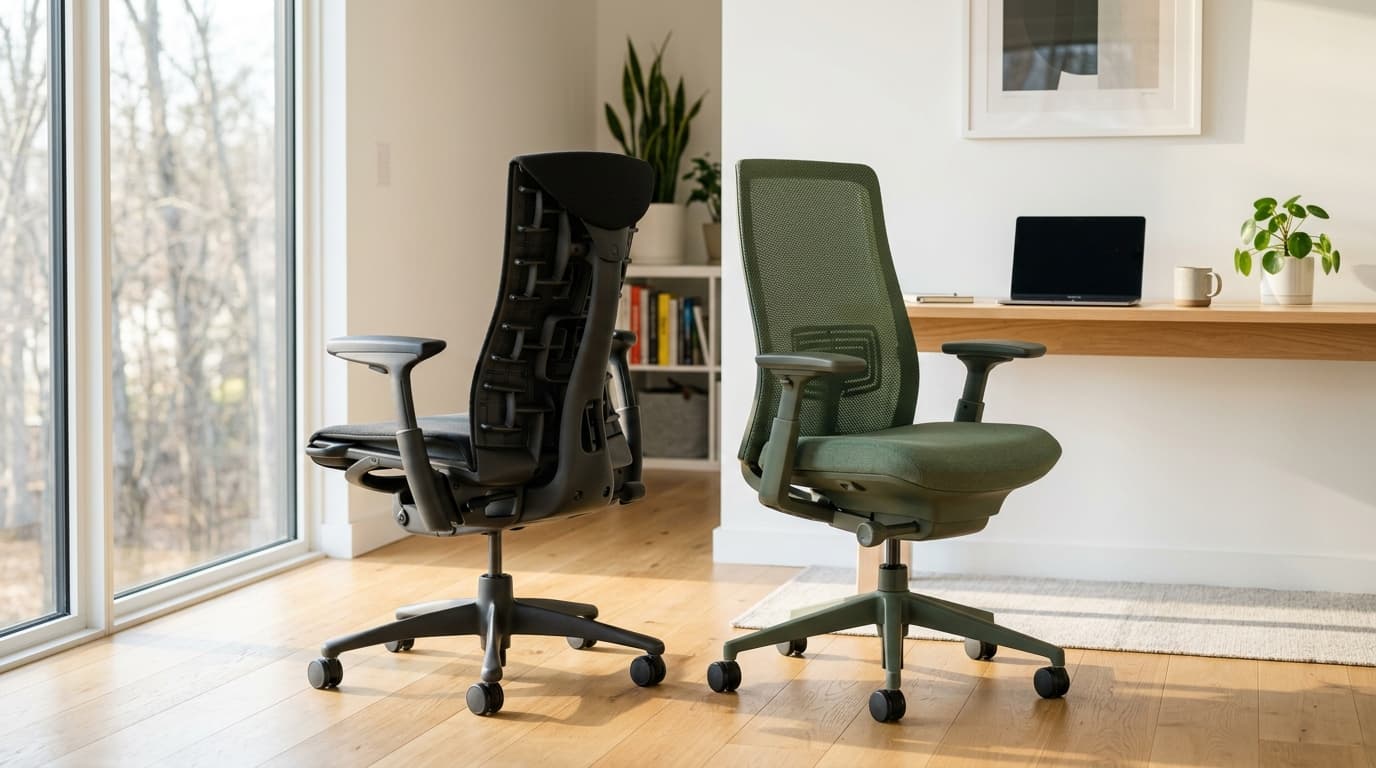
The Haworth Fern vs Herman Miller Embody matchup represents two completely different philosophies of ergonomic engineering. The Embody forces you into upright posture using a narrow, responsive spine of plastic pixels. The Fern cradles you in a wide, flexible leaf structure that allows you to slump, cross your legs, or lean sideways without penalty.
One chair keeps you dialed into precision keyboard work for 12 hours straight. The other lets you relax.
Quick Verdict: Our Top Picks at a Glance
Short on time? Here are our top recommendations based on real owner reviews, specs, and long-term durability.
Haworth Fern
3-part central stem with digital knit
Herman Miller Embody
Dynamic pixelated matrix & thoracic spine
Quick Verdict: Haworth Fern vs Herman Miller Embody
| Ergonomic Chair | Price Range | Backrest & Lumbar Architecture | Best For |
|---|---|---|---|
| Haworth Fern | ~$1,390 to $1,650 | 3-part central stem with digital knit | Flexible postures, casual loungers & deep recline |
| Herman Miller Embody | ~$1,695 to $1,995 | Dynamic pixelated matrix & thoracic spine | Strict upright tasking & all-day computational work |
Check Herman Miller Embody on Amazon • Check Haworth Fern Pricing
Get the Herman Miller Embody if you suffer from mid-back fatigue or thoracic stiffness during uninterrupted 10-hour typing days. It acts like an external skeleton, automatically mirroring tiny spinal adjustments without requiring manual dials.
Get the Haworth Fern if you hate feeling locked into a single posture. Its backrest is taller, its seat cushion is softer, and its deep synchronous recline feels significantly more natural for reading, phone calls, and leaning back.
How these two flagship chairs actually compare
| Spec & Feature | Haworth Fern | Herman Miller Embody |
|---|---|---|
| Starting Price | ~$1,390 | ~$1,695 |
| Max Weight Capacity | 325 lbs | 300 lbs |
| Backrest Height | 28.0" (High back) | 24.5" (Mid-to-high back) |
| Seat Width | 19.9" | 21.25" |
| Seat Depth Adjustment | 15.5" to 18.5" (3.0" range) | 15.0" to 18.0" (Roll-out thigh edge) |
| Lumbar System | Central Frond stem (optional bladder) | Integrated dynamic pixel matrix |
| Armrest Adjustability | 4D (Height, width, depth, pivot) | 2D (Height, width) |
| Forward Seat Tilt | Optional (Executive configurations) | None (Neutral to recline only) |
| Seat Cushion Core | Contoured foam over suspension web | 4-layer spring matrix and scrim foam |
| Recline Resistance | 5-position back stop + tension dial | Harmonic tilt limiter with fine-tune knob |
| Warranty Coverage | 12-year 24/7 commercial warranty | 12-year comprehensive (parts and labor) |
The backrest showdown: Pixelated matrix vs the central frond
The structural core of each chair dictates how your vertebrae feel at 4:00 PM.
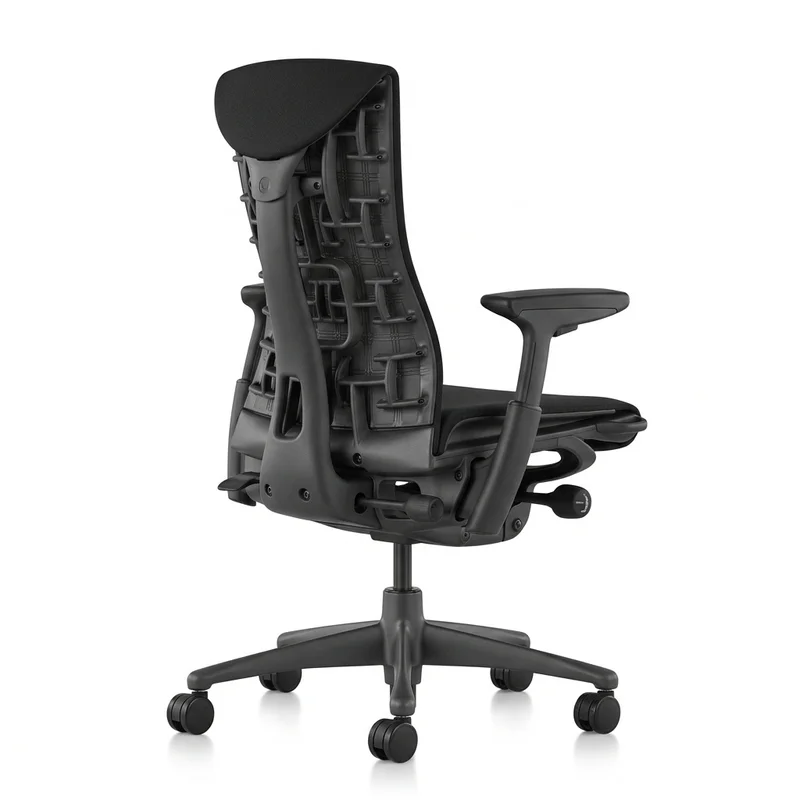
The Herman Miller Embody uses an exposed external spine with dozens of plastic matrix points. Each point moves independently based on the pressure of your shoulder blades and lumbar curve. When you lean back to reach across your desk, the pixels flex with your ribcage.
The backrest on the Embody is intentionally narrow. Your upper shoulders hang off the edges, which naturally rolls your chest open and pulls your neck into alignment.
Haworth approached the Fern from a botanical perspective. A central plastic stem runs vertically up the center of the chair, branching outward like fronds on a fern plant.
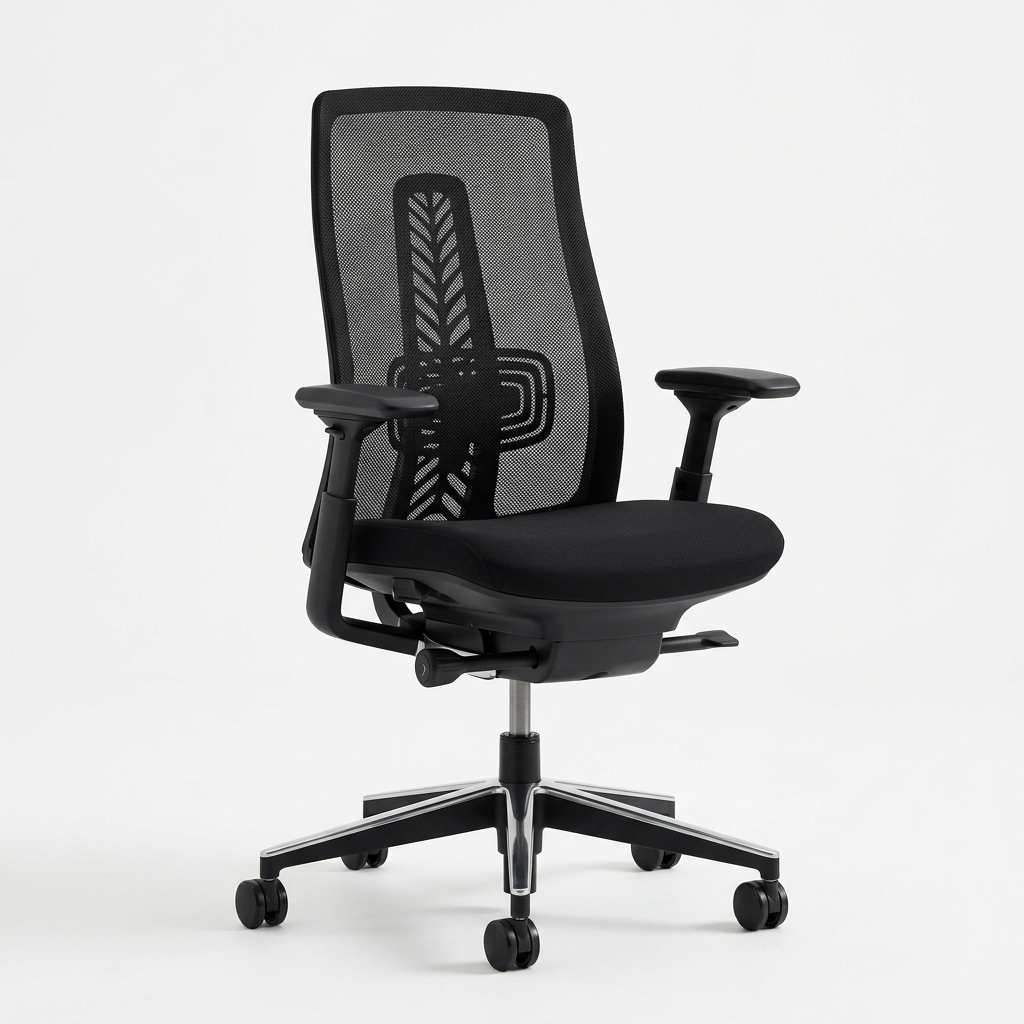
A flexible suspension layer and an outer digital knit envelop this stem. Instead of isolated plastic fingers pressing into your spine, the Fern distributes resistance evenly across your entire torso. You feel uniform support from your tailbone up to your shoulders.
If you have a history of slouching and need a chair that actively corrects your curvature, the Embody is superior. If you want a tall backrest that supports your upper trapezius while remaining soft against your shoulder blades, the Fern wins easily.
Seat pan comfort: Four-layer suspension vs contoured foam
Seat pan pressure causes more returns in the luxury category than backrests.
The Embody does not use traditional slab foam. Its seat pan consists of four distinct layers: a molded plastic base, a web of flexible plastic coils, a breathable scrim spacer, and an outer fabric cover.
Weight is distributed evenly across your sit bones without bottoming out. Air flows freely through the layered core, making the Embody one of the coolest-sitting upholstered chairs on the market.
However, the Embody feels firm. If you expect a cloud-like sensation when dropping into your chair, you will be disappointed. It is engineered for ergonomic neutrality, not plush softness.
The Haworth Fern uses a high-density molded foam seat poured over an elastic suspension web. It is thicker and softer than the Embody.
The waterfall front edge slopes gently downward, completely eliminating hamstring pressure for shorter legs. You can comfortably tuck one foot under your knee on the Fern during casual calls, something that is nearly impossible on the Embody due to its raised side plastic bolsters.
Armrest mechanics and daily desk friction
Armrests can make or break your wrist ergonomics during keyboard work.
Haworth equipped the Fern with true 4D armrests. You can raise them, slide the pads forward and backward, adjust their width, and pivot the caps inward for narrow typing. The armrest pads are soft, rubbery polyurethane with generous cushioning that spares your ulnar nerve.
The Herman Miller Embody uses unique 2D armrests. They adjust up and down, and they push outward or pull inward to change overall width.
There is zero armrest cap pivot on the Embody. The pads do not slide forward or backward.
For standard typing at a desk, the Embody armrests are wide, supportive, and exceptionally durable. But if you play PC games with a controller or lean forward over a tablet, the lack of 4D adjustability is a noticeable handicap.
What sucks about each chair (Real tester friction)
No $1,500 chair is perfect. Both manufacturers cut corners in specific areas that showroom marketing glosses over.
What sucks about the Haworth Fern
- Armrest drift: The 4D arm pads slide far too easily. There is no locking switch. If you push off the armrests to stand up, they will slide forward or twist out of position every single time.
- The optional lumbar bulge: The standard Fern backrest has beautiful, balanced lumbar curve built into its fronds. If you order the optional adjustable lumbar insert, it adds a stiff plastic bladder that feels like an invasive tennis ball jammed into your L4-L5 disc. Skip the optional lumbar.
- Creaky recline stops: The tilt mechanism can produce a dull metallic clunk when engaging the 5-position back stop under heavy body weight.
What sucks about the Herman Miller Embody
- The pixel noise: When you shift your weight or twist your upper torso, the pixelated backrest creaks. It sounds like flexing plastic sneakers. It will not show up on a noise-canceling microphone, but in a dead-silent room, it can irritate noise-sensitive owners.
- Shoulder blade pinch for tall frames: The Embody backrest tops out at 24.5 inches. If you are 6'4" or taller with broad shoulders, the hard plastic frame tabs at the top corners will dig directly into your shoulder blades when reclining.
- Width adjustment effort: Widening the Embody armrests requires grabbing the base of the arm and wrenching it outward with two hands. It feels crude on a $1,700 piece of industrial design.
Who should buy the Herman Miller Embody

Buy the Embody if you work 8 to 12 hours a day in front of multiple monitors and suffer from recurring lower back pain or postural fatigue. The pixelated matrix back is an engineering triumph for spinal decompression. It holds your pelvis in neutral alignment and stops you from curling forward into a monitor hunch.
The Embody is also the premier choice for warm office environments. The four-layer suspension seat breathes dramatically better than high-density foam, preventing heat buildup during marathon coding or writing sprints.
Skip the Embody if you are over 6'3" with broad shoulders, or if you prefer crossing your legs while sitting.
Check Herman Miller Embody price on Amazon
Who should buy the Haworth Fern
Buy the Haworth Fern if you want luxury ergonomics without feeling rigid or constrained. Its 28-inch backrest accommodates tall torsos effortlessly, while the digital knit back cradles your spine like a supportive hammock.
The Fern is vastly superior for mixed computer use, including writing, casual web browsing, and console gaming. Its deep, smooth recline and cushioned armrests invite you to lean back and relax in ways the task-oriented Embody simply does not allow.
Skip the Fern if you demand firm, locked-in posture correction, or if loose, easily-bumped armrest caps bother your workflow. And remember: do not pay extra for the optional lumbar bladder.
Check Haworth Fern availability
Internal links and cluster guides
Evaluating other high-end ergonomic chairs? Read our standalone Herman Miller Embody review for long-term wear testing.
If you are torn between Herman Miller's two icons, check out our Herman Miller Embody vs Aeron comparison. For a head-to-head against Steelcase's flagship recline system, see our Steelcase Gesture vs Herman Miller Embody shootout.
Unsure which chair fits your body dimensions? Answer four quick questions in our Chair Finder tool to calculate your ideal seat depth and lumbar height.
Frequently Asked Questions (FAQ)
Is the Haworth Fern better than the Herman Miller Embody for lower back pain?
Both chairs handle lumbar support exceptionally well, but they target different issues. The Embody is better for lower back fatigue caused by poor posture because its pixelated matrix actively prevents sacral slumping. The Haworth Fern is more forgiving for tailbone pressure and general lumbar stiffness due to its softer foam seat pan and wide suspension stem.
Does the Haworth Fern need the optional lumbar support?
No, and most ergonomic specialists advise against ordering it. The standard Fern backrest already incorporates organic lumbar curvature through its central frond stem and digital knit. Adding the optional plastic lumbar bladder creates a firm, localized pressure point that many owners find uncomfortable.
What is the consensus on Haworth Fern vs Embody on Reddit r/OfficeChairs?
Reddit discussions praise the Herman Miller Embody for long-term spinal health, build quality, and superior resale value. Community members favor the Haworth Fern for its taller backrest, softer seat cushion, and superior 4D armrest padding. Redditors frequently note that the Fern feels like a comfortable luxury chair, whereas the Embody feels like corrective medical equipment.
Why does the Herman Miller Embody creak when moving?
The Embody creak originates from the friction between its dynamic pixel matrix fingers and the flexible secondary skeleton. As you twist or lean sideways, the plastic joints flex against each other. It is a normal mechanical characteristic of the chair's responsive design and does not indicate structural failure.
Can you add a headrest to the Haworth Fern or Herman Miller Embody?
Haworth offers an integrated factory headrest option for the Fern that must be ordered at the time of purchase. Herman Miller does not manufacture an official headrest for the Embody, but third-party manufacturers like Atlas Headrest produce aftermarket headrests designed specifically for the Embody frame.
Bottom line
The Herman Miller Embody is a precision ergonomic instrument for computer workers who need strict postural support to work without back pain. It justifies its $1,700 price tag through unmatched spinal alignment and breathable materials.
The Haworth Fern is the more versatile, human chair. It delivers 90% of the Embody's ergonomic support while providing a softer seat, a taller back, and a much better recline. Save $200 to $300 and buy the Fern if you value comfort and flexibility over clinical correction.
Check Herman Miller Embody on Amazon | Check Haworth Fern Pricing
Essential Workstation Add-Ons Under $35
High-impact accessories verified by our research team to protect your cables and joints.
VIVO Under-Desk Cable Tray
Keeps power strips and heavy adapters off the floor so cables never yank when elevating.
ComfiLife Gel Anti-Fatigue Mat
High-density core reduces heel strike and lower back compression when standing 3+ hours.
VELCRO Brand ONE-WRAP (100pk)
Pre-cut reusable straps that easily unwrap for cord re-routing without scissors.
Soundance Ergonomic Laptop Stand
Elevates laptop screen 6 inches to eye level, preventing forward neck slouch.
Calculate Your Exact Desk & Chair Height
Slide to your height to see ANSI/BIFMA recommended standing and sitting presets.

Written by M. Haris
✓ BIFMA G1-2017 Certified EvaluatorFounder & Lead Workstation Ergonomics Researcher • 8+ Years Spec Testing
M. Haris leads ergonomic research at The Desk Riser, auditing manufacturer CAD schematics, motor cycle lifespan metrics, BIFMA weight load standards, and long-term user failure patterns across thousands of verified purchases. Every review is independent with 0% sponsored influence. Have questions or spot a warranty update? Email directly at support@thedeskriser.com, read the Author Dossier, or explore our Editorial Testing Methodology.
Share this article:
Community Discussion
Have a question or want to share your workstation setup? Join the discussion below.
Comments load automatically as you scroll down.