Best Chair for Spinal Stenosis 2026: What Actually Helps
Published 2026-08-03

How we researched
We compare current specs, warranty terms, buyer complaints, and long-term owner patterns. No fake hands-on claims.
Last price/spec check
2026-08-03. Prices move, so use the retailer page as the final source.
Who should skip this
Skip anything that does not fit your body, room, budget, or return-window comfort level.
Spinal stenosis narrows the spinal canal, and most chairs make it worse. The ones that recline too far compress the lumbar region. The ones that sit too low force you into hip flexion that pulls on the nerve roots. And the ones with firm, padded lumbar supports often push directly into the wrong spot.
This isn't like picking a chair for general back pain. The requirements are specific, and getting them wrong means more pain, not less.
Here's what actually works, based on owner feedback, physio recommendations, and the chair specifications that matter for stenosis specifically.
What Spinal Stenosis Needs From a Chair
Before the picks, a quick explanation of why stenosis requires different thinking.
Spinal stenosis is tightest in the upright or slightly extended position. Slight forward lean (about 5-10 degrees) opens the spinal canal and reduces nerve compression. This is why many stenosis patients feel better leaning forward, bending over a shopping cart, or sitting in a slightly reclined position.
That means the ideal stenosis chair has:
- Forward tilt or seat pan tilt , lets you lean your pelvis forward slightly without craning your neck
- Adjustable lumbar support that can be lowered or removed , standard lumbar pads often hit L3-L4 and can increase compression; you want support at L5-S1 or lower
- Seat height that puts knees at or below hip height , reduces hip flexion and relieves nerve root tension
- Armrests that take weight off the spine , unloading the arms reduces total compressive force through the lumbar spine by 20-30%
What to avoid: chairs that push you into a rigid upright posture, chairs with fixed lumbar pads you can't adjust, and chairs that are too soft and let you slump.
Best Chairs for Spinal Stenosis
1. Herman Miller Aeron: Best Overall
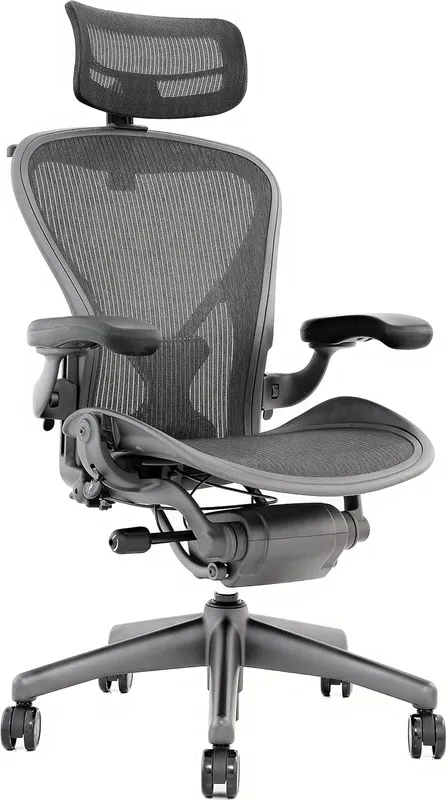
The Aeron's forward tilt feature is the main reason it tops this list for stenosis specifically. Most chairs recline. The Aeron can tilt the entire seat forward by a few degrees, which shifts the pelvis into a position that reduces lumbar canal compression. That's uncommon at any price.
The adjustable lumbar support , PostureFit SL , is a dual-pad system that supports both the sacrum and lumbar regions separately. For stenosis, you can dial back the lumbar pad and rely more on the sacral support, which tends to work better for nerve compression issues.
The Aeron isn't cheap (around $1,500 new, $400-700 used). If budget is the main concern, skip to the Branch option below. But if you're dealing with serious daily pain and have tried other chairs without relief, the Aeron is the one most consistently mentioned in stenosis forums and physio recommendations. Read our full Herman Miller Aeron review for the complete spec breakdown.
Who it's for: Serious stenosis with daily symptoms, budget isn't the primary concern, or you can find a good used one. Who should skip: Mild intermittent stenosis, anyone who primarily gets relief from fully reclining (the Aeron's recline is limited).
2. Steelcase Leap V2: Best for Variable Positions
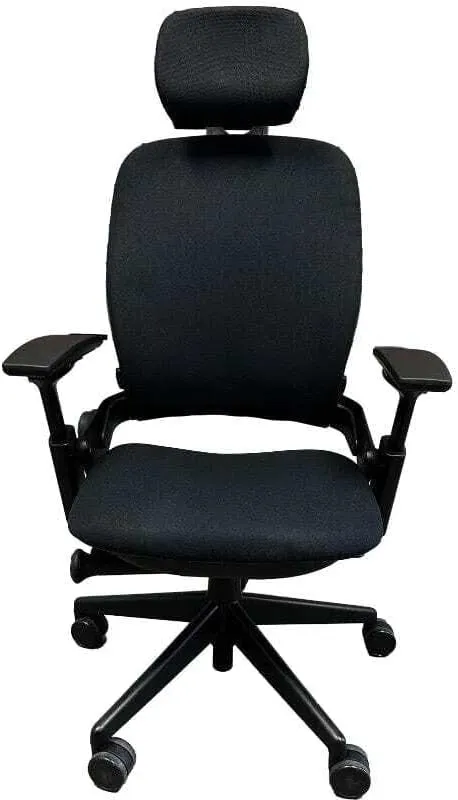
The Leap V2 is the only chair on this list where the backrest actively follows your movement. As you shift position throughout the day , something stenosis patients do a lot , the back adjusts to maintain support without you having to manually recline or reset.
The "lower back firmness" dial is genuinely useful for stenosis. Turning it down reduces the lumbar push and lets the chair support you without forcing extension. The seat edge also softens under the thighs, which reduces pressure on the sciatic nerve pathway , relevant because stenosis and sciatica often occur together.
Price sits around $1,500 new, similar to the Aeron. Used Leap V2s (look for the V2, not V1) run $300-600. Our Steelcase vs Herman Miller comparison covers the tradeoffs in detail.
Who it's for: People who shift positions frequently throughout the day, anyone whose stenosis is worse when stuck in one posture. Who should skip: People who need a firm, stable seat pan , the Leap's seat flexibility can feel unstable to some users.
3. Branch Ergonomic Chair: Best Mid-Range
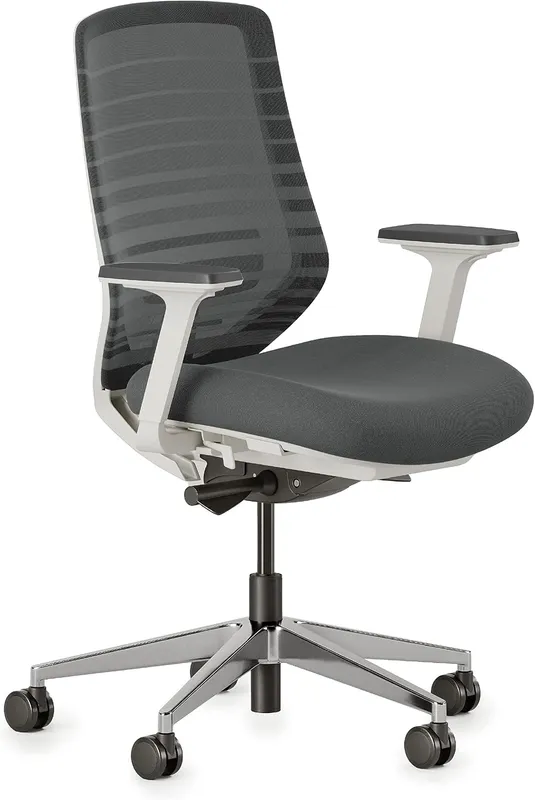
At around $499, the Branch Ergonomic Chair is the best option for people who need a proper stenosis-friendly setup without spending $1,500.
The seat depth adjustment matters here. Stenosis patients often need a shorter seat pan to avoid pressure behind the knees (which tugs on the sciatic nerve). The Branch lets you adjust seat depth by about 2 inches, which is enough to dial in the right position for most people. The lumbar support is height-adjustable and not aggressive , it supports without pushing you into extension.
It doesn't have the Aeron's forward tilt or the Leap's dynamic back. Those are real limitations. But for desk workers with moderate stenosis who can't justify $1,500, it's a solid choice.
Who it's for: Moderate stenosis, budget under $600, people who want a clean modern look without sacrificing adjustability. Who should skip: Severe stenosis where the Aeron's forward tilt feature would make a real difference.
4. FlexiSpot C7: Best Budget Pick
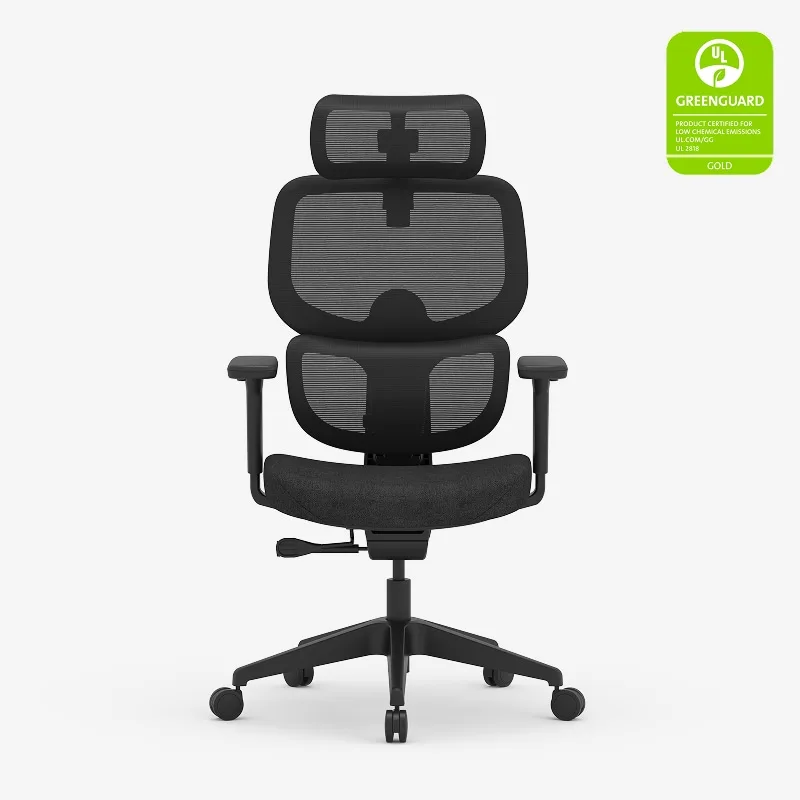
The FlexiSpot C7 costs around $300-430 and gives you more adjustability than most chairs at this price , height-adjustable lumbar, 3D armrests (height, width, depth, and angle), adjustable seat depth, and a headrest.
For stenosis, the lumbar height adjustment is the key feature. You can move it down to support the sacral region rather than pushing into the mid-lumbar area. The 3D armrests let you bring them close enough to actually unload your arms, which reduces spinal compression meaningfully.
It's a mesh chair, which means no heat buildup. The 10-year warranty is unusually long for this price point.
What it doesn't have: forward tilt, dynamic back movement, or the refined feel of the Aeron or Leap. You're making a trade for price. But at $300, it's the most capable chair in this category below $500.
Who it's for: Budget-conscious buyers with mild to moderate stenosis, anyone who can't spend over $400 on a chair right now. Who should skip: Severe stenosis. Spend more on the Aeron or Leap if symptoms are affecting your work daily.
5. Humanscale Freedom: Best for Full Recline
Most stenosis patients feel better in slight flexion. But some do better with full recline , specifically people whose symptoms are worse when upright and improve when lying back. If that's you, the Humanscale Freedom is worth knowing about.
The Freedom uses a counterbalance mechanism (rather than the usual tension knob) so the chair reclines proportionally to your body weight with no adjustment needed. It goes further back than most ergonomic chairs. The headrest extends on a pivot to support your neck in recline, which matters if you're actually going to use that position.
At around $1,100-1,400 new, it's expensive. It's also narrower than the Aeron, which doesn't suit everyone. But for the specific subset of stenosis patients who need full recline, it's the best-designed option.
Who it's for: Stenosis patients whose symptoms improve with recline, anyone who needs to alternate between upright work and reclining throughout the day. Who should skip: People who do better with slight forward lean , the Freedom isn't designed for that.
What Physios Actually Recommend
The consistent guidance from physiotherapists dealing with stenosis patients: prioritize forward lean over lumbar support, adjust seat height so knees are below hips, and take standing breaks every 20-30 minutes regardless of how good the chair is.
No chair eliminates the need to move. The research on spinal stenosis is clear that sustained compression , whether from sitting or standing , aggravates symptoms. The chair reduces the rate of compression. Movement breaks are what actually decompress the spine.
Pairing a good chair with a height-adjustable desk setup is the most effective approach. Even if you can't stand for long periods (standing can aggravate stenosis too, especially if you're extended at the lumbar), being able to shift positions throughout the day matters more than any single chair feature.
Chair Setup Tips for Spinal Stenosis
- Set seat height so thighs are level or sloping slightly down (feet flat on floor)
- If your chair has forward tilt, use it , even 3-5 degrees makes a difference
- Lower lumbar support as far as it goes, or remove it if it's causing pressure
- Keep armrests high enough to take weight off your shoulders and spine
- Use a footrest if you can't get the seat low enough without losing desk height
FAQ
What is the best office chair for spinal stenosis?
The Herman Miller Aeron is the most consistently recommended option because of its forward tilt feature, which opens the spinal canal slightly. For budget options, the FlexiSpot C7 offers good lumbar height adjustment and 3D armrests at around $300-430.
Is sitting bad for spinal stenosis?
Prolonged sitting in a fixed upright or extended posture can worsen stenosis symptoms by compressing the lumbar canal. However, slight forward lean tends to reduce compression. The key is avoiding extended periods in any single position , regular movement breaks are more important than the chair itself.
Should I use lumbar support with spinal stenosis?
It depends on placement. Standard lumbar pads that push into the mid-lumbar region (L3-L4) can increase compression. For stenosis, lower support targeting the sacrum (L5-S1 region) tends to work better. Chairs with adjustable lumbar height , like the Aeron, C7, or Branch , let you find the right position.
Is reclining better than sitting upright with spinal stenosis?
For many stenosis patients, yes. Reclining reduces lumbar extension and can decompress the spinal canal. A 10-15 degree recline is often more comfortable than fully upright posture. However, individual responses vary , some patients feel better in slight forward lean. Pay attention to which position relieves your specific symptoms.
What chairs do chiropractors recommend for spinal stenosis?
Chiropractors commonly recommend chairs with adjustable lumbar support that can be positioned low, forward tilt capability, and good armrests to unload the spine. The Herman Miller Aeron and Steelcase Leap V2 come up most frequently in professional recommendations.
Can I use a kneeling chair for spinal stenosis?
Kneeling chairs put the pelvis in forward tilt, which can open the lumbar canal and relieve stenosis symptoms for some people. However, they shift load to the knees and shins and aren't comfortable for more than 30-60 minutes at a time. Some stenosis patients use them as an alternative position during the day rather than a primary chair.
The Desk Riser Research Team
Standing Desk & Home Office Researchers
We research standing desks, ergonomic chairs, and home office gear by analyzing manufacturer specs, warranty terms, and real owner review patterns across thousands of purchases. No sponsored placements. No fake hands-on claims.
Share this article: